There is a special kind of dread in checking the weather before work and seeing a number that belongs on a ski trip. The streets are frozen, the platform is a wind tunnel, and somewhere across town your office is heated like a greenhouse — and you are expected to arrive looking like none of it happened.
The good news is that dressing for a deep freeze is a system, not a shopping spree. Warmth at work comes from six unglamorous decisions made in the right order: what touches your skin, what covers your legs, how long your coat is, what grips the ice, how you protect your head and hands, and what is waiting in your desk drawer.
Each section below pairs one of those decisions with a complete outfit that proves it, styled head to toe in the classic winter work palette of camel, charcoal, navy, burgundy, cream, black, grey and plaid. Nothing here looks like expedition gear, and everything works as hard in the boardroom as it does on the bus.
Work through the sections in order and the coldest week of the year stops dictating your wardrobe. You will still feel the weather — you just will not be dressing in apology to it.
Start With a Serious Base Layer Nobody Sees
The biggest freezing-day upgrade is invisible: a fine merino or silk thermal layer worn under the clothes you already own. A lightweight merino crew or turtleneck traps warmth against your skin and adds roughly the insulation of a whole extra sweater, without a millimetre of bulk under a tailored blazer. Match the base layer colour to your outfit — a cream merino turtleneck peeking out of a charcoal suit reads as deliberate styling, not survival gear — and add thermal leggings under trousers or a skirt. Merino also resists odour for days, so two base layers rotated through the week will carry you through a cold snap.

Choose Bottoms With the Warmth Built In
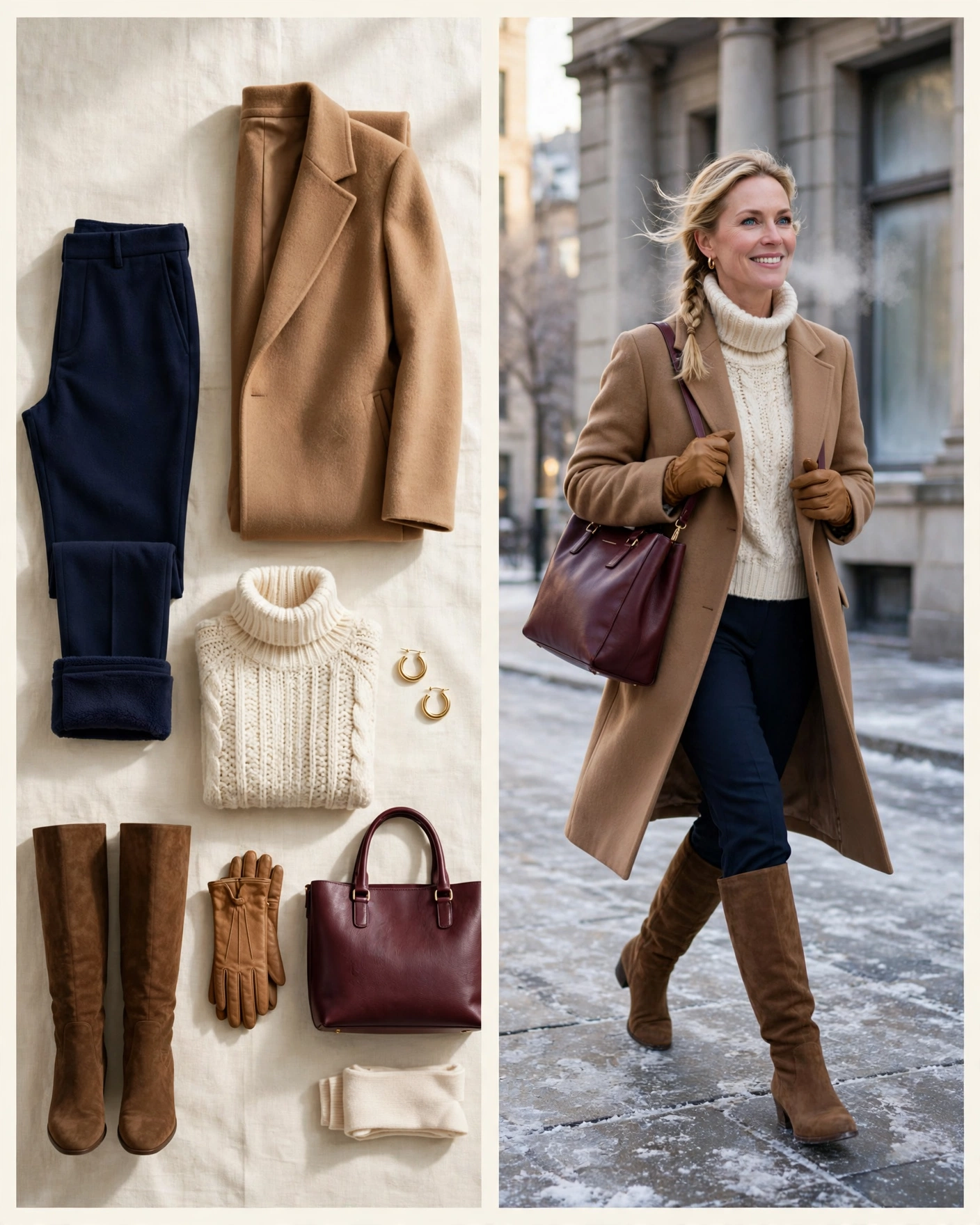
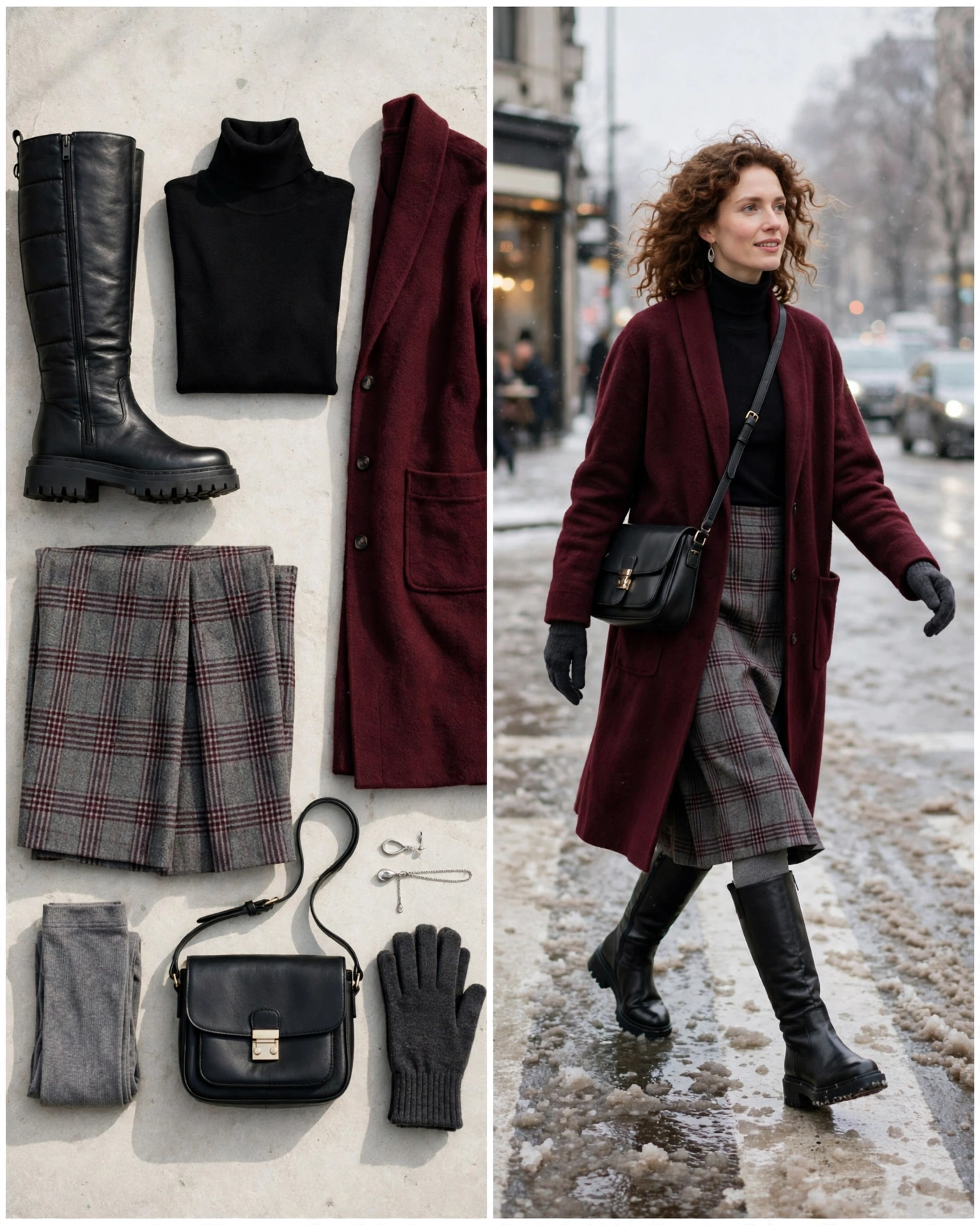
Thin summer-weight trousers are where most freezing-day outfits quietly fail, because the legs lose heat fastest on a windy platform. Fleece-lined tailored trousers and heavy wool-blend pants look identical to regular office trousers from the outside, but the brushed interior turns them into wearable insulation. If you prefer skirts, swap sheer tights for fleece-lined tights of 200 denier or more, which keep a midi skirt and boots completely viable at minus ten. Darker colours earn their keep here too, since they hide the road-salt splashes that gather at every hem by February.
Let One Long Coat Do the Heavy Lifting
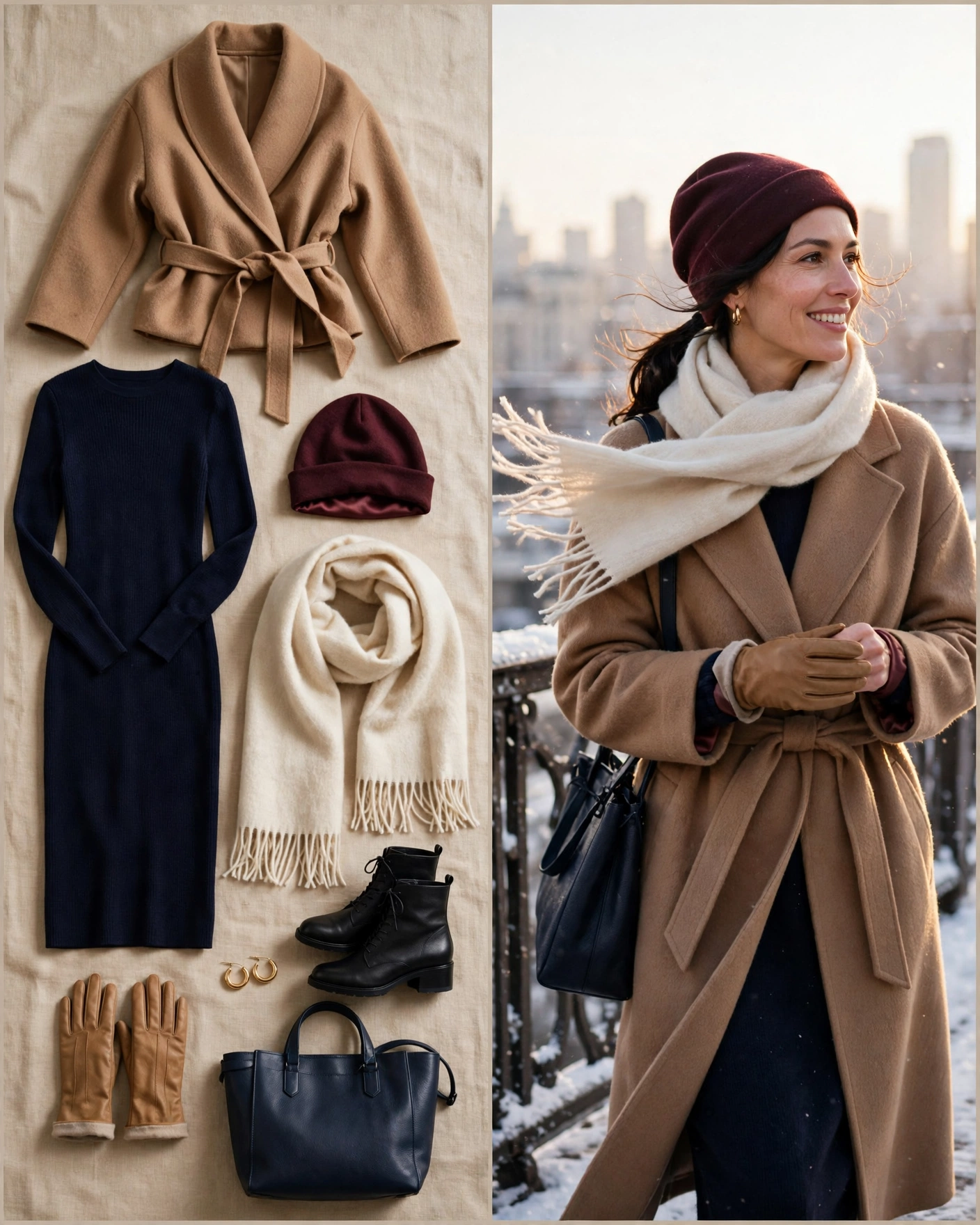
On the coldest days your coat is not an accessory, it is the outfit the world sees, and length is warmth: a below-the-knee or maxi coat closes the gap between hem and boots where the wind usually cuts straight through. Look for a high wool content, a double-breasted or storm-placket front that seals against gusts, and deep pockets your gloves actually fit in. A belted, tailored shape in charcoal, camel or navy keeps it boardroom-appropriate over everything from suits to knit dresses. Buy the best one you can and wear it daily — one serious coat outperforms three thin ones every single winter.

Wear Boots Built for Ice That Still Pass at Your Desk
The commute is where freezing days turn dangerous, and smooth leather soles and stilettos have no business on ice. Insulated winter boots with a chunky lug sole grip salted, slushy pavement, while waterproof leather and a warm lining keep feet dry through every puddle of meltwater. Sleek knee-high versions disappear under midi skirts and dresses, and clean insulated chelsea boots pass with tailored trousers in most offices. Keep the styling minimal — black leather, no heavy hardware — and wipe the salt off each night so they stay office-presentable instead of slowly turning grey.
Protect Your Head, Neck and Hands Without Wrecking Your Hair
Skipping a hat and gloves to save your hairstyle backfires the moment you arrive with numb fingers and a windswept fringe anyway. A silk-lined cashmere beanie protects your ears without the frizz and static that plain wool linings cause, and a low bun or ponytail survives the commute intact under it. An oversized wool scarf doubles as a shawl against platform wind, and cashmere-lined leather touchscreen gloves mean you never bare your hands to check a train time. Choose everything in your coat’s colour family and the whole bundle looks like styling, not bundling.
Keep a Desk-Side Change Kit Ready
The smartest freezing-day piece is not worn at all — it lives in your bottom desk drawer. A change kit of polished indoor shoes, a spare pair of dry wool socks, hand warmers, a mini lint roller and lip balm lets you dress with total seriousness for the commute and total comfort at your desk. Swapping out of insulated boots also stops your feet overheating under office heating, which is its own special misery by mid-afternoon. Restock it on the first cold Monday of the season and every freezing day after that becomes a routine instead of an ordeal.

In Summary
Freezing weather does not require a different wardrobe, just a better-engineered one. A merino base layer, lined bottoms, a coat that actually reaches your boots, grippy insulated footwear, protected extremities and a desk-side change kit solve the whole problem between them, in that order.
Notice that none of these solutions asks you to sacrifice polish. Silk linings protect your hair, tailored fleece-lined trousers pass as ordinary suiting, and the longest coat in your wardrobe is usually the most elegant one. Warmth and professionalism only conflict when the layers are an afterthought.
So set the system up once, before the next cold snap, and let it run all winter. The forecast can do its worst — you will step off that frozen platform looking exactly as composed as you planned.