There is a special kind of winter dread that has nothing to do with the weather itself: it is standing in front of your wardrobe at seven in the morning, knowing you can be warm or you can look professional, and suspecting you cannot be both. Thick sweaters bunch under blazers, smart shoes surrender to the first patch of ice, and by the time you reach your desk you feel like you dressed for a ski trip that happens to end in a meeting room.
The good news is that warmth and polish are not opposites — they are a system. Professional winter dressing works in layers that each do one job: a hidden base that traps heat, a slim middle that insulates without bulk, and a tailored outer layer that presents the finished picture to the world.
This guide breaks that system into six practical moves, from the base layer nobody sees to the coat everybody does. Each one comes with a complete outfit that proves the point, built from the classic winter work palette of camel, charcoal, navy, burgundy, cream, black, grey, plaid and deep green.
Master these six moves and the morning dilemma disappears. You will dress once, stay warm on the coldest platform and in the draughtiest meeting room, and look like the most put-together person in the building while you do it.
Start With a Base Layer That Disappears Under Tailoring
The warmest professional outfits begin with a layer nobody ever sees: a fine merino wool or silk-blend thermal top worn under your blouse or shirt. Choose a scoop or V-neckline that sits below your top button, sleeves that end just above the wrist, and a body-skimming fit that adds heat without adding a single visible line under tailoring. Black, navy and deep nude tones vanish under most blouses, while pale thermals can shadow through light fabrics, so match the base to the top it hides under. The proof outfit: a charcoal tailored suit and cream silk blouse that look like pure summer-weight polish — with a black merino base layer doing all the thermal work invisibly underneath.
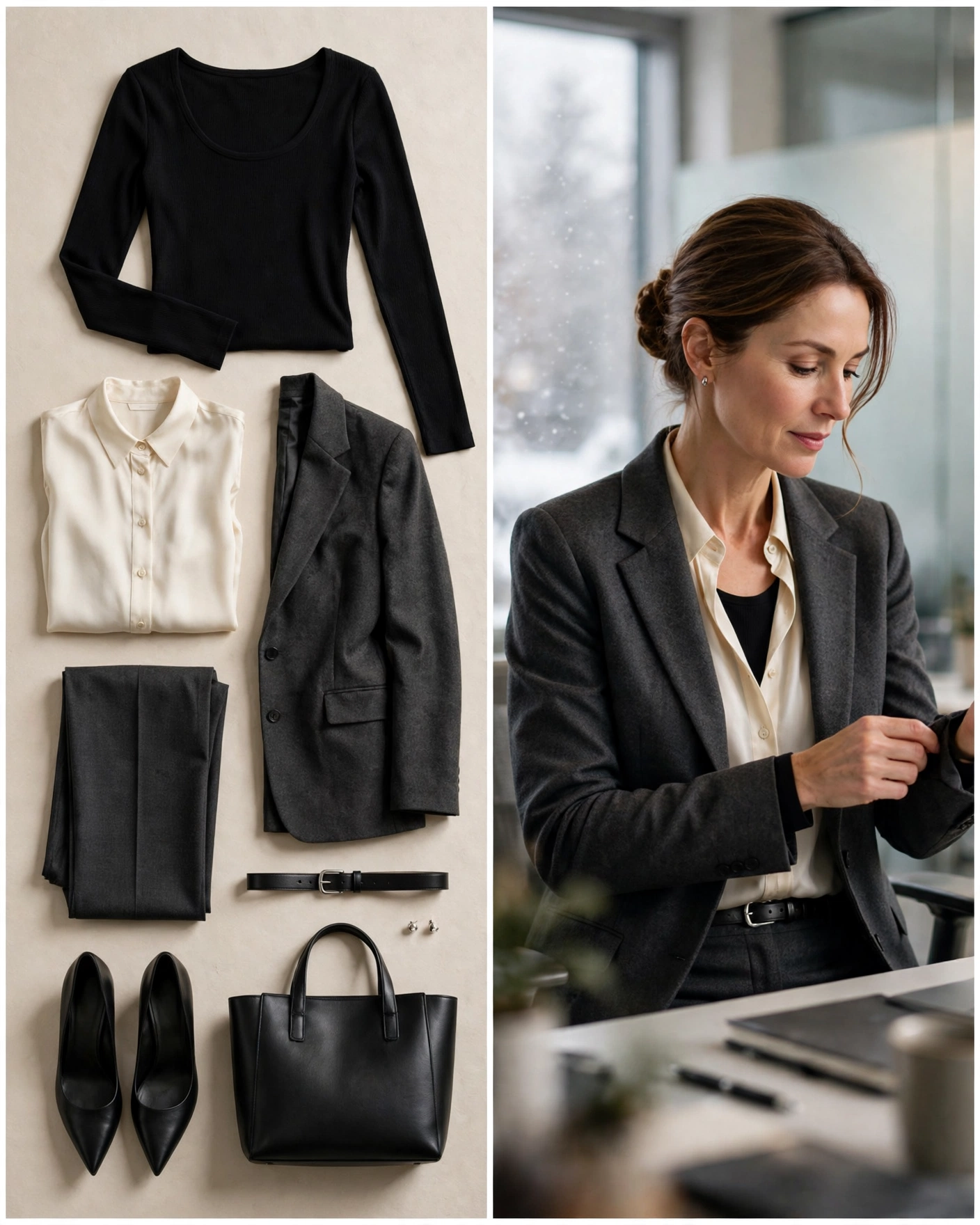
Insulate With Slim Knits Instead of Bulky Sweaters
Chunky knits are the enemy of a tailored silhouette: they fight your blazer, bunch at the waistband and read casual no matter how smart the rest of the outfit is. Swap them for fine-gauge merino, cashmere or ribbed knits that sit close to the body — a slim turtleneck or crew neck adds serious warmth in only a few millimetres of fabric. Tuck the knit fully in, check that the blazer still closes over it without strain, and the whole outfit reads sharper than a cotton shirt on a cold day. A burgundy fine-knit turtleneck under a navy blazer with grey tailored trousers shows exactly how much warmth one thin layer can carry.
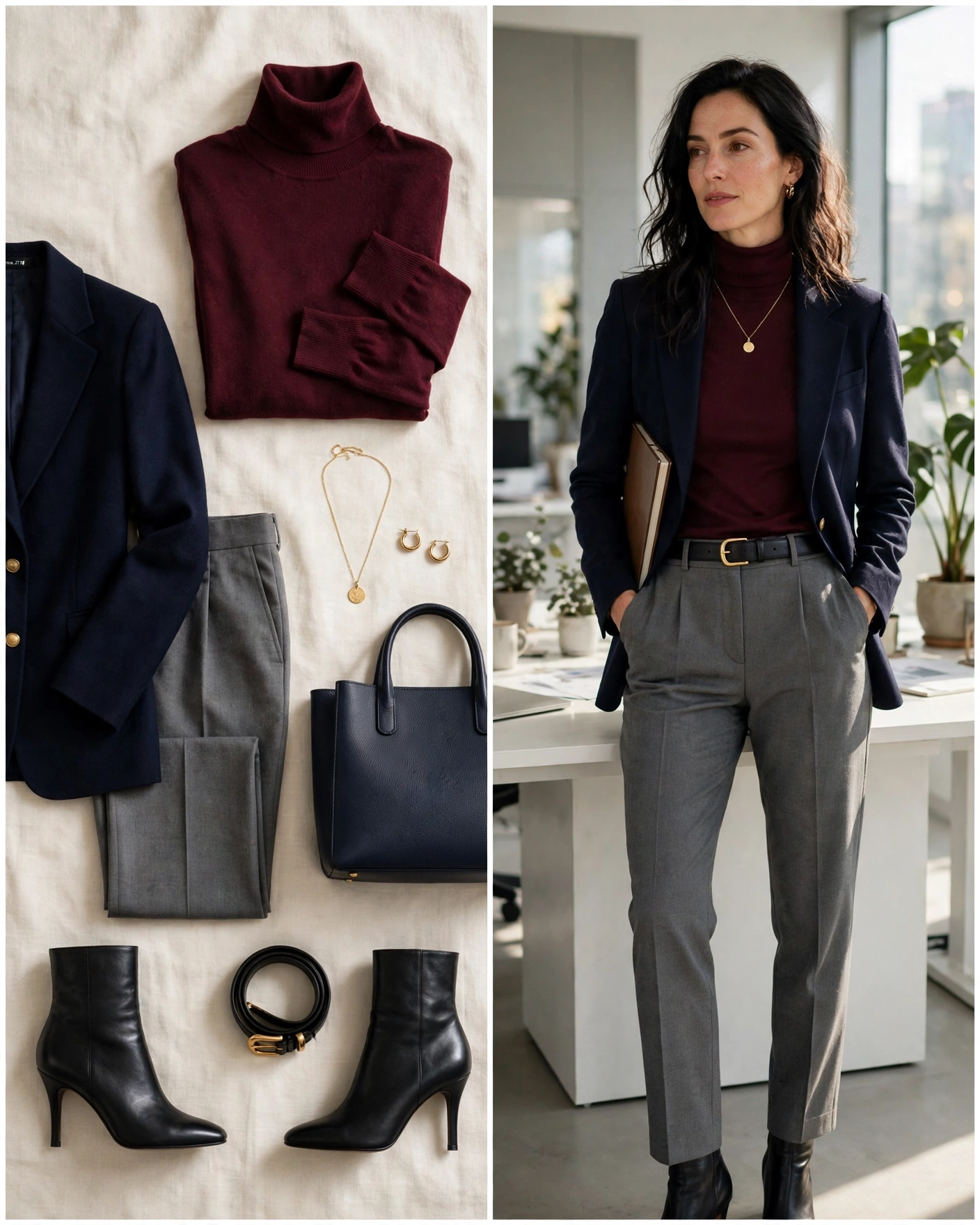
Choose a Coat That Belongs in the Boardroom
Your coat is the first thing clients and colleagues see for four months of the year, so it has to work as hard as the suit underneath it. Look for a long, structured wool or wool-blend coat that falls below the knee, with clean lapels, a single-breasted or wrap closure, and enough room through the shoulders to sit over a blazer without pulling. Camel, charcoal, navy and black rotate with everything in a work wardrobe, and a longer line keeps trousers and dress hems protected from wind and slush. Arriving in a sharp camel wrap coat over a black trouser suit, you look senior before you have said a word.
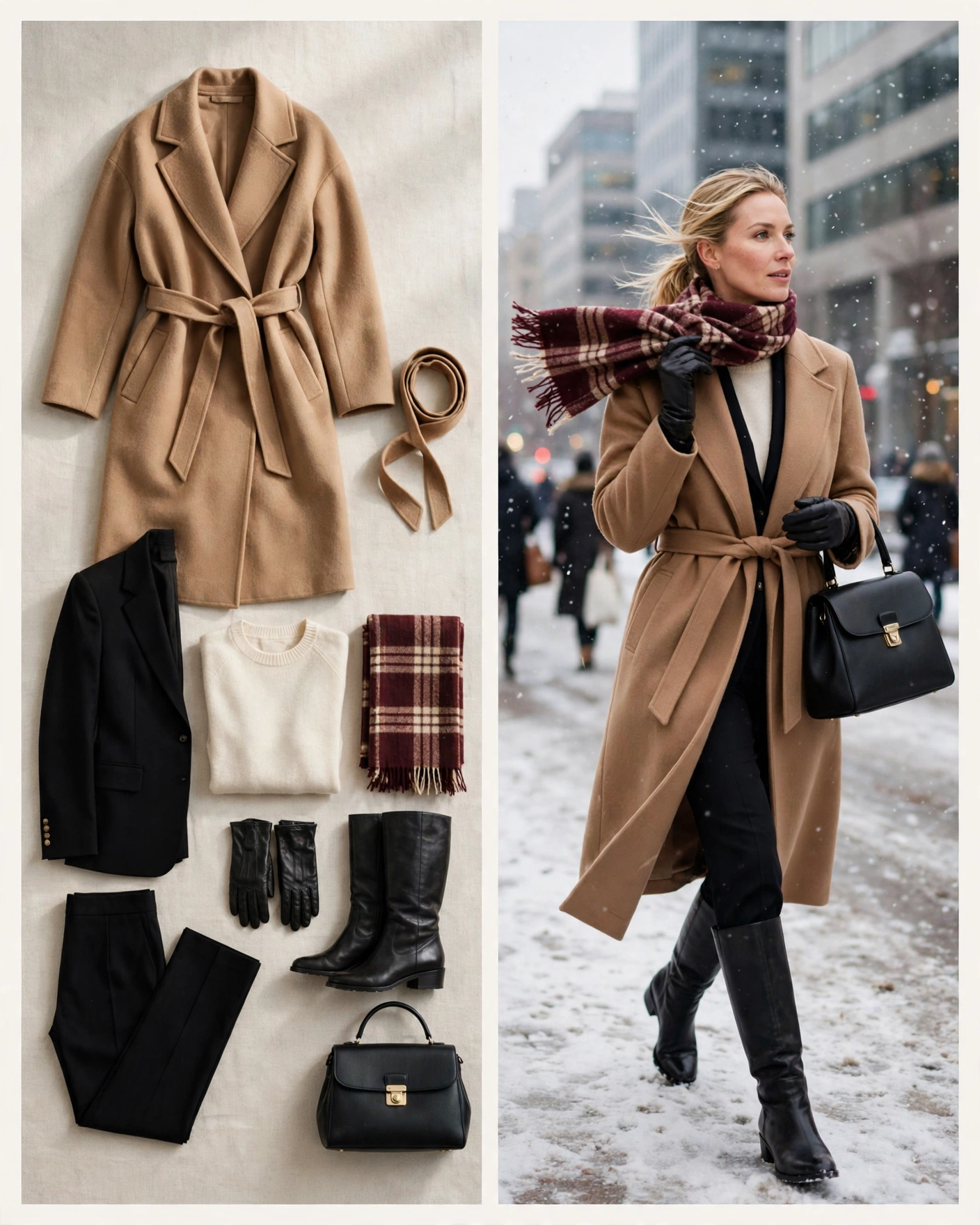
Keep Skirts and Dresses Working With Warm Tights and Tall Boots
Cold weather does not have to retire your dresses — it just changes what happens underneath them. Opaque tights of 80 denier or more, or fleece-lined tights on the coldest days, turn a knit dress into a genuinely warm outfit, and matte black tights always read smarter than sheer ones in winter light. Close the gap between hem and foot with knee-high boots: when the boot top meets or passes the dress hem, there is no strip of cold leg left and the silhouette stays long and unbroken. A deep green sweater dress with black opaque tights and knee-high boots is the easiest warm work outfit you will ever pull on.

Wear Boots That Handle Snow and Still Read Professional
The commute is where professional winter outfits go to die — usually somewhere between the icy pavement and the office door. The fix is a waterproof leather ankle boot with a lugged or textured rubber sole, a low block heel and a clean, minimal upper: it grips like a walking boot but presents like a smart shoe. Keep a pair of heels at your desk only if you love them, because a good winter boot in black or dark brown works straight through meetings without a costume change. Charcoal trousers, a burgundy sweater and a black blazer over waterproof ankle boots will carry you through slush and still stand up in the boardroom.
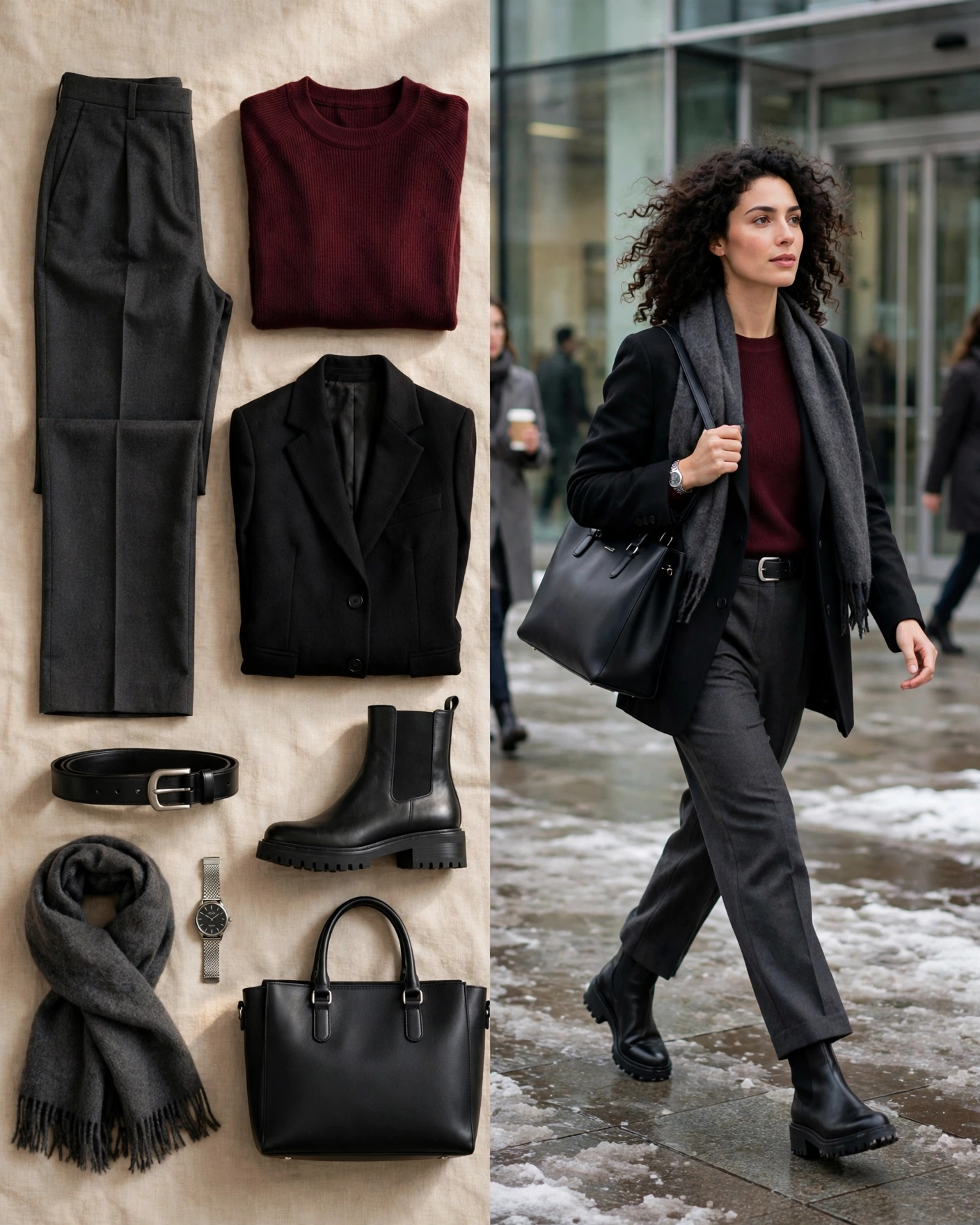
Finish With Details That Say Polish, Not Survival Mode
In winter, accessories stop being decoration and start being equipment — but they still have to match the outfit, not just the forecast. Choose leather gloves in the same family as your shoes or bag, a wool scarf in a colour drawn from your outfit rather than a random bright one, and a structured bag that survives being set down on wet floors. Brushed, steamed fabrics matter too: five minutes with a clothes steamer lifts the flat, tired look that heavy layers give knitwear and coats. A grey plaid suit finished with a camel scarf and black leather gloves looks considered from the café queue to the last meeting of the day.

In Summary
Dressing professionally in winter is not about owning more clothes — it is about giving every layer a job. A hidden base traps the heat, a slim knit insulates without bulk, a serious coat presents you to the world, and the right tights, boots and finishing details close every gap where the cold used to get in.
Build the wardrobe around those six moves and the classic palette — camel, charcoal, navy, burgundy, cream, black, grey, plaid and deep green — and almost everything you own will combine with everything else. Getting dressed on a dark, freezing morning becomes a two-minute decision instead of a daily negotiation.
So tomorrow, dress once and dress properly: warm on the platform, polished in the meeting, comfortable at your desk all day. That is what dressing professionally in winter actually looks like — and it feels as good as it looks.