The winter workwear dilemma is always the same: dress for the freezing commute and you melt in the overheated office, or dress for the office and shiver at the bus stop. Layering solves it — but random layering just makes you look bulky and feel worse.
The fix is a formula, not a pile. Professional winter outfits that actually work are built in three deliberate layers: a thin warming base against the skin, a fine insulating knit in the middle, and a structured outer layer that makes the whole thing look polished.
Each layer has one job, and the order matters — thinnest closest to the body, structure on the outside. Get the order right and you can walk through snow at eight and sit through a heated meeting at ten, removing exactly one layer in between.
Here is the formula broken down layer by layer, then applied to a dress outfit and a trouser outfit, plus the small mistakes that add bulk — and how to fix them.
Layer One: The Invisible Base That Does the Warming
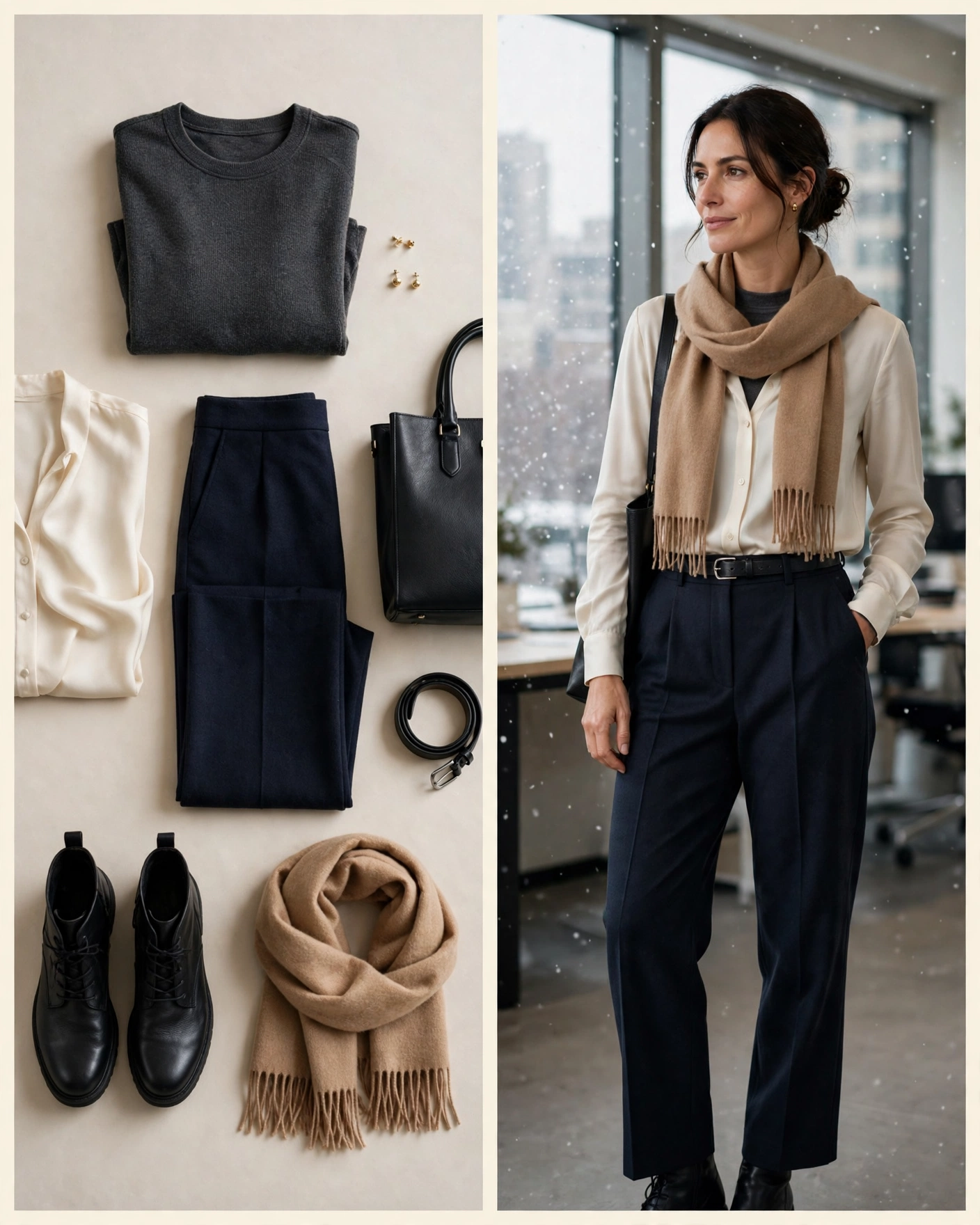
Every warm outfit starts with a layer nobody sees. A fitted merino or heat-tech thermal crew — in black, charcoal or a skin-tone neutral — sits flat against the body, traps warmth and disappears completely under a blouse or fine knit, with no bunching at the sleeves or waistband. Choose a scoop or crew neckline that stays below your top layer’s neckline, and size it close rather than loose: air gaps are what make base layers feel cold and look lumpy. Styled here under a cream silk blouse with navy trousers, it is the reason the whole outfit can stay light on top.
Layer Two: The Fine Knit That Traps the Heat
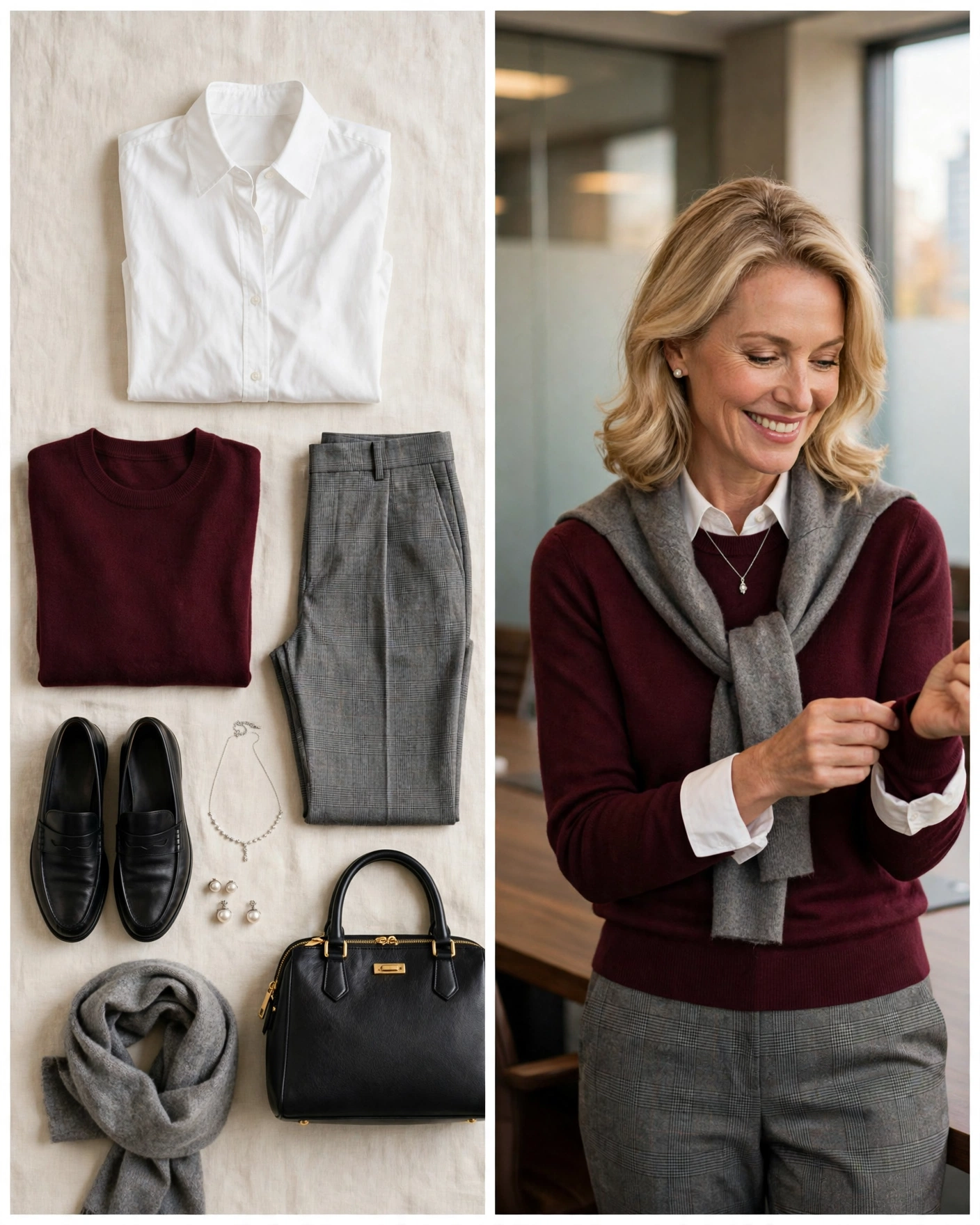
The middle layer is where the actual insulation happens, and fine gauges do it best. A merino, cashmere-blend or heat-retaining knit in a slim fit adds serious warmth at a fraction of a chunky sweater’s bulk, and it slides cleanly under blazers without fighting for room in the sleeves. Wear it solo with the collar and cuffs of a shirt showing underneath for a deliberate, styled edge, and keep the fit close — the insulation layer should skim, never sag. Burgundy over a white shirt with grey plaid trousers is the classic version of this layer at work.
Layer Three: The Structure Layer That Makes It Look Professional
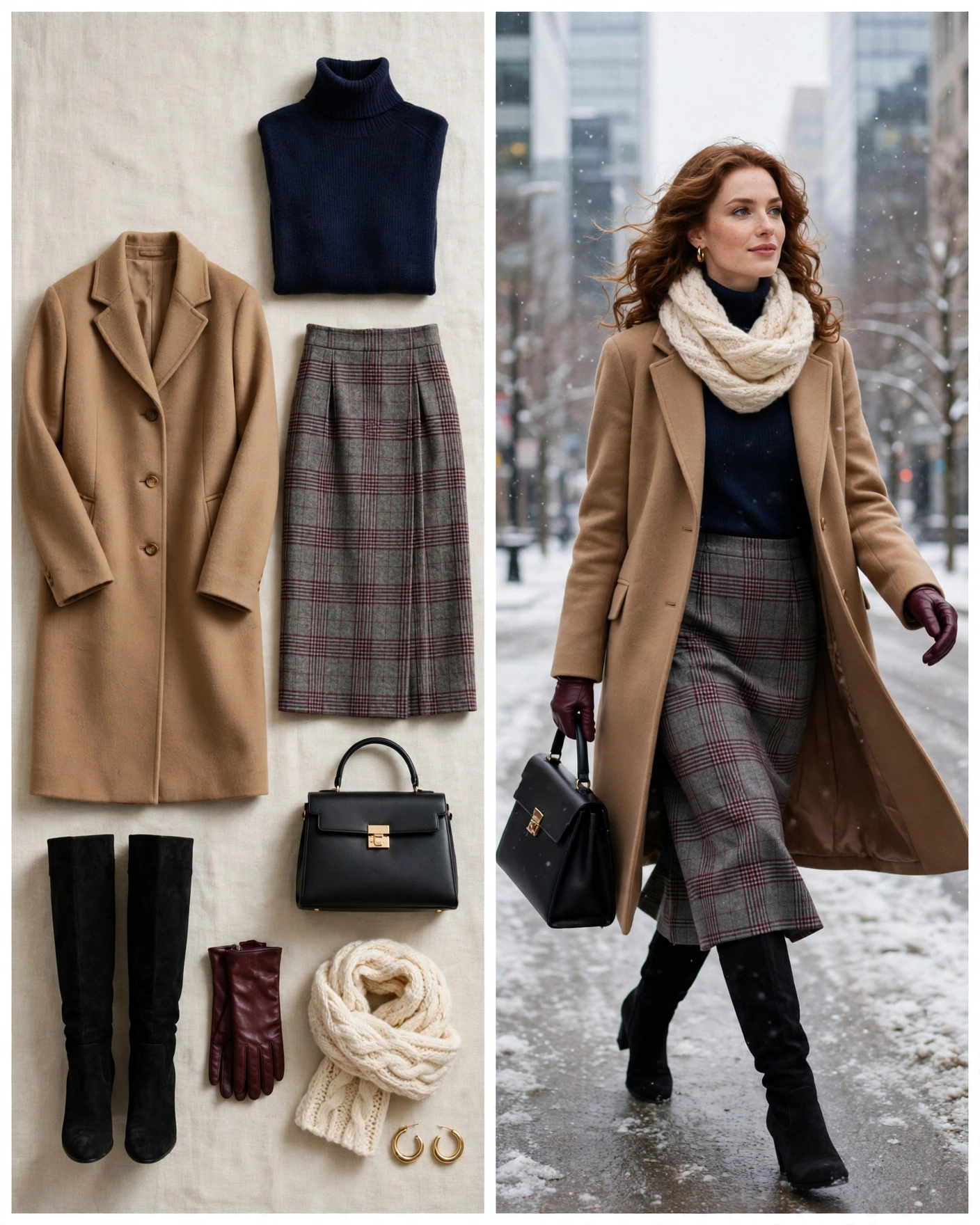
The outer layer is what the room actually sees, so it carries the professionalism: a tailored blazer for the desk, a long wool coat for the commute, or both. Structure on top is what stops two warm layers underneath from reading as bundled up — sharp shoulders and a clean front line make everything below look intentional. Match the coat length to your outfit: long coats over midi skirts and dresses, blazers and shorter coats over trousers. A camel wool coat over a navy turtleneck and plaid midi skirt shows how polish and warmth stop being a trade-off.
The Formula on a Dress: Base, Knit, Blazer
Dresses layer beautifully once you treat the dress itself as the middle layer. Start with fleece-lined tights and, on the coldest days, a thermal camisole underneath; then add the dress — a ribbed knit midi in deep green is warm enough to count as insulation on its own. Finish with a tailored blazer for structure and knee-high boots, which close the gap between hem and shoe so no strip of cold leg is left exposed. The result reads as one elegant outfit, not three layers of survival gear.

The Formula on Trousers: Thermal, Turtleneck, Long Coat
Trousers take the formula just as easily, and this is the version to copy for sub-zero commutes. Thermal leggings slide invisibly under wide-leg or straight trousers — choose a pair with a smooth waistband so nothing digs in or shows through. On top, a cream merino turtleneck does the insulating, and a long grey wool coat supplies the structure, falling past the trouser break for one unbroken line. Black ankle boots, gloves and a plaid scarf finish it: three layers, zero bulk, ready for a boardroom.

Layering Mistakes That Add Bulk — and the Sleek Fixes
Most layering fails are small: a chunky knit stuffed under a blazer so the shoulders bulge, three necklines competing at the throat, or a thick layer worn over a thin one so everything wrinkles and rides up. The fixes are just as small — thinnest layer closest to the skin, one neckline visible at a time, and every layer able to come off without ruining the outfit underneath. The black turtleneck under a burgundy blazer here shows the corrected version: smooth shoulders, a single clean neckline, and nothing to adjust all day. If you can raise your arms and sit down without tugging at anything, the layering is right.

In Summary
Three layers, three jobs: the base warms, the knit insulates, the structure polishes. Once you build outfits in that order — thinnest against the skin, tailored on top — winter dressing stops being a compromise between shivering at the bus stop and sweating through the meeting.
Start with one base layer you trust and one long coat that goes over everything, and the rest of your wardrobe falls into place around them. Warm, sleek and office-ready is not about owning more clothes; it is about stacking the ones you have in the right order.