Boots are the hardest-working shoes in a winter work wardrobe, but pairing them with a skirt or dress is where most outfits quietly fall apart. The boots are fine, the dress is fine — it is the few centimetres between the hem and the boot top that decide whether the look reads polished or accidental.
The good news is that the rules are simple and completely learnable. Once you know how much leg should show (and when the answer is none), which boot heights flatter which hemlines, and how tights can glue the whole combination together, you can build a dozen office outfits from pieces you already own.
This guide walks through the six pairings that cover almost every workplace, from boardroom-formal to casual Friday. Each one shows the complete outfit — skirt or dress, boots, tights and layers — so you can copy the proportions exactly.
Start with the no-gap rule in the first section; it alone fixes the most common mistake. Then adjust the boot height, heel and colour to your office dress code, and winter mornings get a lot simpler.
Knee-High Boots and Midi Skirts: Follow the No-Gap Rule
The most reliable skirt-and-boots formula in winter is also the simplest: the hem of a midi skirt should meet or overlap the top of a knee-high boot, with no band of leg or tights showing in between. That unbroken line from waist to toe looks intentional, keeps you warm, and removes the awkward “where does the skirt end?” question entirely. Choose a skirt that falls at least two inches below the boot’s top edge, and add opaque tights underneath for insulation rather than for show. A burgundy plaid wool midi skirt with a charcoal turtleneck, black knee-high boots and a structured tote is the version that works in almost any office.

Ankle Boots With Knee-Length Dresses: When a Small Gap Works
A gap is not always wrong — with a knee-length dress and ankle boots, a short stretch of leg is exactly what keeps the outfit looking light instead of bottom-heavy. The rule is proportion: the dress should end at or just above the knee, and the visible gap should stay modest, roughly two to four inches, so the ankle boot reads as a deliberate shoe choice rather than a shrug. Keep the tights sheer or skin-toned in formal offices, or skip them on milder days; heavy black opaques can chop the leg line at this length. A navy wrap dress with camel suede ankle boots, a long camel coat and a gold pendant shows the balanced version — polished, warm enough, and easy to walk in.

Chelsea Boots and Pencil Skirts for Conservative Offices
In a strict dress code, the Chelsea boot is your safest ankle boot: sleek, laceless and close-fitting, it reads almost like a dress shoe, especially in smooth black leather. The styling detail that matters is the shaft — it should sit snugly against the ankle and slip cleanly under or just meet the hem of a knee-length pencil skirt, never bunching against the fabric. Pair it with opaque tights in the same black so the boot, leg and skirt form one continuous column, and keep the top half classic. A charcoal pencil skirt, cream silk blouse and black blazer over black Chelsea boots passes in law firms, finance floors and any office where trainers would raise eyebrows.

Heeled Boots With Wrap Dresses for a Longer Leg Line
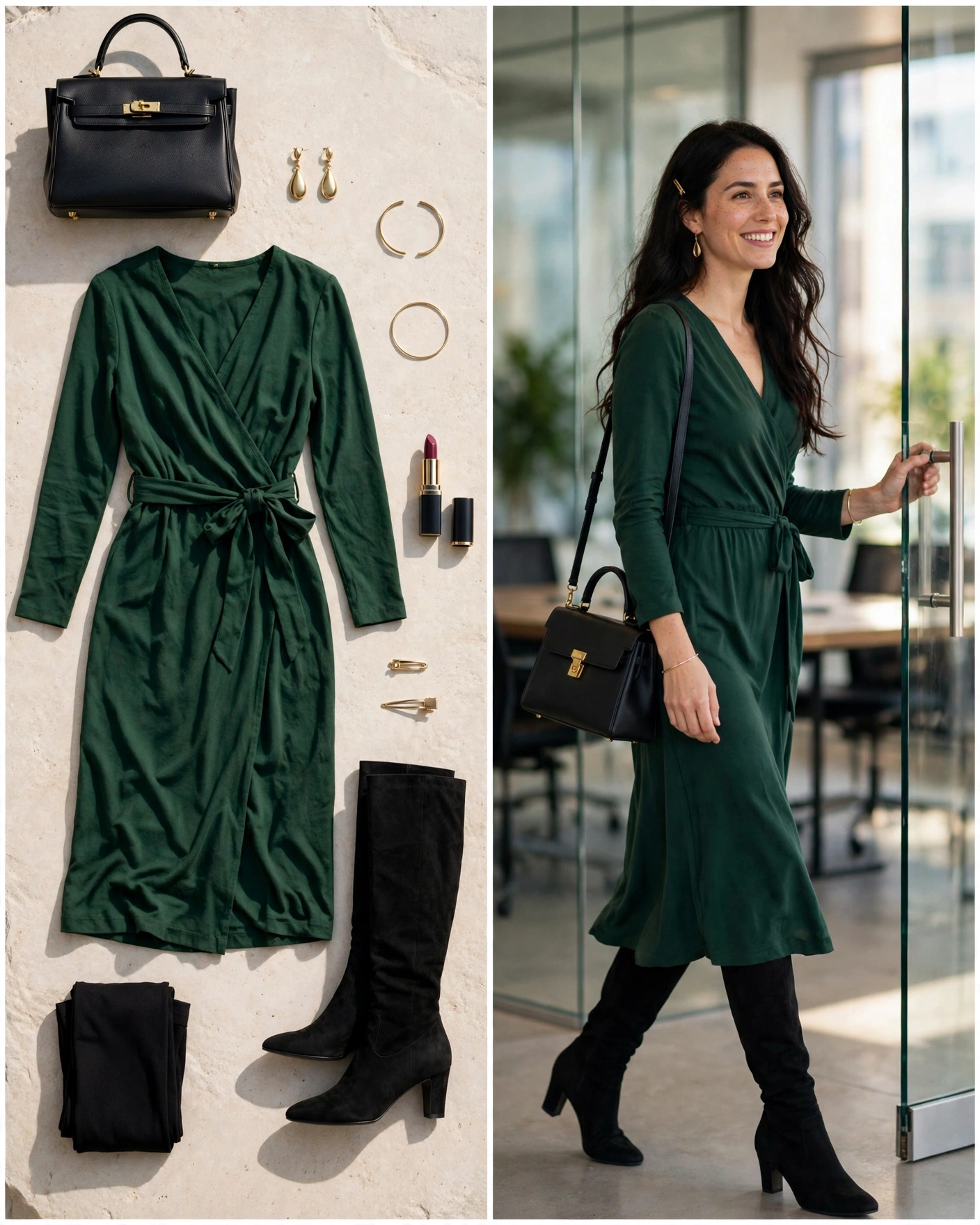
When you want height and polish together, a heeled knee-high boot under a wrap dress is the strongest combination in this guide. The wrap neckline and defined waist already lengthen the torso; a slim heel of two to three inches continues that line downward, and because the midi hem overlaps the boot top, there is no break anywhere from shoulder to toe. Keep the boot shaft slim and the heel walkable — a block or sculpted heel, not a stiletto — and match the boot colour to the dress’s darkest tone so nothing competes. A deep green wrap midi dress with black heeled knee-high boots, gold drop earrings and a structured bag is client-meeting ready in under five minutes.
Flat Riding Boots With Sweater Dresses for Casual Fridays
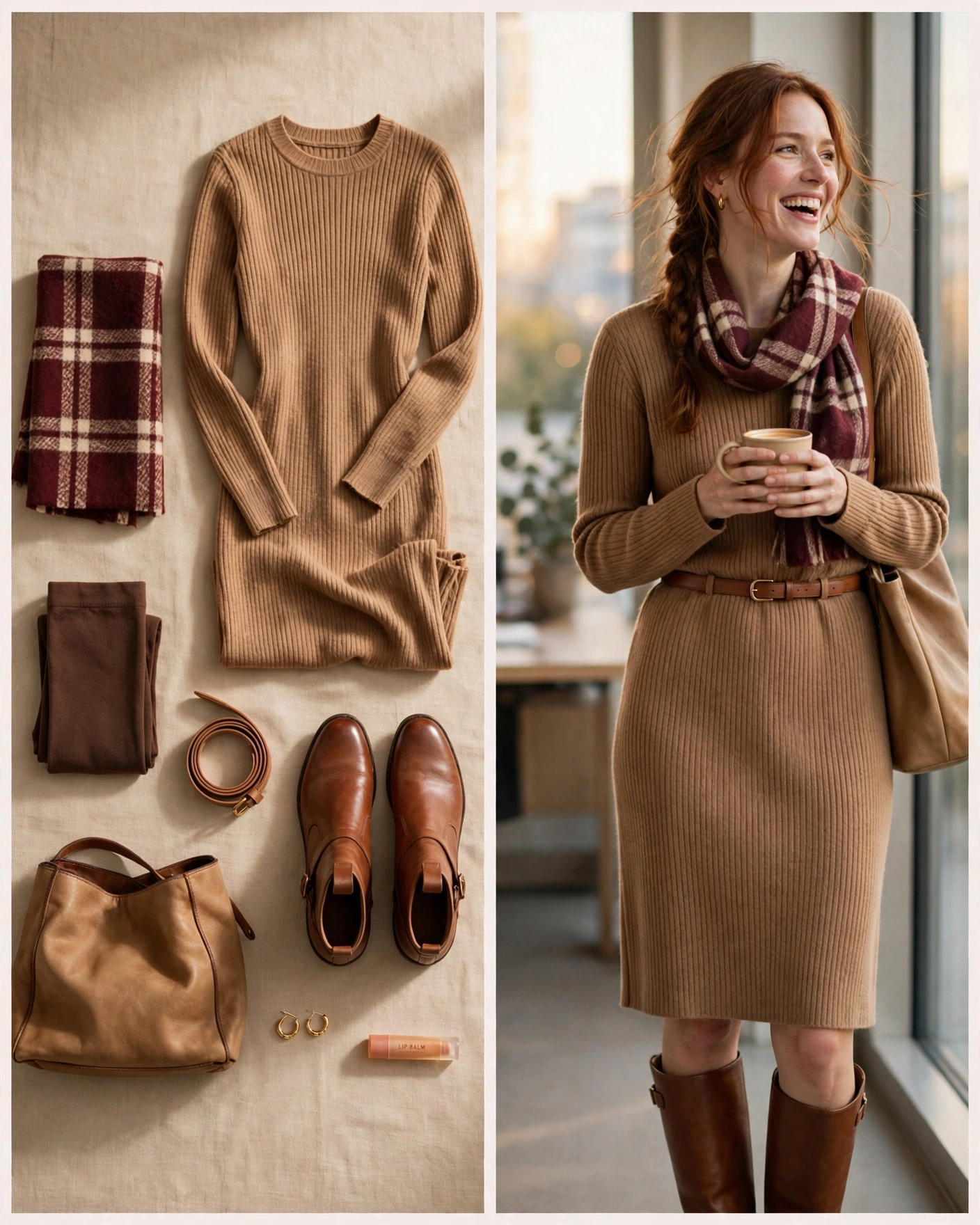
A flat riding boot is the comfortable end of the spectrum, and a sweater dress is its natural partner — both are relaxed, structured enough to stay office-safe, and warm without a single extra layer decision. Keep the same no-gap rule as the first section: the dress should land at the knee or just below, meeting the top of the boot, and a belt at the waist stops the knit from reading shapeless. Choose riding boots with minimal hardware and a clean toe so they stay smart rather than equestrian costume. A camel sweater dress, cognac-brown flat riding boots, a plaid scarf and a roomy tote handle a full casual-Friday schedule, commute included.
Match Your Tights to Your Boots to Lengthen the Leg Line
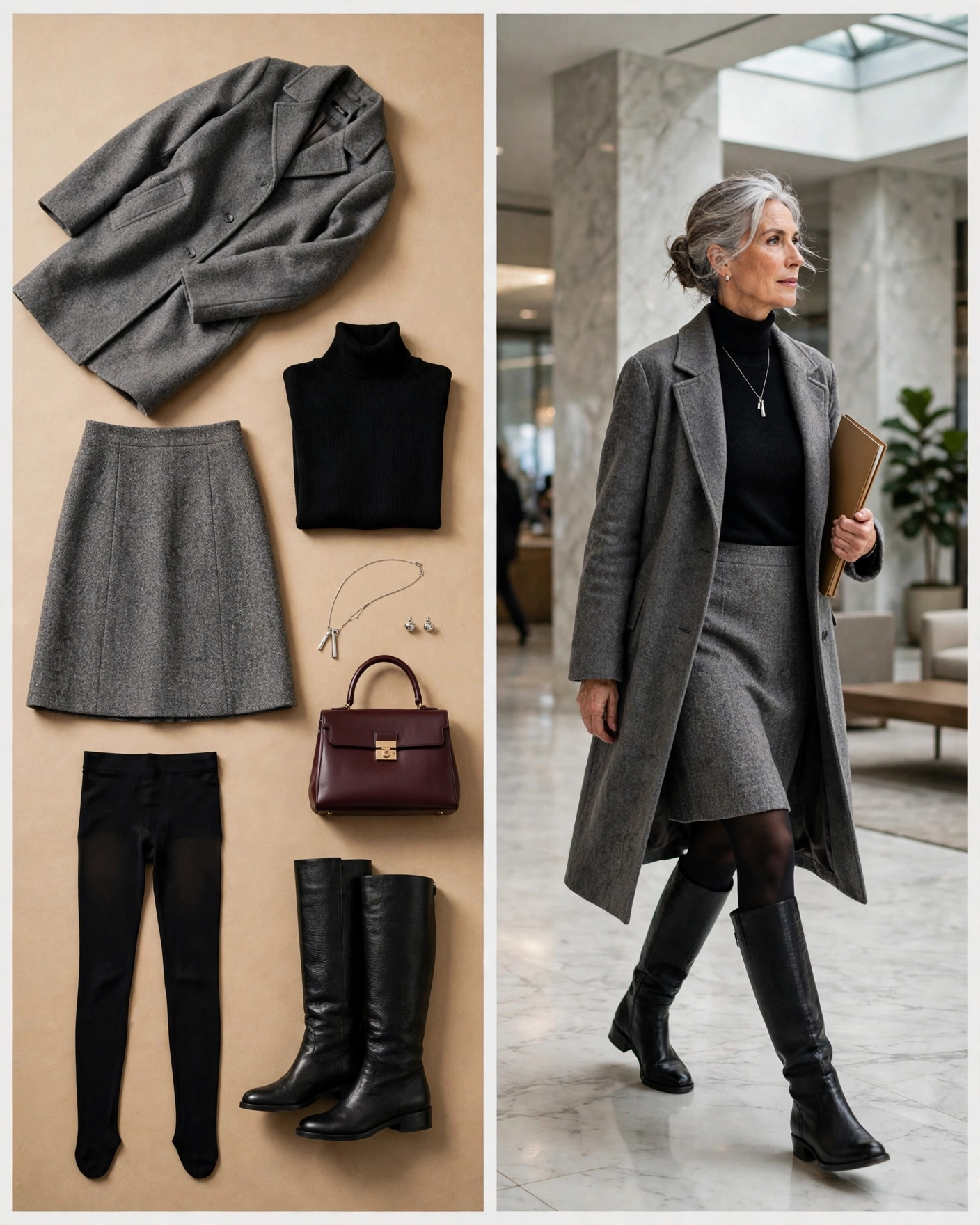
The final trick costs nothing and fixes dozens of outfits: wear tights in the same colour family as your boots. Black opaques running into black knee-high boots create one unbroken column of colour, so the eye never finds a stopping point and the legs look noticeably longer — it also makes shorter skirts office-safe, because the coverage reads as part of the boot. The same logic works in brown with brown boots or navy with navy boots, and it is the easiest way to rescue an ankle boot pairing that feels choppy: just close the colour gap. A grey tweed skirt, black turtleneck and a burgundy bag for contrast show how deliberate the all-black leg line looks.
In Summary
Boots with a skirt or dress at work comes down to three decisions: the gap, the height and the colour. Let midi hems overlap knee-high boots, keep the gap small and intentional with ankle boots and knee-length dresses, and match your tights to your boots whenever you want the longest, cleanest leg line.
None of these pairings needs new shopping to start — a plaid midi skirt, a wrap dress, a sweater dress and one good pair each of knee-high and ankle boots will cover a full working week. Check the proportions in a full-length mirror before you leave, especially hem against boot top, and the outfit will take care of itself.
So stop saving your skirts and dresses for spring. With the right boots under them, they are the warmest, sharpest thing in your winter work wardrobe — and now you know exactly how to prove it.