A winter work coat is the most expensive item in your wardrobe and the first thing people see — in the lobby, on the platform, in the client car park. It has to keep you genuinely warm on the commute and still look like it belongs in a boardroom at nine in the morning.
The good news is that choosing one is mostly a checklist, not a talent. Fabric, length and fit do the heavy lifting, and once those three are right, silhouette, colour and details become straightforward decisions rather than gambles.
This guide walks through all six checks in the order a good sales assistant would use, and for each one it shows a complete work outfit built around a coat that gets that check right — so you can see the rule working, not just read it.
Whether you are buying your first serious coat or replacing one that never quite worked, take the checks in order. By the end you will know exactly what to look for on the label, in the mirror and at the till.
Start With Fabric: The Wool Percentages That Actually Keep You Warm
The label decides the warmth, so read it before you look in the mirror. Aim for at least 70 percent wool in the shell: a wool-cashmere blend with 5–15 percent cashmere feels softer against the neck, while 20–30 percent nylon in the mix adds durability without killing insulation. Steer clear of coats under 50 percent wool marketed as “wool-look” — they pill fast, crease badly and let the wind straight through. Heavier cloth, around 500–600 gsm, suits deep-winter commutes, while a mid-weight 350–450 gsm coat layers more happily over blazers in milder cities.
Pick a Length That Works With Your Hemlines and Your Commute
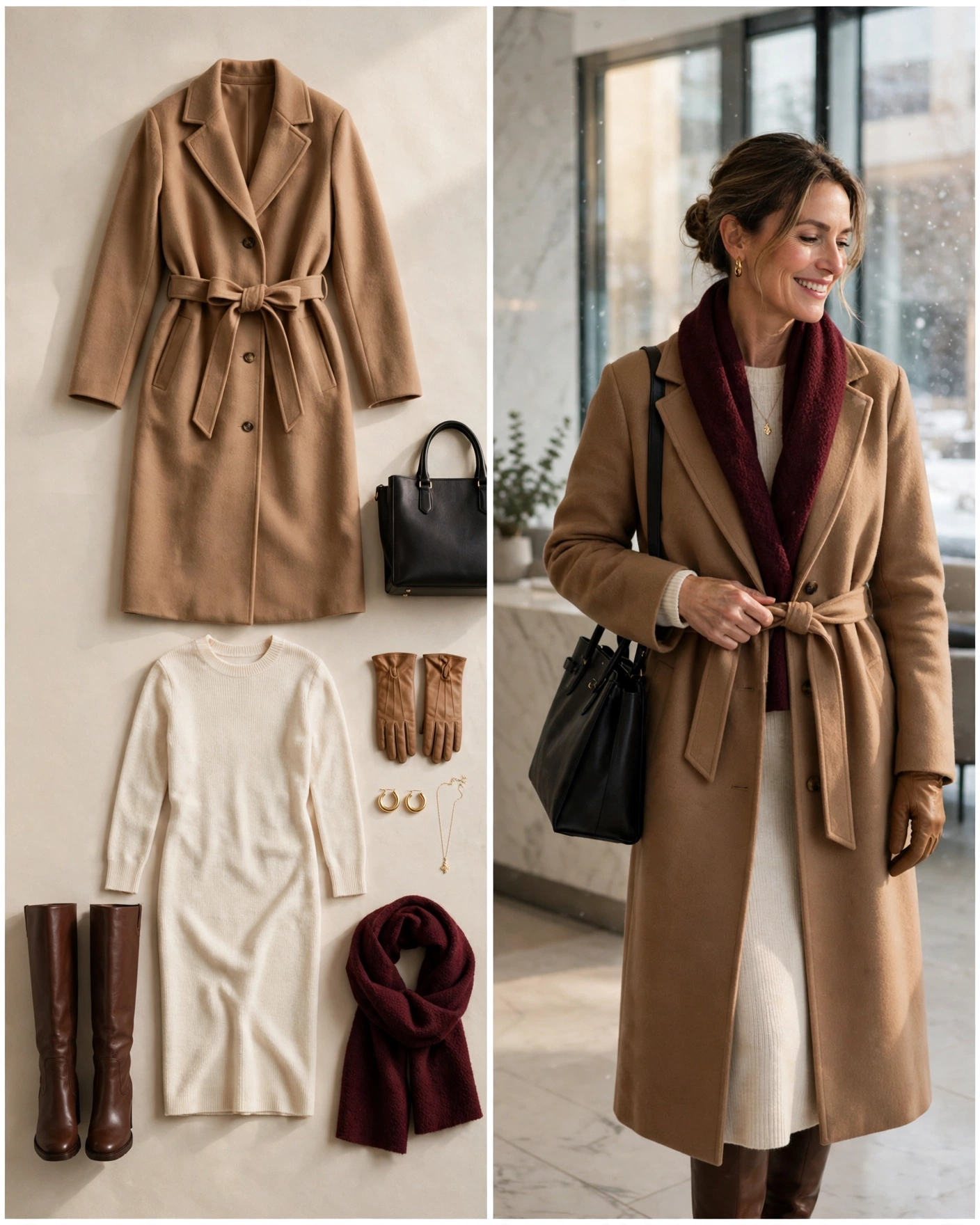
Length is a proportion decision: your coat should either fully cover your longest work dress or skirt hem, or end at least a hand’s width above it — a hemline peeking out untidily underneath is the most common coat mistake there is. Knee-length coats are the safest all-rounders, midi and maxi lengths read more polished and keep your legs warm on platform waits, and cropped styles only work if your commute is door-to-door by car. If you cycle, drive or climb station stairs all day, choose a length with a back vent or side slits so the coat moves with you instead of fighting you.

Run the Fit Checks: Shoulders, Layering Room and the Sit-Down Test
Fit is tested in motion, not standing still in front of a mirror. The shoulder seam should sit exactly on your shoulder bone — if it droops, the whole coat reads borrowed — and you must be able to hug, reach a high shelf and button the coat while seated without the front pulling or the vent kicking open. Always try it on over your thickest blazer: you want roughly two fingers of ease through the chest, and sleeves long enough to cover the blazer cuff but not swallow your hands. If you fall between sizes in a tailored style, size up and let a tailor take in the waist rather than strangling the shoulders.
Match the Silhouette to Your Office Dress Code
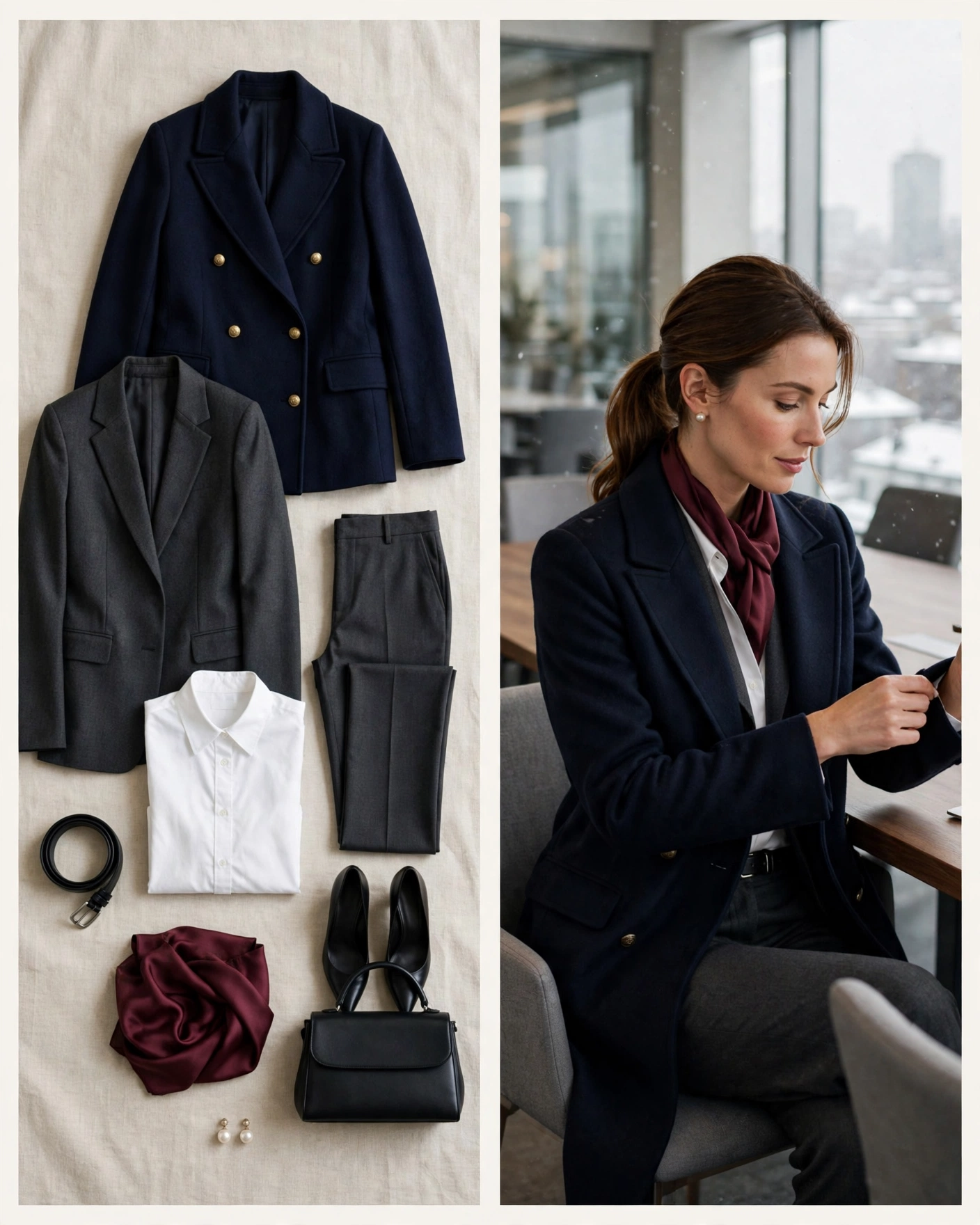
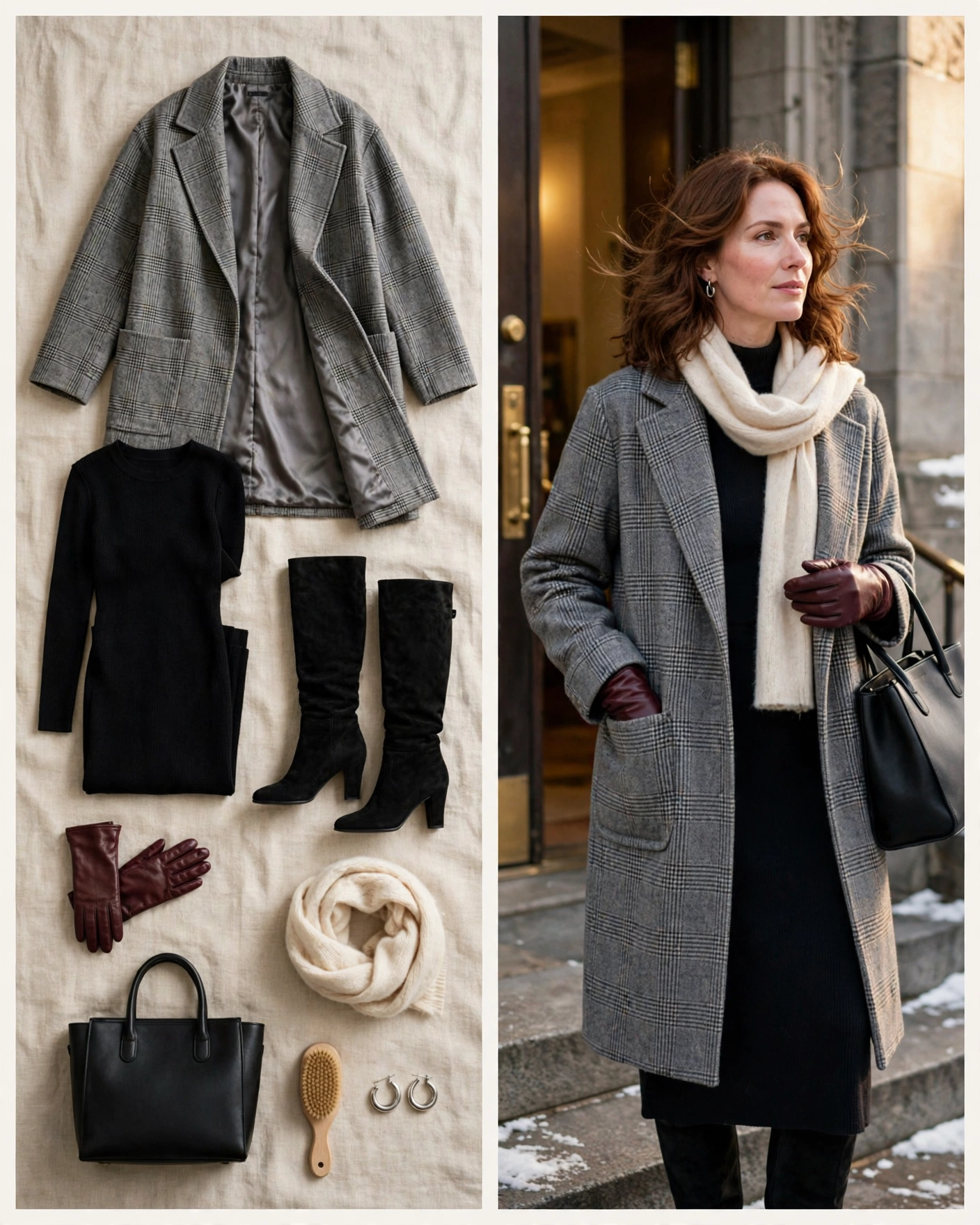
Silhouette signals the dress code before you say a word. Formal offices suit structured shapes — a tailored wrap coat, a clean double-breasted or a straight single-breasted in a smooth cloth — worn in navy, charcoal or black. Business-casual floors allow softer structure: cocoon cuts, relaxed shoulders and textured weaves like plaid or herringbone. Whatever your code, one rule holds: the coat must look like it belongs with the outfit underneath, so match its formality to your most formal weekly outfit, not your most relaxed one.

Choose a Colour That Carries Your Whole Work Wardrobe
Your first serious work coat should be the colour that disappears into everything: camel flatters cream, burgundy and navy; charcoal and navy pair with almost every suiting colour; black is the sharpest of all but shows lint, salt marks and pet hair the fastest. Once that anchor exists, a second coat in burgundy, deep green or a muted plaid adds variety without a single clash. Whichever colour you choose, test it against your everyday work shoes and bag — if the coat fights the accessories you actually own, you will quietly stop reaching for it by January.

Check the Finishing Details: Lining, Pockets, Closures and Care
The details decide whether a coat survives five winters or one. A full lining — ideally viscose or cupro rather than scratchy polyester — lets the coat glide over knits and stops the static cling that ruins a skirt underneath. Pockets should be deep enough for gloves and sit where your hands naturally fall, closures should fasten securely without gapping, and spare buttons plus firm stitching at the vent and cuffs are quiet signs of real quality. Care matters just as much: rest wool coats for 24 hours between wears, brush off snow before it soaks in, and store yours on a wide shouldered hanger so the shape you paid for is the shape you keep.
In Summary
Choose the fabric first — at least 70 percent wool — then a length that respects your hemlines, then prove the fit by sitting, reaching and buttoning the coat over your thickest blazer. Silhouette, colour and finishing details come after, and they are far easier decisions once the foundations are right.
A work coat bought this way stops being a seasonal purchase and becomes infrastructure: it carries every outfit from November to March, survives five winters of commuting, and still looks deliberate in every entrance you make.
So try coats on properly, in your real work clothes, and be fussy about the label and the sit-down test. The right coat exists at almost every budget — it is simply the one that passes all six checks.