A winter dress is only ever as workable as the tights underneath it. The same navy wrap dress can look boardroom-ready in matte black opaques, underdressed in a shiny pair that reads as leggings, or quietly expensive in a 20-denier sheer — and it can feel warm at the bus stop or miserable by the time you reach your desk, depending on one small number on the packet.
Opaque versus sheer is not really a style preference. It is a practical decision about warmth, formality and proportion, and once you know how denier works you can make it in about five seconds every morning.
This guide decodes the numbers first, then walks through the five tights a working wardrobe actually needs — the opaque workhorse, the formal sheer, the fleece-lined commute pair, tasteful colour and texture — and finishes with the matching rule that makes your legs look one long, unbroken line.
Every outfit is shown full-length, tights and footwear together, because that is how the combination is judged in real life. Pick the sections that match your office and your weather, and winter dresses stop being the complicated option.
Denier Decoded: What the Numbers on the Packet Really Mean
Denier is simply a measure of how thick and heavy the yarn is, and it decides both how much skin shows through and how much warmth you get. Tights from 10 to 30 denier are sheer: your skin is clearly visible beneath a tinted veil, the finish is formal, and the insulation is close to zero. From 40 to 60 denier you are in semi-opaque territory — the leg is covered but a hint of skin softens the colour — while 80 denier and above is fully opaque, matte and genuinely warming. Match the denier to the weight of the dress as well as the weather: a chunky knit dress over 15-denier sheers looks unbalanced, while a fine crepe dress disappears under the heaviest fleece tights. Keep one pair in each band and you can answer almost any morning.

Black Opaque Tights: The Winter Workhorse
If you buy one pair, make it black opaques at 80 to 100 denier. At that weight the finish is properly matte — no shine, no show-through — so your legs read as one clean, covered line that works under knit dresses, sweater dresses and wool shifts alike, and pairs with ankle boots, knee-high boots or loafers without a second thought. The details matter: choose a pair with a smooth waistband that will not dig in under a fitted dress, and avoid lycra-heavy opaques with a glossy sheen, which read as gym leggings and cheapen the whole outfit. When opaques start to fade to a washed-out grey-black at the knees, replace them — fresh deep black is what makes the look expensive.
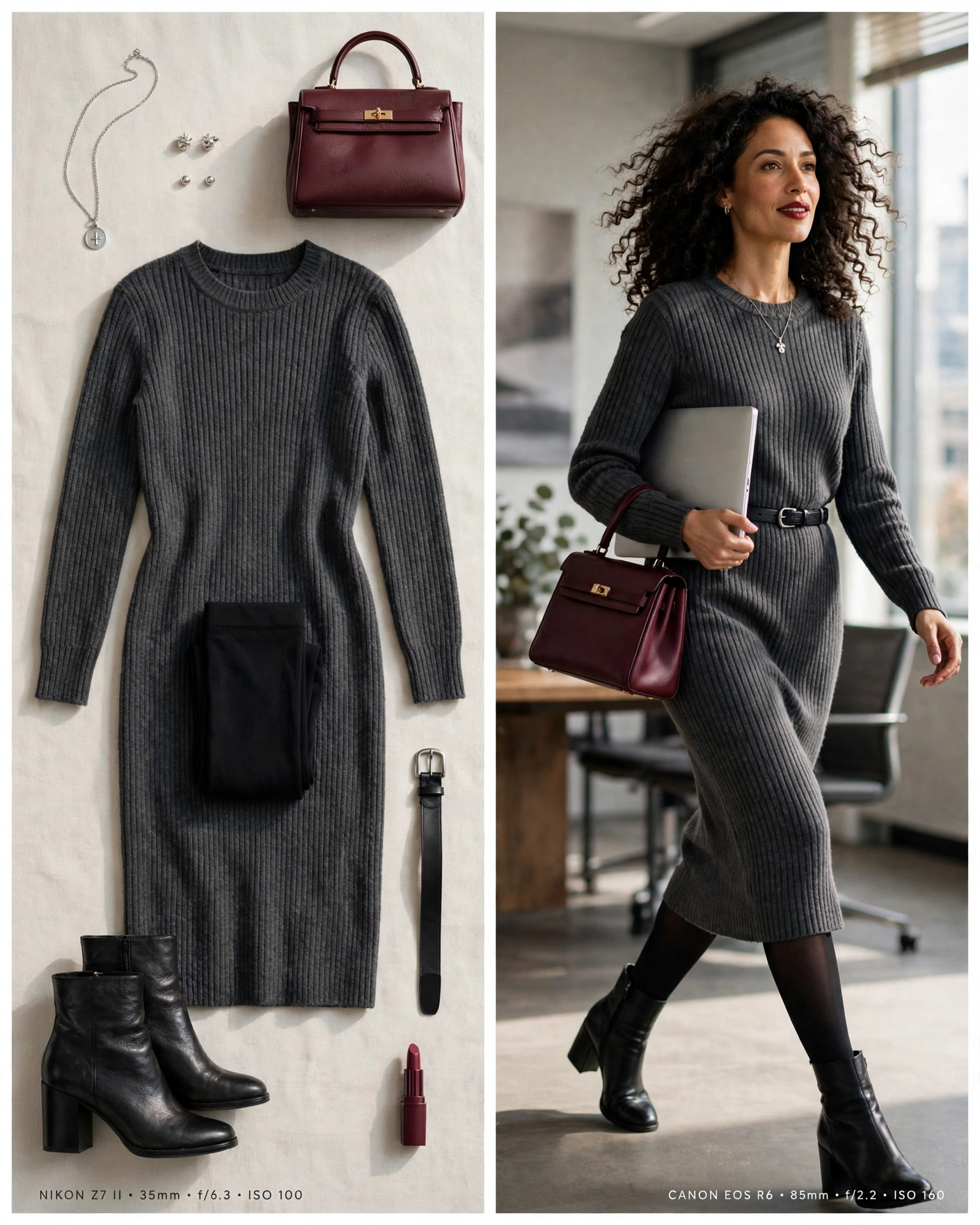
Sheer Tights for Formal Offices and After-Work Events
Sheers still own one territory completely: formal dress codes and evening plans. A 15 to 20 denier black sheer lays a barely-there veil over the leg — no real warmth, but a finished, polished look that bare legs in January cannot match — and it is the only tight that sits correctly under a tailored sheath dress with classic pumps. Choose a matte sheer rather than a glossy one, which can look dated under office lighting, and treat them as the fragile item they are: a spare pair in your desk drawer is standard practice, because one ladder at 9 a.m. undermines an otherwise perfect outfit. For client dinners and work events that run past six, this is the pair that keeps a winter dress elegant instead of cosy.
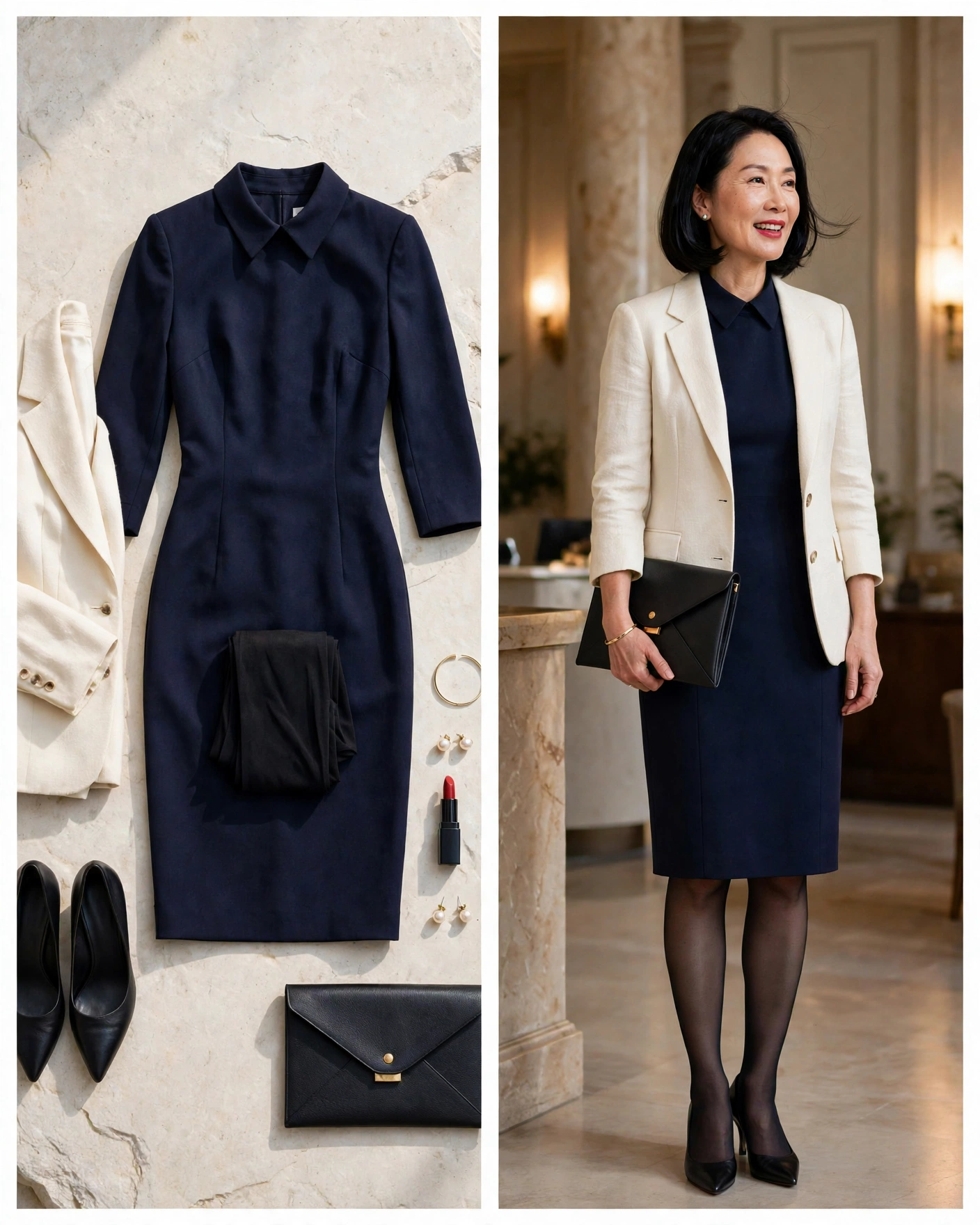
Fleece-Lined Tights for Freezing Commutes
Fleece-lined tights are the honest answer to the coldest mornings: they look exactly like ordinary black opaques from the outside, but a soft brushed-fleece interior — usually sold around a 200-denier feel — traps warmth like a pair of trousers, so a sweater dress stays a realistic option at minus five. They are the right choice for snowy commutes, draughty platforms and offices that never quite heat up, especially under knee-high boots, where the double layer at the calf goes completely unnoticed. One sizing tip makes all the difference: size up if you are between sizes, because fleece tights stretched too tight go shiny at the knee and lose both their matte finish and their warmth. Nobody at work will know your secret — they will just wonder why you are not cold.

Coloured and Textured Tights, Done Tastefully
Colour works at the office when it whispers. Burgundy, charcoal, deep green and dark navy tights in an opaque 60 to 80 denier read as a deliberate part of the outfit rather than a statement, especially when they pick up a tone already present in your dress, coat or shoes. Subtle textures play by the same rule: a fine rib or a gentle herringbone adds interest and a hint of extra warmth under a plain shift dress, while bold patterns, bright primaries and anything sparkly belong outside conservative offices. The safest formula is one coloured element per outfit — burgundy ribbed tights with a grey dress and black boots, charcoal tights under a deep green knit — and everything else kept quiet. Done this way, coloured tights make winter dresses feel styled rather than merely survived.
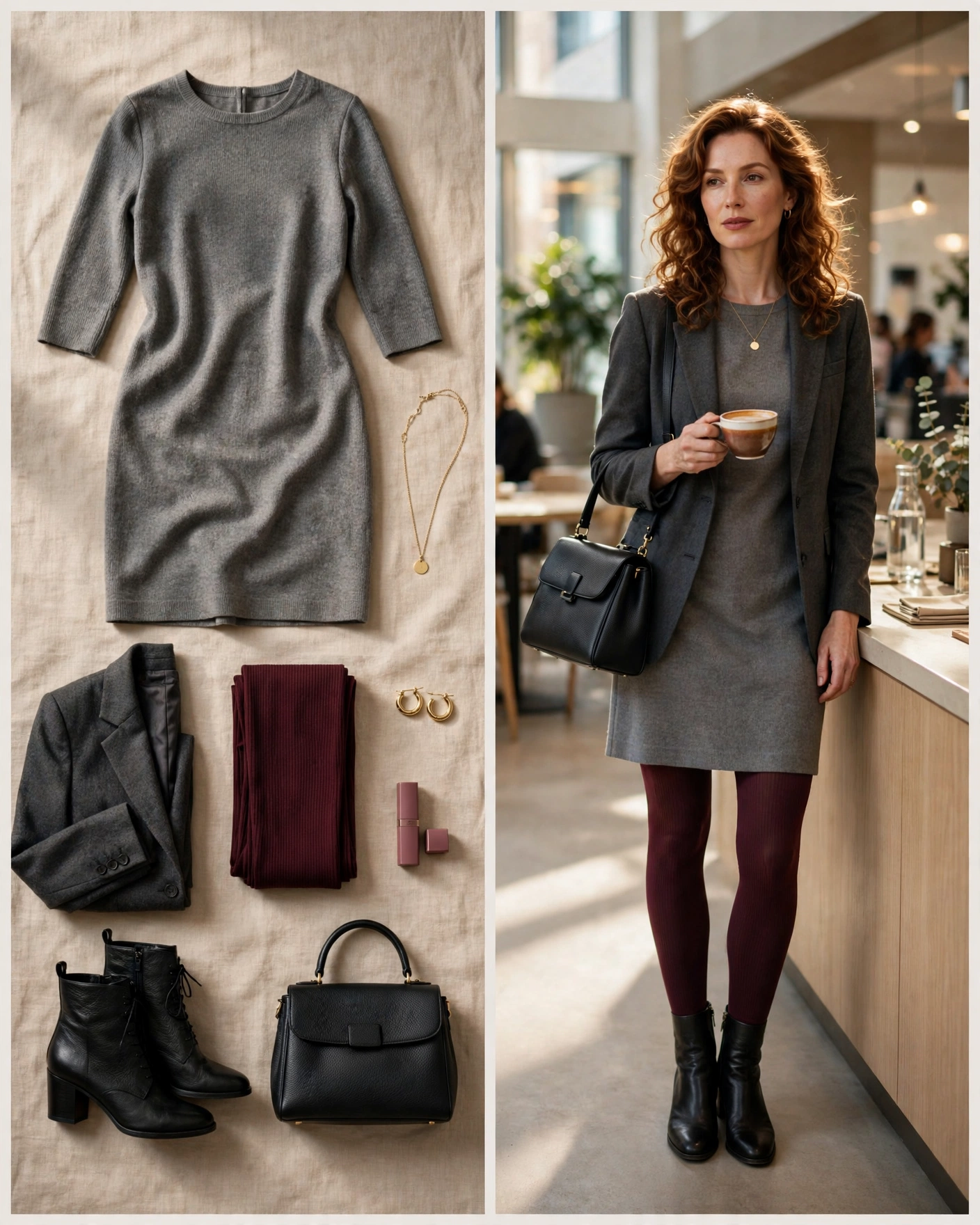
Match Your Tights to Your Boots and Shoes for One Long Leg Line
The finishing rule is the simplest one on this page: when your tights and your footwear share a colour, your legs read as one unbroken line from hem to toe, and you look taller and more deliberate for it. Black opaque tights disappearing into black knee-high boots is the classic version — it works under almost any winter dress and hides the awkward hem-to-boot gap completely. With ankle boots, make sure the tights meet the top of the boot with no band of bare skin in between, which in January looks like a mistake rather than a choice. Lighter shoes need a bridge instead: nude or pale pumps pair with sheer tights that soften the transition, while a deliberate contrast — burgundy tights with black boots, say — works when the tights clearly echo another colour in the outfit. Match first, contrast on purpose, and never let the leg line break by accident.
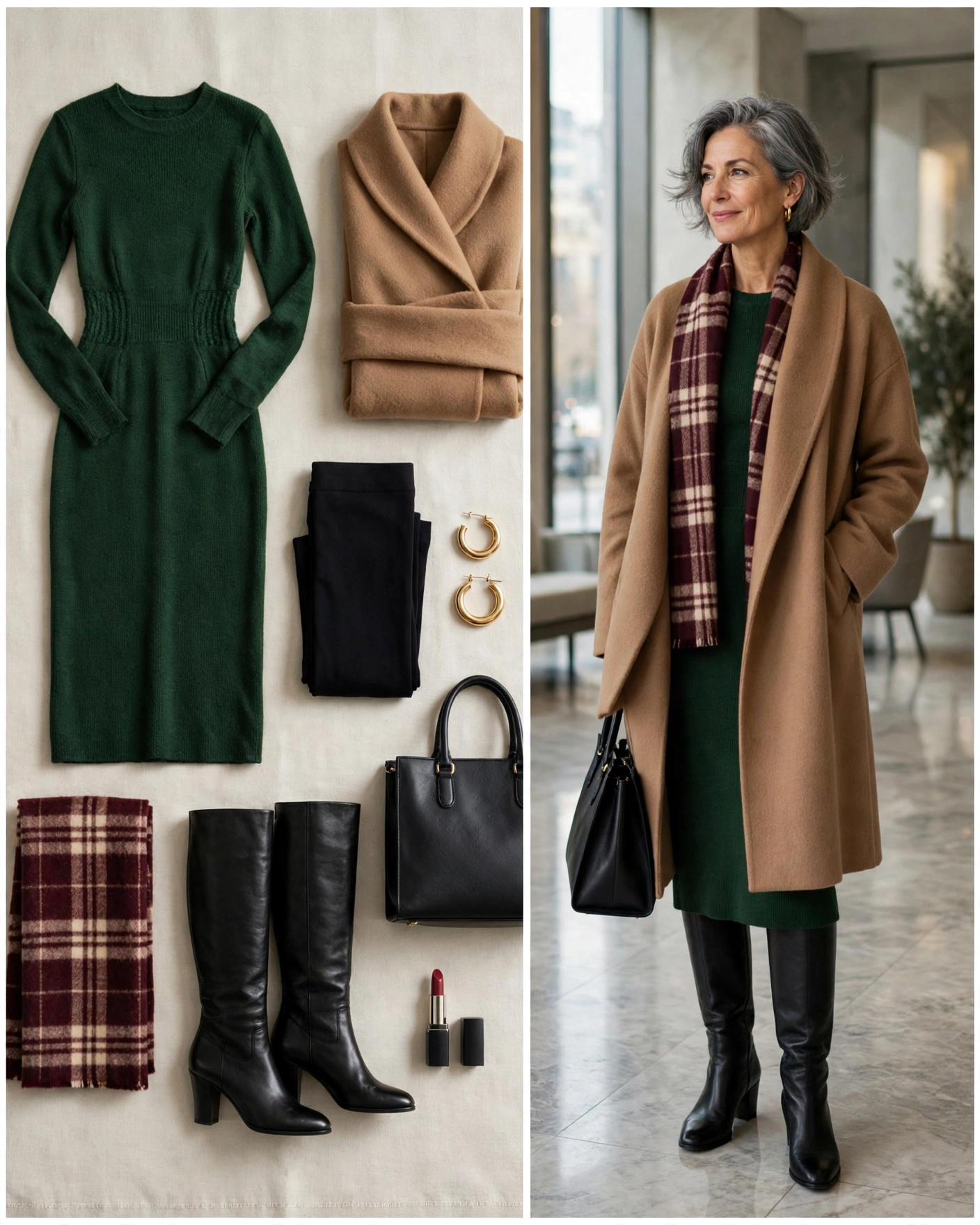
In Summary
Tights are not an afterthought — they are the decision that makes winter dresses work. Decode the denier (sheer at 10 to 30, semi-opaque at 40 to 60, fully opaque at 80 and above), reach for black opaques on ordinary cold days, fleece-lined pairs when the commute turns serious, and sheers when the dress code or the evening turns formal.
Add colour and texture carefully — burgundy, charcoal, a fine rib — and finish every outfit by matching your tights to your boots or shoes so the leg line runs unbroken from hem to toe. Those two habits alone will make every dress you already own look more polished.
So stock the small drawer properly: one sheer, one semi-opaque, one opaque, one fleece-lined, one coloured. Five pairs, every winter dress in your wardrobe back in rotation, and no more standing in front of the mirror wondering why the outfit looks almost right.