There is a particular winter betrayal every skirt wearer knows: the outfit leaves the house hanging perfectly, and by the time you reach your desk the hem is wrapped around your tights, the lining is riding up, and every step produces a faint crackle and a fresh cling. You spend the day peeling fabric off your legs in corridors and smoothing your skirt down before every meeting, feeling scruffy in an outfit that was immaculate an hour ago.
Static is not bad luck — it is physics with a wardrobe. Dry heated air, friction between synthetic fabrics, and tights rubbing against a skirt build up an electrical charge, and the charged fabric reaches for the nearest surface, which is usually your legs. Once you understand that the problem is charge plus contact, the fixes become obvious: separate the fabrics, choose fibres that refuse to charge, and drain the static away before it builds.
This guide walks through six fixes, from the half-slip your grandmother swore by to the safety pin stylists hide inside hems, and each one comes with a complete winter work outfit that stays smooth and polished from the morning commute to the last meeting. The palette is the classic work one — camel, charcoal, navy, burgundy, cream, black, grey and plaid — because an anti-static system should disappear into a wardrobe you already own.
Put two or three of these moves together and the crackle disappears. Skirts fall straight, dresses hang the way they did in the shop, and you can forget your hem entirely — which is exactly what a good outfit is supposed to let you do.
Start With a Half-Slip Under Every Skirt
The half-slip is the oldest anti-static device in existence, and it still works better than any spray: a smooth satin or silk layer worn between your skirt and your tights means the two cling-prone fabrics never touch or rub, and static needs that friction to build. Choose a slip two or three inches shorter than your skirt hem, in a static-resistant satin rather than a cheap nylon that charges on its own, and check in the mirror that it stays hidden when you sit. It takes ten seconds to put on and quietly solves the problem for the entire day. A burgundy wool pencil skirt worn over an ivory satin half-slip, with a cream fine-knit sweater, opaque tights and heeled ankle boots, glides over the legs instead of wrapping around them — in the boardroom, on the stairs and everywhere in between.

Build Outfits Around Natural Fibres, Not Synthetics
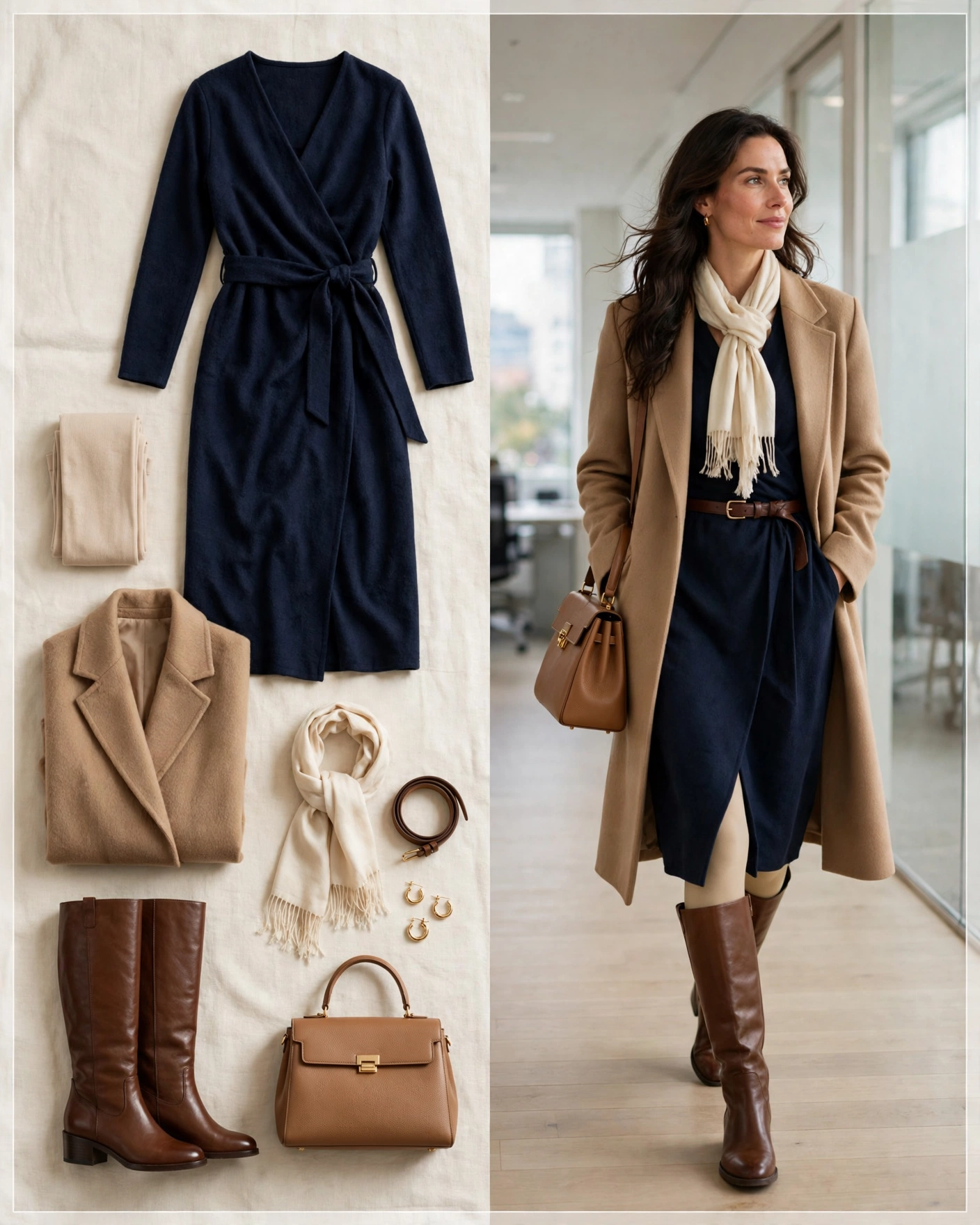
Most static is a fabric-shopping problem long before it is a dressing problem. Polyester, acrylic and cheap nylon build a charge quickly and hold onto it, while wool, cotton, silk and good-quality viscose stay electrically calm and let any small charge dissipate. Read labels the way you read prices: choose wool and wool-blend skirts and dresses, cotton-rich tights instead of fully synthetic ones, and silk or cotton-blend linings, and the outfit starts the day with almost nothing to cling with. You do not need a new wardrobe — just a bias toward natural fibres every time a piece is replaced. A navy wool wrap dress with cotton-blend opaque tights, a cream silk scarf and a long camel wool coat is naturally low-static from collar to hem, and it hangs as smoothly at five in the evening as it did at nine in the morning.
Smooth the Layer Between Skin, Tights and Dress
Cling is at its worst where three dry surfaces meet — skin, tights and dress — so smoothing that stack of layers is half the battle. Moisturise your legs properly in the morning, because dry skin increases friction and friction is what generates the charge, and let the lotion sink in before the tights go on. Then choose the in-between layer with care: fleece-lined tights with a smooth outer face slide against a dress instead of gripping it, and a silk-blend slip short or a lined dress removes the direct dress-to-tights contact altogether. The result is movement without grab. A charcoal ribbed knit midi dress worn over black fleece-lined tights with a fine burgundy cardigan layered on top drapes and swings as you walk, rather than climbing and clinging with every step between meetings.

Discharge the Charge Before You Walk Out the Door
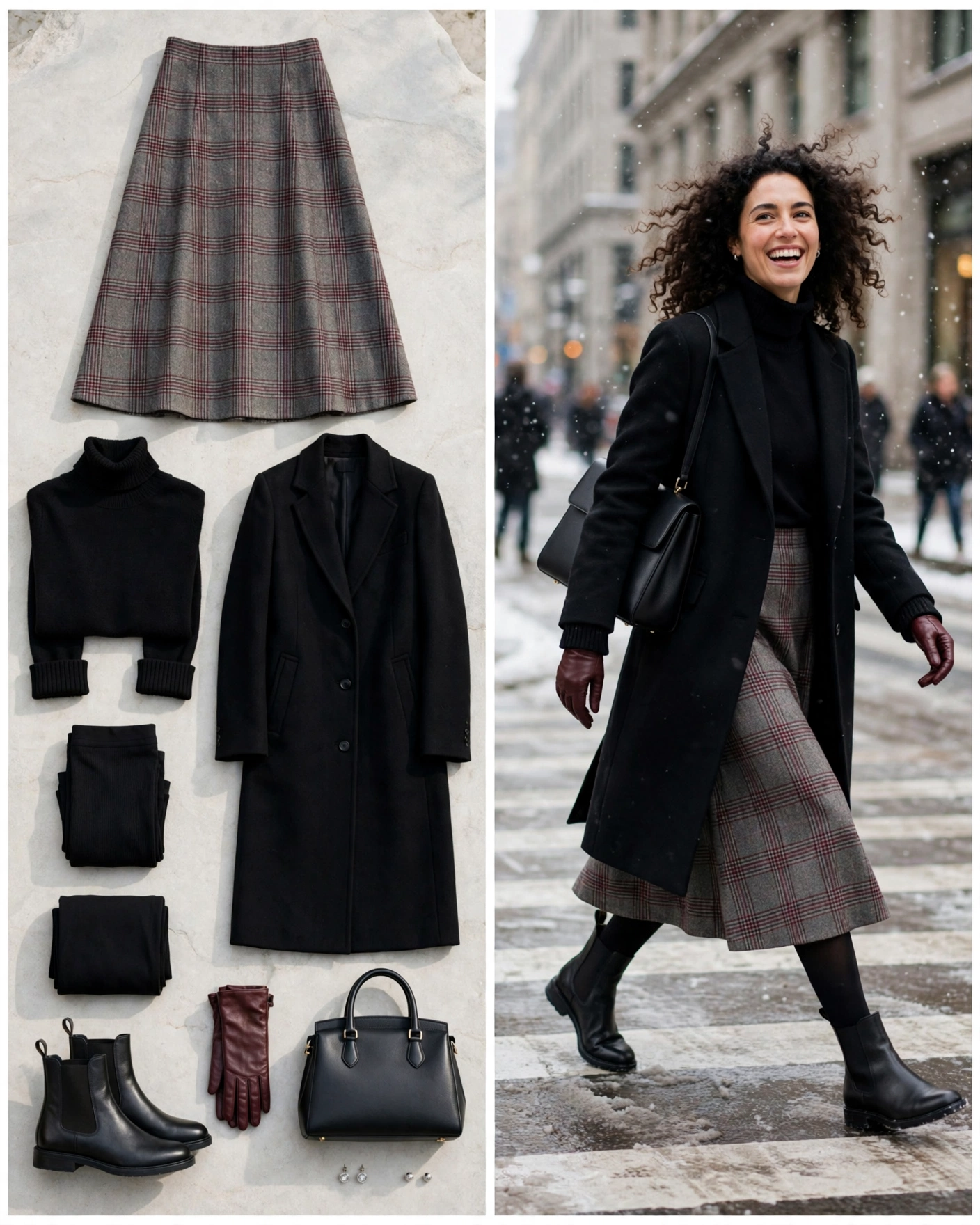
Even a good outfit can pick up a charge while you are getting dressed, so give it a sixty-second reset before the coat goes on. Run a plain metal clothes hanger slowly down the outside of your skirt or dress — the metal draws the static off the fabric as it goes — or lightly swipe a tumble-dryer sheet over your tights and hem, or simply smooth the skirt down with barely damp palms, since a trace of moisture stops the charge holding. Do it as the last step, after shoes and jewellery, and the fabric leaves the house electrically neutral. A grey and burgundy plaid wool A-line skirt with a black fine-knit turtleneck, opaque tights and Chelsea boots, discharged with the hanger trick before leaving, crosses a snowy street and arrives at the office hanging dead straight instead of twisting around the legs.
Choose Lined Pieces and Anti-Static Finishes When You Shop
The cheapest time to fix static is before you own the garment. A fully lined skirt or dress has a built-in slip doing the separating work permanently, and a smooth acetate or silk-blend lining glides over tights all day without any effort from you. When you shop, turn pieces inside out: look for a full lining rather than a half one, wool-blend outers rather than pure polyester, and labels that mention an anti-static finish — and do the changing-room rub test, swishing the skirt against your tights to see whether it grabs. Spending the extra minute at the rail saves a season of peeling fabric off your legs. A light grey lined skirt suit with a cream silk blouse, opaque tights and pointed pumps is the polished proof: structured, formal, and completely cling-free through back-to-back meetings.

Keep a Desk-Drawer Kit for Midday Emergencies
Heated offices recharge static all day long, so even a well-built outfit deserves backup. Keep a small kit in your desk drawer: a mini anti-static spray or a spare tumble-dryer sheet for a quick swipe over tights, a travel hand lotion for dry shins and palms, and the stylist trick of a small safety pin fastened inside your skirt hem, where the metal quietly drains charge away from the fabric as you move. None of it takes drawer space, and all of it beats retreating to the ladies’ room to peel your dress off your legs before a presentation. A camel fine-knit midi dress with a cream half-slip, a long cream wool coat for the commute and tan loafers stays smooth from the first email to the last, with the desk kit handling anything the office heating manages to recharge by midday.

In Summary
Static cling is not a mystery and it is not a life sentence for skirt wearers — it is charge plus contact, and every fix in this guide removes one or the other. A half-slip separates the fabrics, natural fibres refuse to charge in the first place, smooth layers and moisturised skin cut the friction, the hanger trick drains what builds up, lined pieces prevent it at the rail, and a small desk kit handles whatever the office heating recharges by lunch.
Notice that none of these moves asks you to change your style. The burgundy pencil skirt, the navy wrap dress, the plaid skirt and the knit dresses all stay exactly as polished as they were meant to look — they simply hang the way they did in the changing room, all day, in the driest heated office in the building.
So the next cold, crackly morning, dress in the skirt you actually want to wear. Slip underneath, hanger over the top, pin inside the hem — and walk out knowing your outfit will still look intentional at six in the evening.