Short answer first: yes, you can wear leggings to work — but only when they are styled as trousers, never as athleisure. The thin pair you wear to the gym will fail every office dress code, while a thick, structured ponte pair worn with full coverage and polished layers is an entirely different garment. The difference is never the legging itself; it is everything you do around it.
Winter is actually leggings' strongest season at the office. Knee-high boots cover the calf, longline blazers and tunic sweaters handle coverage, and a tailored coat pulls the whole thing together on the commute — the exact structure leggings need to read as intentional rather than lazy.
This guide walks through the six rules that make it work: the only fabric that passes, the coverage rule you cannot bend, the blazer-and-boots formula, the sweater-dress shortcut, the situations where leggings are a hard no, and the finishing details that seal the impression. Each rule comes with a complete winter outfit that gets it right.
Before you wear any of them, run the mirror test: if you would happily be photographed for the company website in the outfit, it passes. If you would angle away from the camera, something needs changing — and one of the six rules below is almost always the fix.
Start With Ponte: The Only Leggings That Pass as Trousers
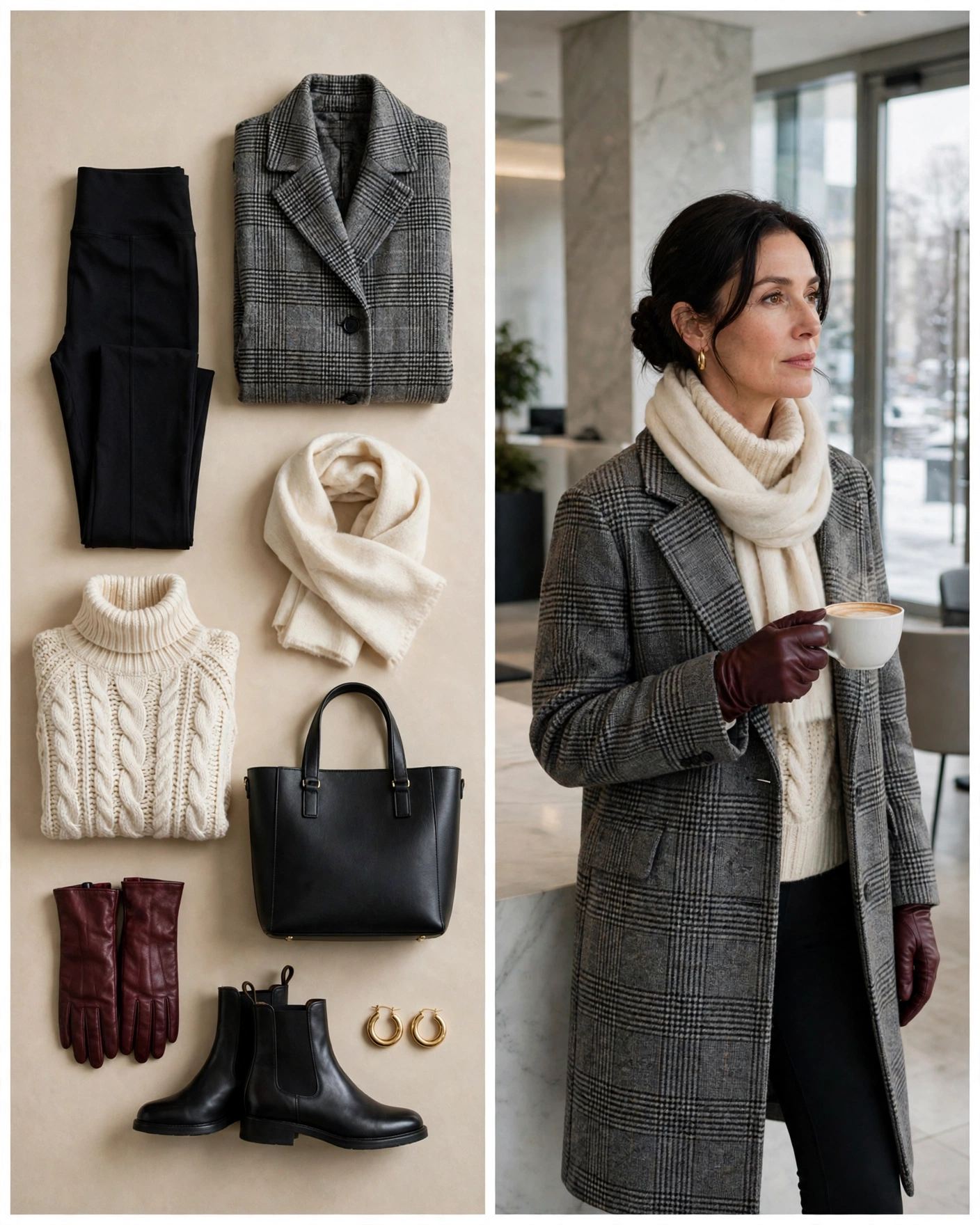
Fabric decides everything. Look for ponte di roma — a heavy double-knit that holds its shape, stays fully opaque in bright office light, and never shows a shine when you bend or sit. Do the bend test under a bright light before the first wear: if anything shows through, they are gym leggings, whatever the label claims. Trouser details complete the illusion, so choose a wide waistband, centre seams down each leg, a faux fly, belt loops or back pockets. Skip anything thin, shiny, heathered, faded or finished with mesh panels and sporty contrast stitching — those read athletics department, not corner office.
Follow the Coverage Rule Every Single Time
This is the non-negotiable: whatever you wear on top must cover your seat completely, front and back, and ideally reach mid-thigh. Tunic sweaters, longline shirts and oversized fine-knit jumpers are your tools — a standard hip-length top with leggings is where most office leggings outfits fall apart. Run the movement test before you leave home: raise your arms, sit down, bend to pick something up, and check the hem has not crept anywhere it should not. A longer top does more than keep you appropriate, too — it balances the slim line of the leg and makes the whole outfit look deliberate instead of thrown on.
Add a Longline Blazer and Knee-High Boots for Instant Structure
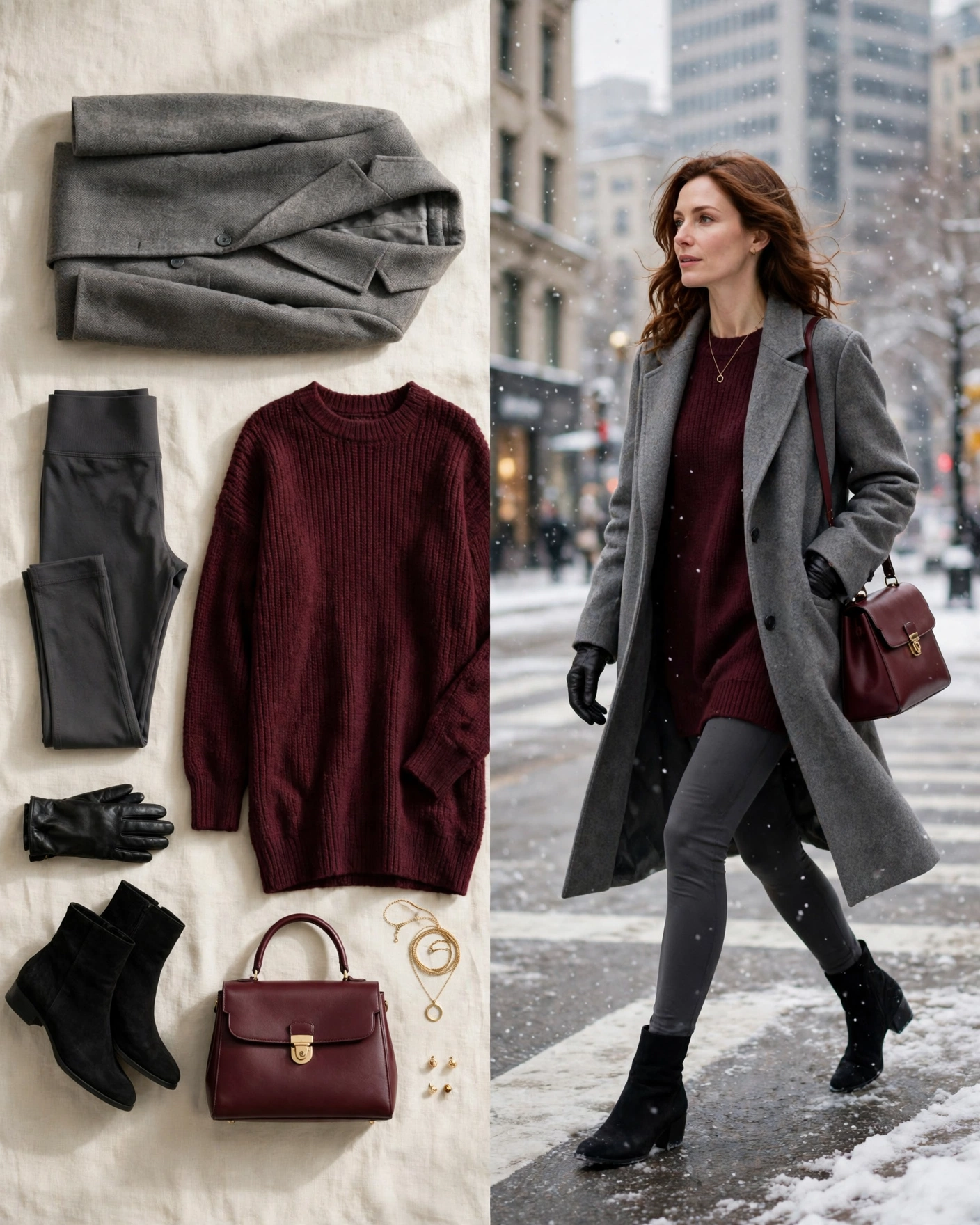
When leggings need to pass in a business casual office, structure is your best friend — and a longline blazer plus knee-high boots is the most reliable formula there is. The blazer should fall below the hip, adding tailoring and coverage in one move, while the boots cover the entire calf so the legging never gets a chance to read casual. Underneath, keep the top layer simple: a longline shirt or fine-knit top that stays tucked or skims smoothly. It is the outfit to reach for on days when the dress code is unspoken but very real, because every element looks chosen.
Wear Them Under a Sweater Dress for the Easiest Formula
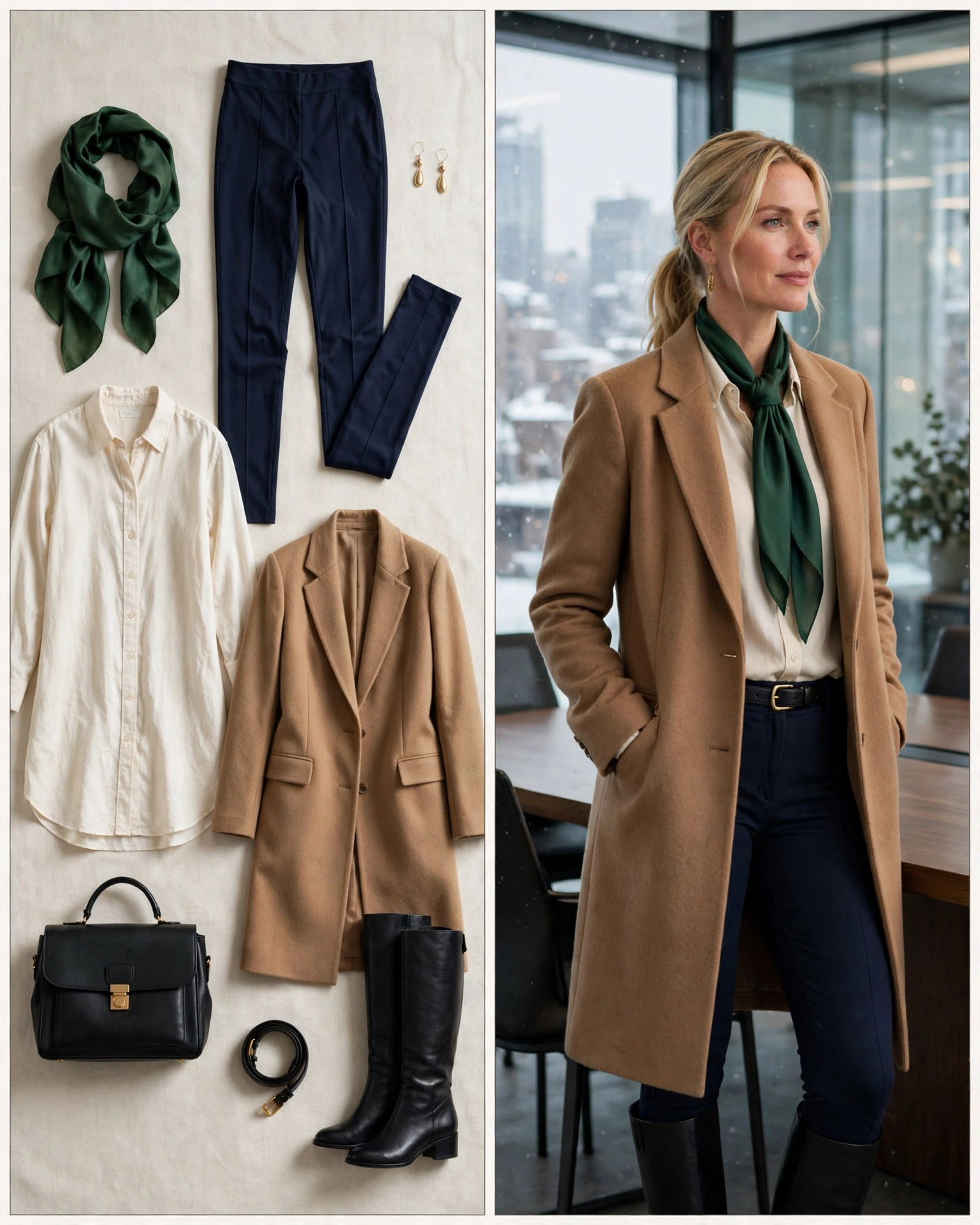
If the blazer formula feels like effort, the sweater dress is your shortcut: one piece gives you the coverage, the polish and the winter cosiness all at once. Choose a ribbed-knit sweater dress that lands at or just above the knee, and treat the leggings as an opaque, warm base layer — far more comfortable than tights on a freezing commute, and they never snag or ladder by lunchtime. A slim belt keeps the knit from reading shapeless, and ankle boots anchor the look at the hem. This is the outfit women reach for on dark January mornings when decision energy is at zero, and it still looks completely composed by the stand-up meeting.

Know When Leggings Are a Hard No
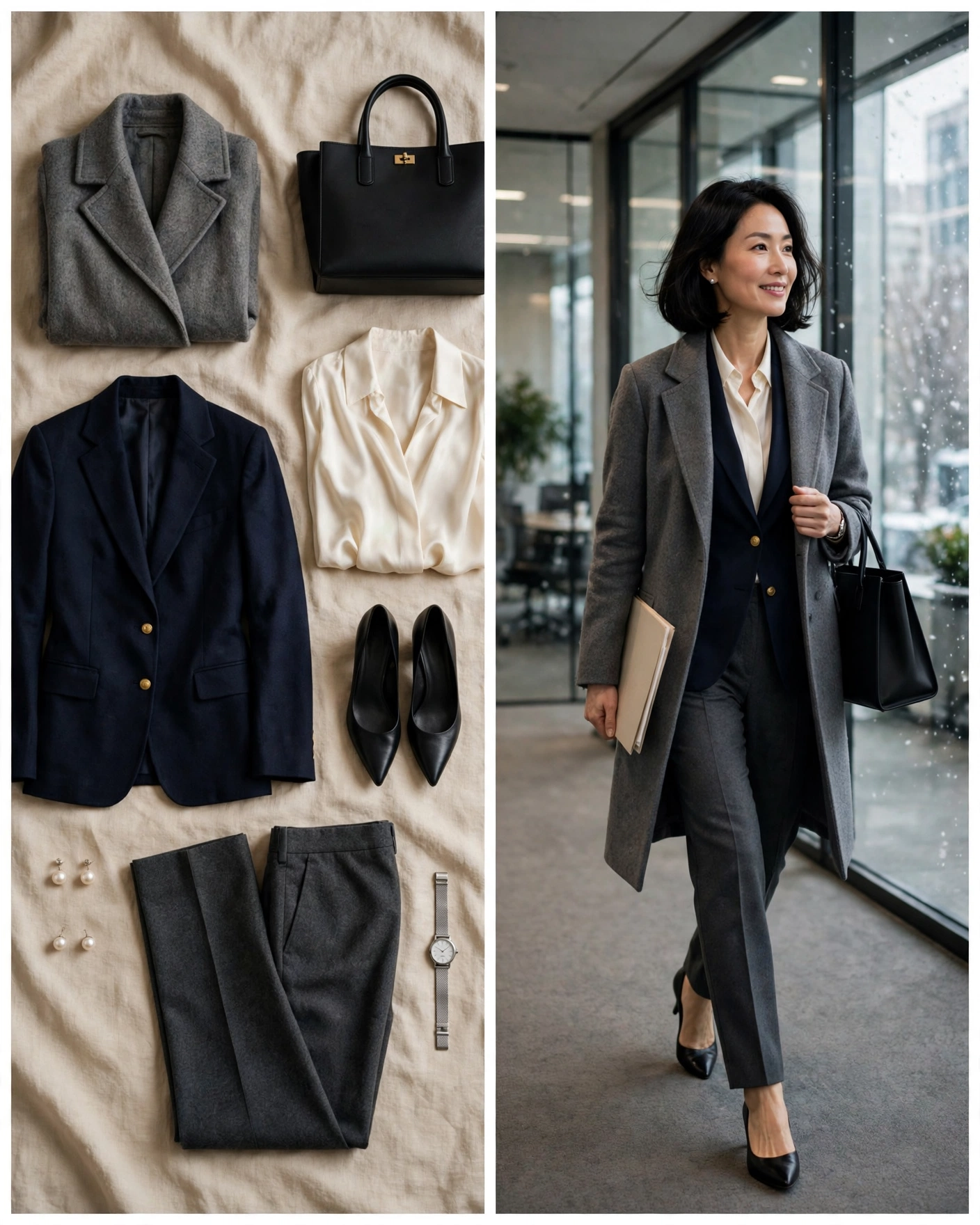
Honesty matters here: some situations are simply not leggings situations, no matter how well styled. Formal and traditional dress codes — law firms, front-office finance, anywhere a suit is the unspoken uniform — are a no. So are client-facing meetings, presentations to senior leadership, and job interviews, where your outfit should never be the thing anyone remembers. And thin, faded, athletic or pilling leggings are a hard no everywhere, full stop. The good news is the fix is painless: swap the leggings for tailored trousers and keep the blazer, blouse, coat and bag exactly the same. Every other rule in this guide still applies — you have just upgraded the base.
Finish With Polished Footwear and Grown-Up Accessories
The last rule is about signals: footwear and accessories decide whether the eye reads “styled” or “gym, then work.” Loafers, block-heel ankle boots and knee-high boots all keep leggings office-appropriate; trainers, slippers and slouchy snow boots undo the entire outfit in one glance. Carry a structured tote rather than a gym bag, add a slim belt or simple gold jewellery, and let a tailored coat be the layer the street actually sees. None of these details is expensive or complicated — they simply announce that the outfit was chosen on purpose, which is the whole secret of wearing leggings to work well.

In Summary
Leggings at work are not a yes-or-no question — they are a styling question. Thick ponte instead of gym fabric, full coverage instead of a hip-length top, structure from blazers and boots, and the honesty to swap in tailored trousers when the day demands it: follow those rules and the answer is genuinely yes.
Notice that none of this requires a special wardrobe. The same coats, blazers, sweater dresses and boots already in your winter rotation do all the heavy lifting — the leggings are simply the comfortable base they were always allowed to have.
So pick one formula, run the mirror test, and wear it on a normal Tuesday. Comfort and credibility are not opposites, and a well-styled pair of ponte leggings is the proof you can walk in wearing.