Few dress codes cause more Monday-morning stress than these two, because offices use the words interchangeably while meaning very different things. Business casual and smart casual sit side by side on the formality ladder, but they start from opposite ends — and the gap between them is exactly where outfits go wrong.
Here is the short version. Business casual is formal office wear with the edges softened: tailoring still leads, and everything else supports it. Smart casual is your casual wardrobe polished up: comfort leads, but every piece is clean, fitted and intentional. One dresses down from a suit; the other dresses up from jeans.
Winter actually makes both codes easier to read, because coats, boots and knits add structure for free. This guide defines each code with a full winter outfit, lays the differences side by side, then styles the exact same base outfit both ways so you can see the dial turn.
By the end you will know which code your workplace really uses, which pieces move an outfit from one side to the other, and the safe choice for the days when nobody will tell you.
What Business Casual Actually Means in Winter
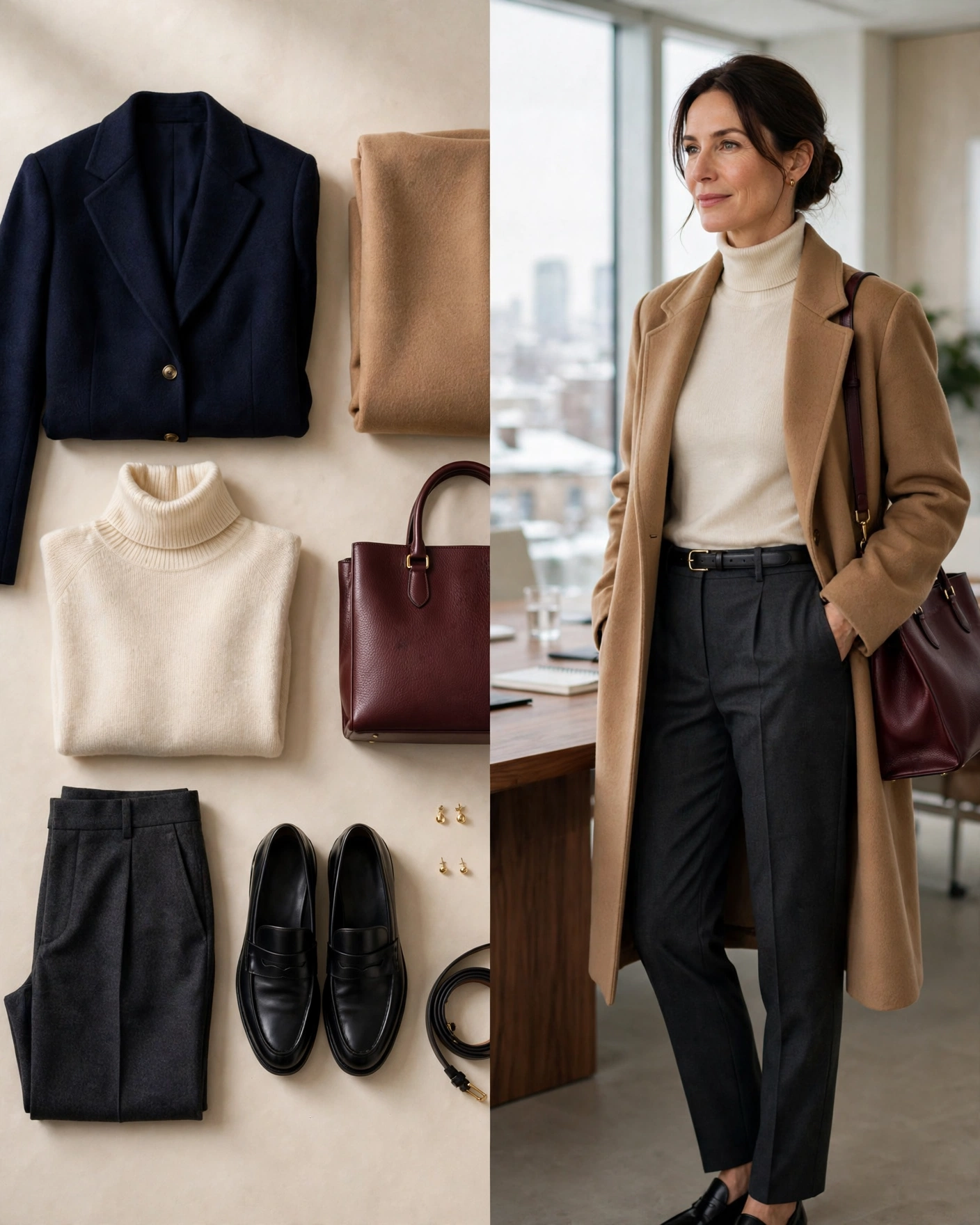
Business casual keeps the skeleton of a formal outfit — a structured layer, pressed trousers or a tailored skirt, closed leather shoes — and relaxes the details: no tie-equivalent formality, softer fabrics, colour allowed. Denim is out in stricter offices and only ever appears as dark, trouser-cut jeans in relaxed ones. The winter version leans on a navy wool blazer over a cream fine-knit turtleneck, charcoal wool trousers with a pressed crease, black leather loafers and a camel wool coat over everything. If a client walked in unannounced, this outfit needs no apology and no adjustment.
What Smart Casual Actually Means in Winter
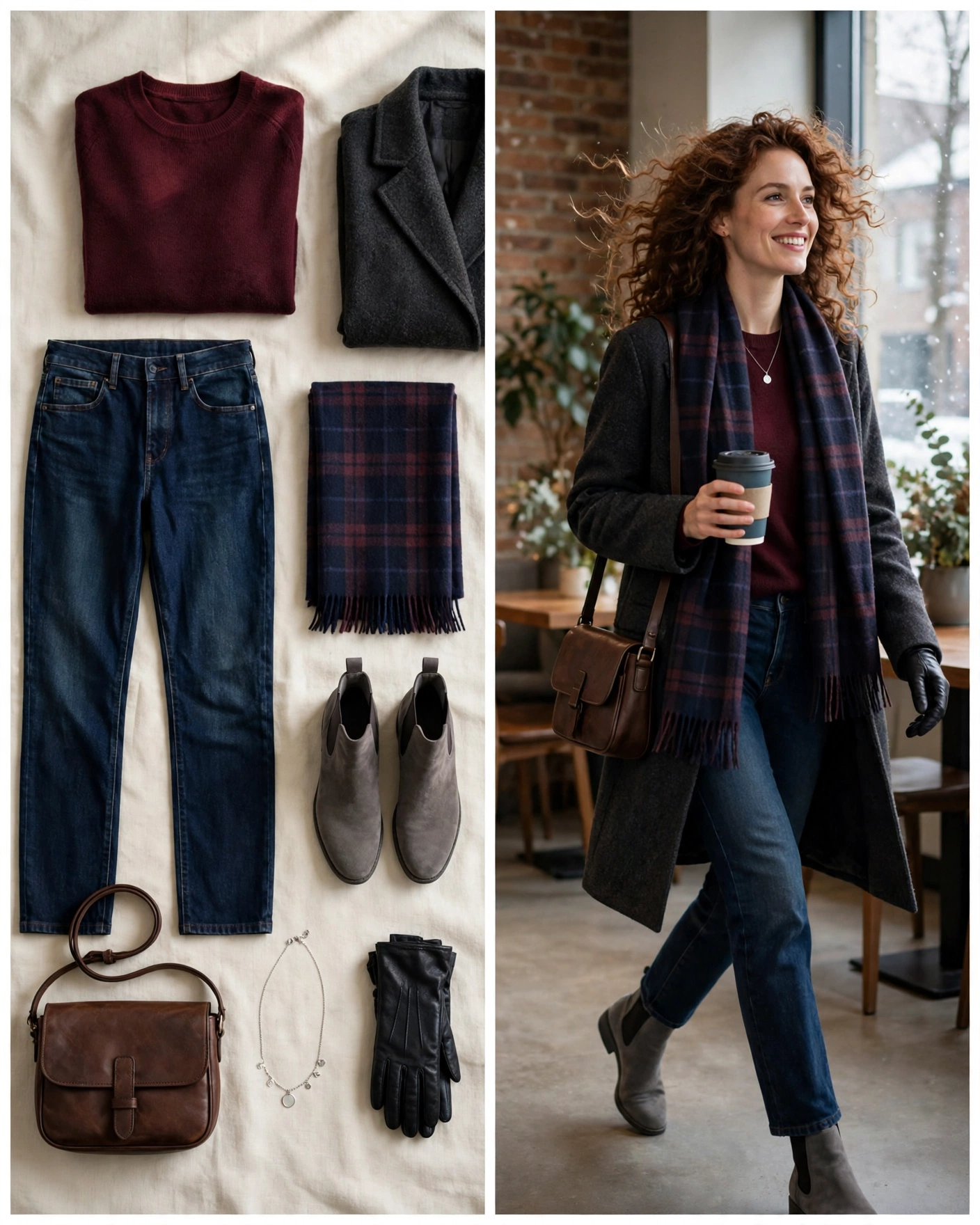
Smart casual starts from casual staples — dark jeans, knitwear, comfortable boots — and polishes every one of them: no rips, no fading, no logos, nothing baggy or worn-looking, and at least one refined piece to lift the whole outfit. In winter that means a burgundy fine-knit crew-neck sweater, dark indigo straight-leg jeans that could pass for trousers at a glance, grey suede Chelsea boots, a plaid wool scarf and a charcoal overcoat that keeps the silhouette tidy. It is the code of creative agencies, tech offices and casual Fridays — relaxed in spirit, but every item looks deliberately chosen.
The Side-by-Side Differences: Denim, Tailoring, Footwear and Fabrics
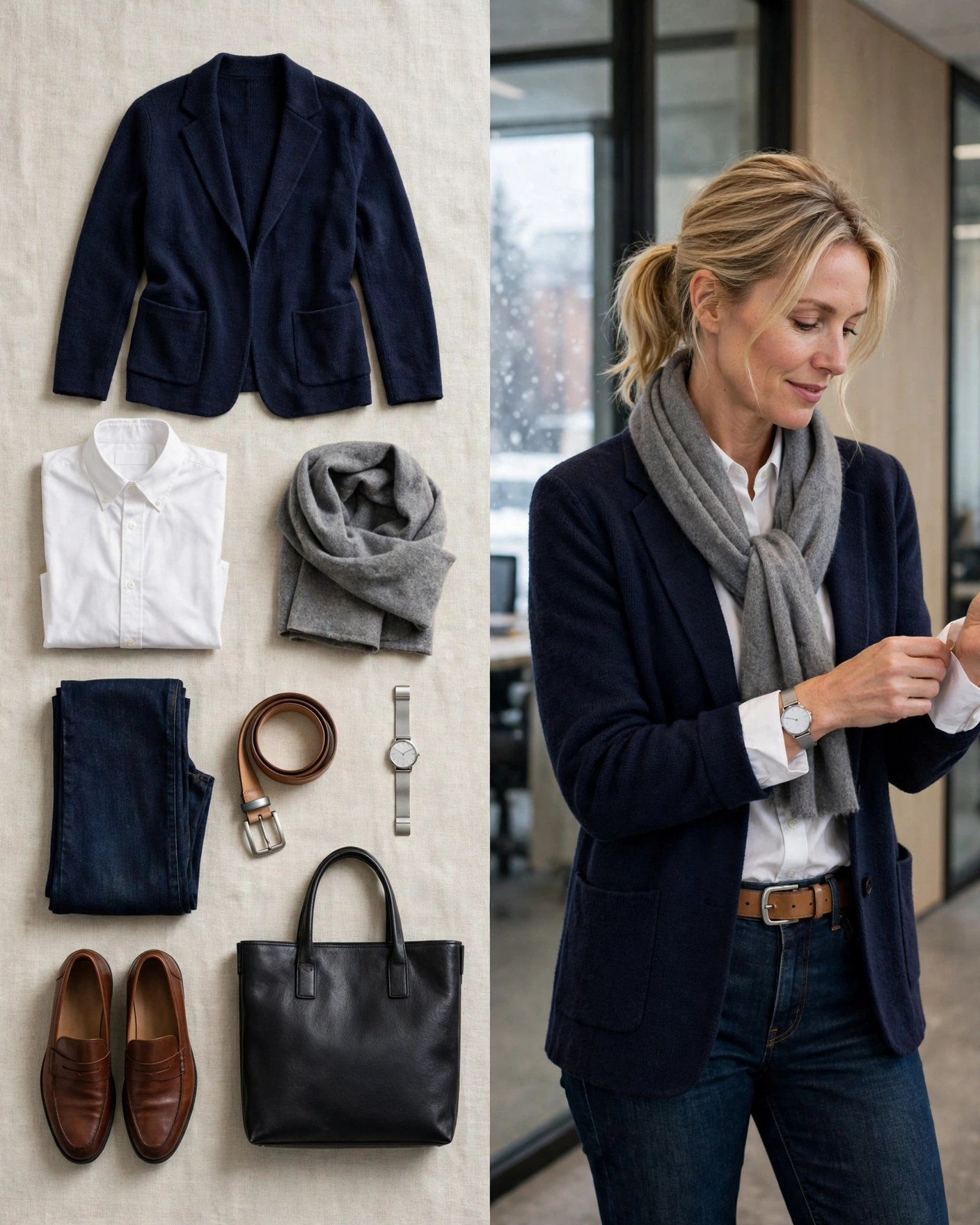
Four decisions separate the two codes. Denim: business casual usually excludes it entirely, while smart casual welcomes dark, clean, well-fitted jeans. Tailoring: business casual expects a blazer or structured layer most days, while smart casual treats tailoring as an optional upgrade. Footwear: business casual means loafers, pumps and heeled boots, while smart casual adds Chelsea boots and minimal clean sneakers. Fabrics: business casual lives in wool, crepe and silk, while smart casual also embraces fine knits, suede, corduroy and denim. The outfit here — a navy knit blazer, white Oxford shirt and dark jeans with brown loafers — sits exactly on the border, which is why it is such a useful reference point.
The Same Base Outfit, Dressed Up to Business Casual
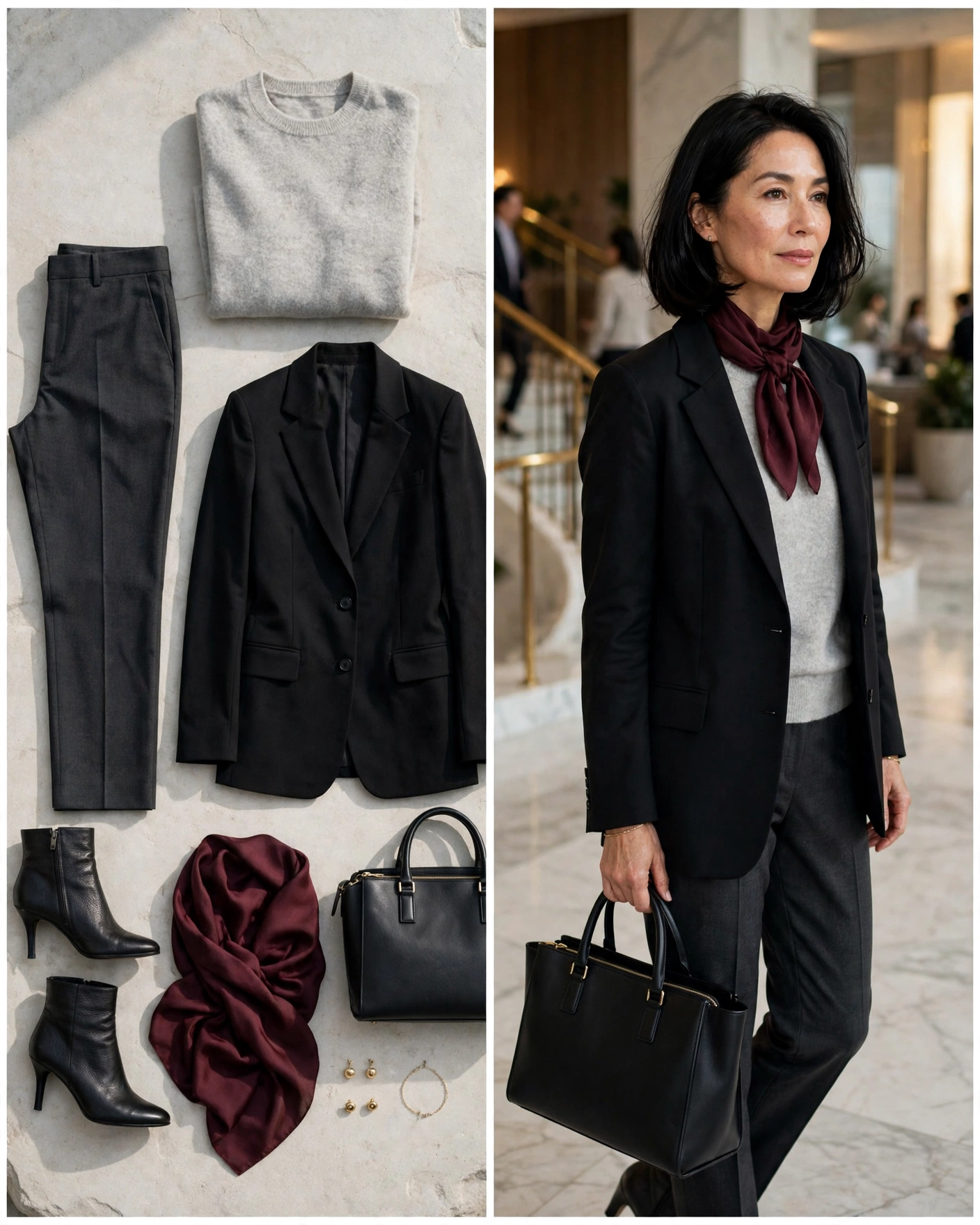
Start with a base thousands of winter wardrobes already own: charcoal straight-leg trousers and a light grey crew-neck merino sweater. To push it into business casual, add structure and shine in three moves — a black structured single-breasted blazer over the sweater, black heeled leather ankle boots instead of flats, and a structured black tote with a burgundy silk scarf knotted at the neckline. Nothing about the base changed, but the blazer, the heel and the glossy accessories move the outfit firmly onto formal ground: this is the version you wear to the client meeting, the review, the presentation.
The Same Base Outfit, Relaxed Down to Smart Casual
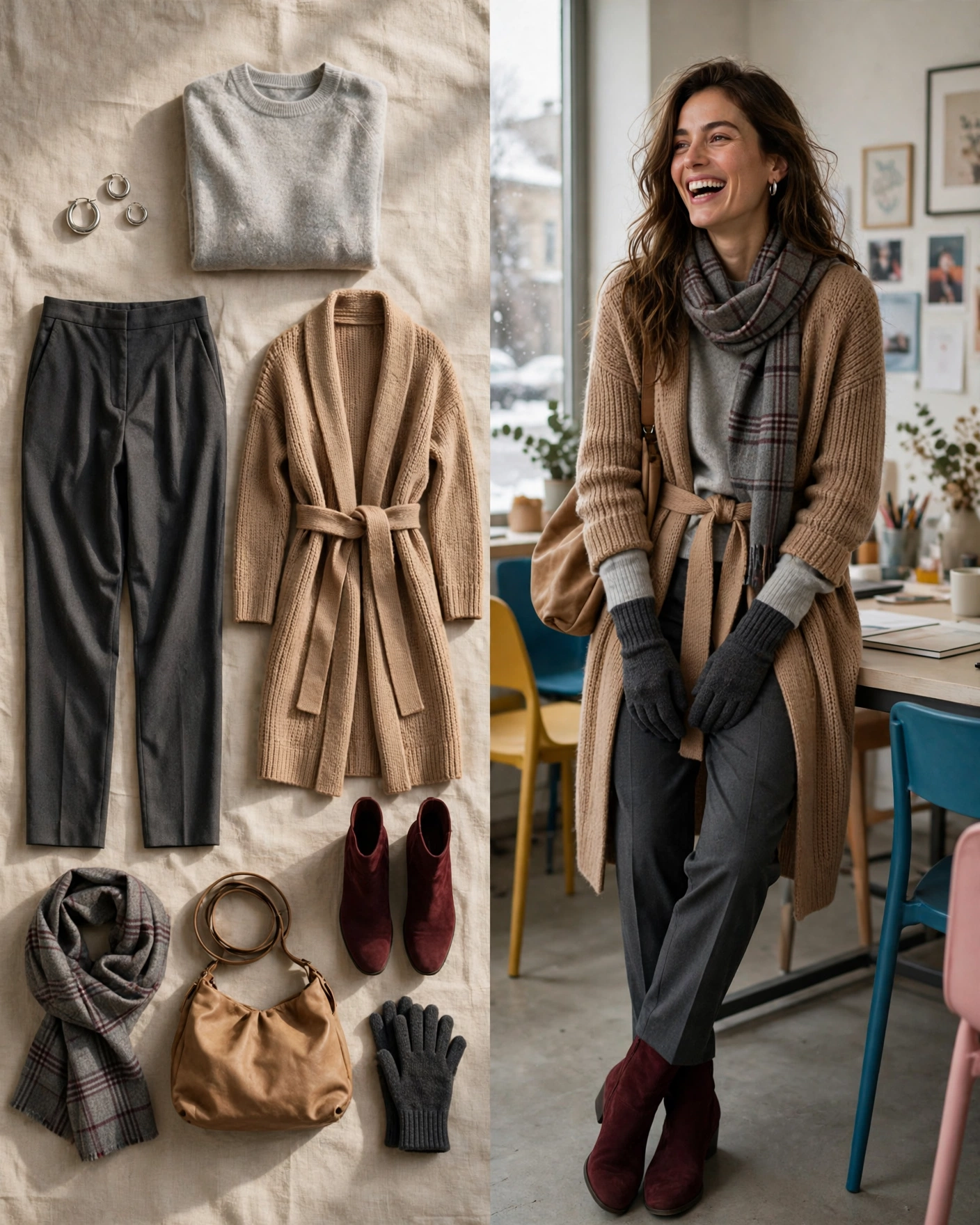
Now take the identical base — the same light grey merino sweater and charcoal trousers — and turn the dial the other way. Swap the blazer for a long camel belted cardigan, swap the heeled boots for burgundy suede ankle boots, and trade the structured tote for a soft slouchy tan shoulder bag with a plaid scarf thrown over the top. The outfit is still neat, warm and completely office-appropriate, but the soft layers and suede textures read creative and relaxed: this is the version for a studio office, a team lunch or a working-from-café afternoon.
Which Code Applies Where, and the Safe Choice When You Are Unsure
Context decides. Law firms, banks, government offices and any client-facing role treat business casual as the floor, while tech companies, startups and creative agencies usually run on smart casual; education, healthcare administration and most mid-size companies sit in between, so look at what the leadership wears, not the handbook. Interviews are their own rule: always dress one notch above the code you expect, which makes business casual the safe default — like the charcoal blazer-and-trouser set with a cream silk blouse, black pointed pumps and a camel coat shown here. And whenever you genuinely cannot tell — a first day, a new client, a work event with no guidance — choose business casual: slightly overdressed reads as respect, while underdressed reads as carelessness.

In Summary
Business casual dresses down from formal: tailoring leads, denim stays home, and leather shoes close the outfit. Smart casual dresses up from casual: dark jeans and knitwear are welcome, as long as every piece is clean, fitted and finished with one polished touch. The base rarely changes — it is the blazer, the footwear and the bag that tell everyone which code you are in.
Use that dial deliberately. Keep one structured blazer, one pair of heeled boots and one smart tote in your winter rotation and you can convert almost any outfit to business casual in two minutes; keep a long cardigan, suede boots and a plaid scarf beside them and smart casual is just as quick.
When the invitation is vague, the industry is formal or the meeting matters, choose the safer side and dress up. Nobody was ever remembered badly for looking slightly too polished — and in winter, the polished version is usually the warmer one too.