Winter white at work looks expensive, calm and completely in control — which is exactly why so many women leave it hanging in the wardrobe from November to March. One slushy pavement, one crowded train, one takeaway coffee, and the outfit of the day becomes the laundry emergency of the week.
The women who wear white all winter are not braver or luckier; they are running a small system. The shade is chosen to forgive, the fabrics are chosen to shed, the commute is handled by other clothes entirely, and the coffee follows rules.
This guide lays out that system in six moves: two ways to build the outfit itself, then the fabric, coat, commute, desk-drawer and coffee habits that keep it clean from the morning platform to the last meeting of the day.
Follow them and winter white stops being a special-occasion risk. It becomes what it should be — the brightest, freshest thing in your work wardrobe, worn on ordinary Tuesdays like everything else you own.
Lead With Cream and Ivory, Not Stark White
Start one shade down from the brightest white on the rail. Cream, ivory and soft ecru read warmer against winter skin, sit more comfortably under office lighting, and — the practical point — show a faint splash or dust mark far less than optical white, which highlights every speck against its blue-bright surface. An all-cream outfit is also easier to wear head-to-toe than all-white: a cream wool blazer and matching trousers over an ivory fine-knit top gives you tonal depth instead of a flat, uniform glare, and the slight differences between the shades make the whole look read as deliberate. Reserve true white for smaller pieces — a shirt under a cream suit, a ribbed turtleneck with cream trousers — where it acts as an accent rather than the main surface area exposed to the day.

Choose Structured, Textured Fabrics That Forgive
Fabric decides how a white outfit ages between 9 a.m. and 6 p.m. Smooth, tightly woven cloth — wool twill, gabardine, dense crepe — gives splashes nothing to soak into, so most marks sit on the surface and brush or blot away, while loose weaves, brushed cotton and soft linen drink a stain in seconds. Texture is the second layer of defence: bouclé, ribbed knits, herringbone and subtle tweeds break the surface up visually, so a tiny mark disappears into the pattern instead of announcing itself. Build the workhorse outfit on it — an ivory bouclé jacket and cream wool trousers with a silk blouse — and keep the flat, delicate fabrics for days with a short, dry commute. If a care label says dry-clean only and the piece is trousers or a skirt, think twice: washable wool blends are the winter-white pieces you will actually reach for.

Let a Dark Coat and Dark Shoes Take the Dirt
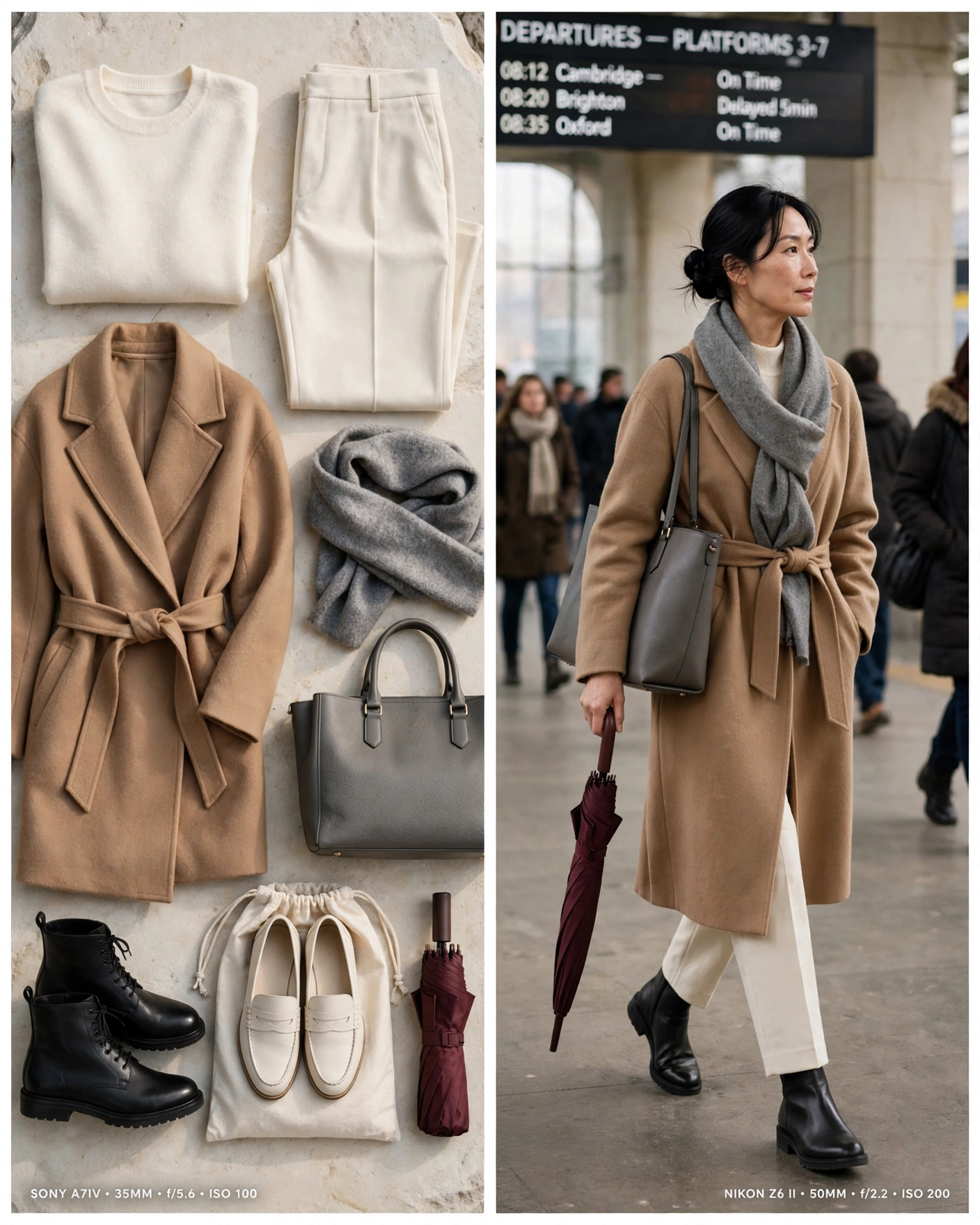
You do not have to keep the whole outfit white — you have to keep the white parts out of the dirt’s way. Slush, spray and grime all attack from the ground up and from the outside in, so give those zones to dark pieces: a long charcoal or navy coat worn closed over the outfit, black or charcoal knee-high boots instead of pale shoes, and a dark bag that can be wiped down. The white then lives in the protected middle — an ivory knit dress or cream trousers glimpsed between coat hem and boot top — where nothing splashes and nothing rubs. When you arrive, the coat comes off and the white outfit underneath is as clean as when you left the house, because it never actually met the street.

Protect the Outfit on the Commute, Not at Your Desk
Most winter-white damage happens before you reach your desk, so treat the commute as a separate outfit. A long, washable coat worn buttoned over everything is the base layer of protection; add waterproof commute boots and switch into your office shoes at your desk, keeping the pale pair in a drawstring pouch inside your tote so they never touch a wet floor. Keep a compact umbrella in the tote even on grey-but-dry mornings — the surprise shower on the walk from the station is the classic white-trouser disaster. On trains and buses, stand when you can, or check the seat before you sit: a quick glance for coffee rings and wet patches takes two seconds and saves the entire outfit.
Keep a Two-Minute Spot-Cleaning Kit in Your Desk Drawer
The difference between a disaster and a non-event is about two minutes and a desk drawer. Keep a small kit where you sit: a stain-remover pen, a pack of white cleaning wipes, a microfibre cloth for blotting, and a stick of tailor’s chalk, which covers a tiny mark on white fabric until wash day. The technique matters more than the tools — blot, never rub, because rubbing pushes a stain deeper and frays the surface; work from the edge of the mark inward, use cold water only, and let the spot air-dry before you judge it, since damp fabric always looks darker than the stain really is. Handle a coffee drip at 10 a.m. this way and by the afternoon meeting there is nothing left for anyone to notice.

Follow the Coffee Rules That Save White Clothes
Coffee is the number one winter-white hazard, and it is almost entirely a technique problem. Drink from a cup with a secure lid whenever you are moving, and make a rule of only drinking while seated — the splash that ruins a blouse nearly always happens mid-stride, cup in one hand and phone in the other. At your desk or a café table, spread a dark scarf or napkin over your lap before the first sip; it catches the drip that slides down the cup, which is where most marks actually come from. Lean slightly forward over the table when you eat, keep white sleeves buttoned or pushed up past the wrist around sauces and soups, and choose the clear soup over the tomato one on white days. None of this requires vigilance — just the same four habits, repeated until they are automatic.

In Summary
Winter white works at work when it is treated as a system rather than a gamble: cream and ivory shades that forgive, structured and textured fabrics that shed marks, and a dark coat and boots that take the street’s dirt so the pale pieces never have to.
Around the outfit sit the habits that do the quiet work — a commute handled in protective layers, a two-minute kit waiting in the desk drawer, and coffee that is only ever drunk sitting down, with a lid and a lap cover. None of it is fussy, and all of it together is what makes the difference between white worn once and white worn all season.
So stop saving the cream suit for dry days and short journeys. Built and handled this way, winter white is not the most fragile thing in your wardrobe — on a grey January morning, it might be the strongest.