The first cold snap catches every office wardrobe off guard: the fall dresses that carried September and October suddenly feel tissue-thin, the loafers that were perfect three weeks ago are no match for a frost, and the blazer that counted as outerwear now barely counts as a layer.
The mistake is treating winter as a reason to start over. Almost everything in a fall work wardrobe can cross into the cold months — it just needs reinforcement. A layer underneath, a heavier layer on top, and a few swaps at the feet and the neckline are the whole difference between a fall outfit and a winter one.
This guide walks through six transition moves in the order to make them: hidden warmth first, then knit layers, tights and boots, the winter coat that goes over fall tailoring, and finally the deeper palette and accessories that make everything read cold-weather. Each move comes with a complete outfit built from the classic winter palette of camel, charcoal, navy, burgundy, cream, black, grey and plaid.
Work through the six moves with the pieces already hanging in your wardrobe and your fall favourites will still be in rotation in the coldest week of the year — warmer, deeper in colour, and none of them replaced.
Slide a Slim Thermal Under Your Fall Dresses and Blouses
Start the transition underneath everything else. A fine merino or silk-blend thermal worn under a fall shirt dress or blouse adds a full layer of heat without changing a single visible line — the dress keeps its fall silhouette while the thermal does the winter work. Choose a scoop neckline that stays hidden below the dress’s top button and a body-skimming fit in black or navy, two tones that vanish under most mid-season fabrics. Your lightest fall dresses gain months of extra wear for the price of one invisible layer.
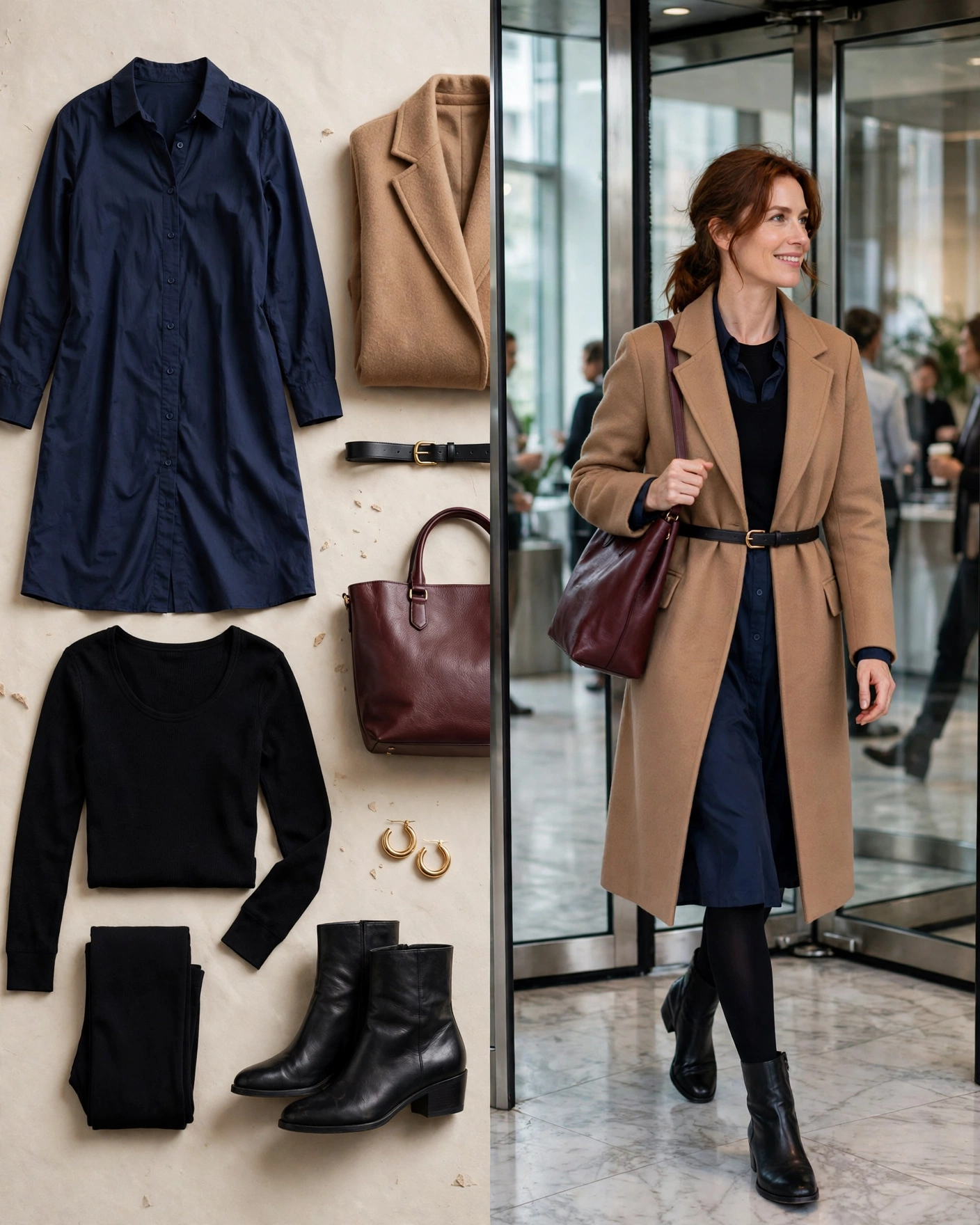
Layer Fine Knits Over Fall Shirts and Under Fall Blazers
Fall’s shirt-and-blazer pairing survives winter when a fine knit moves into the middle. Slip a slim crew-neck or V-neck sweater over your fall shirts — a sliver of collar and cuff showing at the edges is what makes the layering look deliberate rather than bundled — then close the fall blazer over the top. Every layer stays thin, so the blazer still drapes like tailoring while the stack insulates like a coat. It is the simplest way to make September’s smartest tailoring work in January.

Swap Loafers and Ballet Flats for Boots
The fastest visible transition happens at ground level. The midi skirts and cropped trousers you wore with loafers and flats all fall keep exactly the same top half — you just close the gap between hem and floor with boots. Knee-high boots under a midi skirt leave no strip of cold leg and keep the silhouette one unbroken line, ankle boots with a small heel keep cropped trousers looking tailored, and a textured sole handles the first icy pavements. One footwear swap winter-proofs a dozen fall outfits at once.

Add Opaque and Fleece-Lined Tights to Every Skirt Outfit
Tights are the quiet workhorse of the transition: they turn every fall skirt and dress into a winter outfit without touching the silhouette. Retire the sheers until spring and stock two weights instead — an 80-denier opaque for ordinary cold days and a fleece-lined pair for the coldest ones, both in matte black, which reads smartest under office lighting and never fights a hemline. Heeled ankle boots worn over the tights keep a pencil skirt formal, and the whole seasonal change costs less than one new garment.
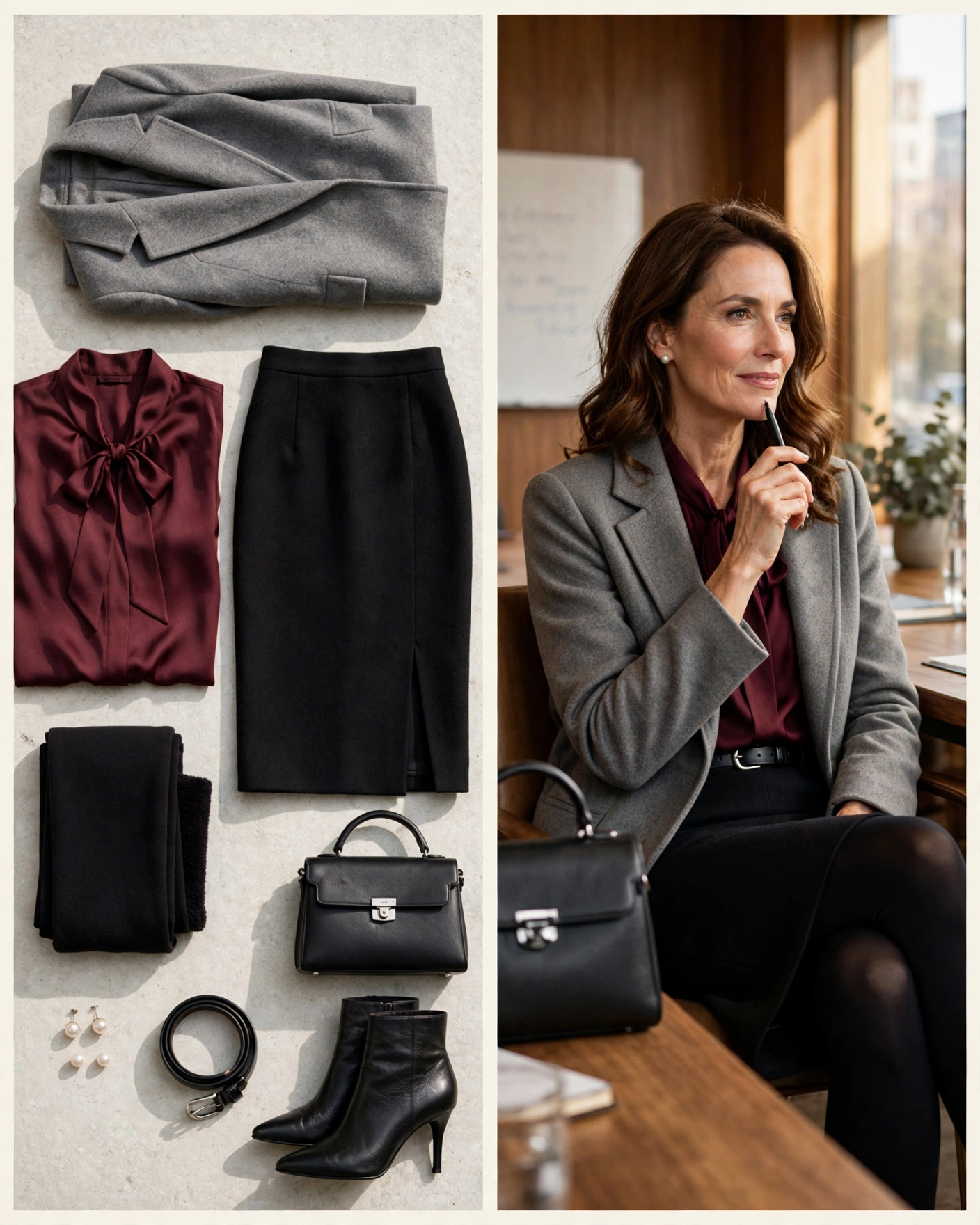
Top Fall Tailoring With a Longer, Heavier Winter Coat
A fall blazer stops being outerwear in November, but it makes an excellent middle layer. Add one long, heavy winter coat — wool or a rich wool blend, falling below the knee with enough room through the shoulders to sit over tailoring — and every fall suit and dress you own gains a proper outer shell. Matching the coat’s length to your longest hemlines keeps the column clean from the street to the lobby, and the fall tailoring underneath arrives unwrinkled and ready for the meeting.
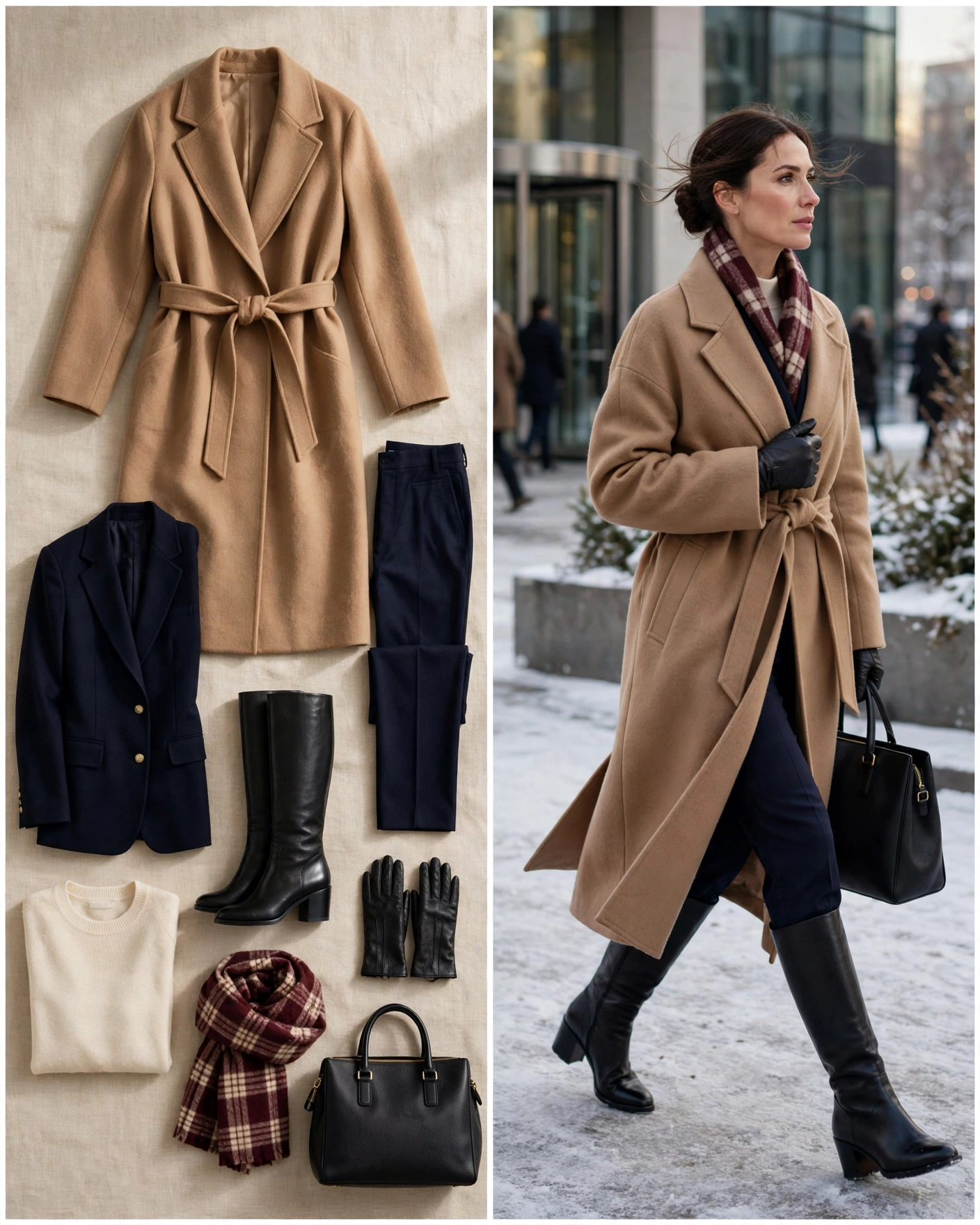
Deepen the Palette and Finish With Winter Accessories
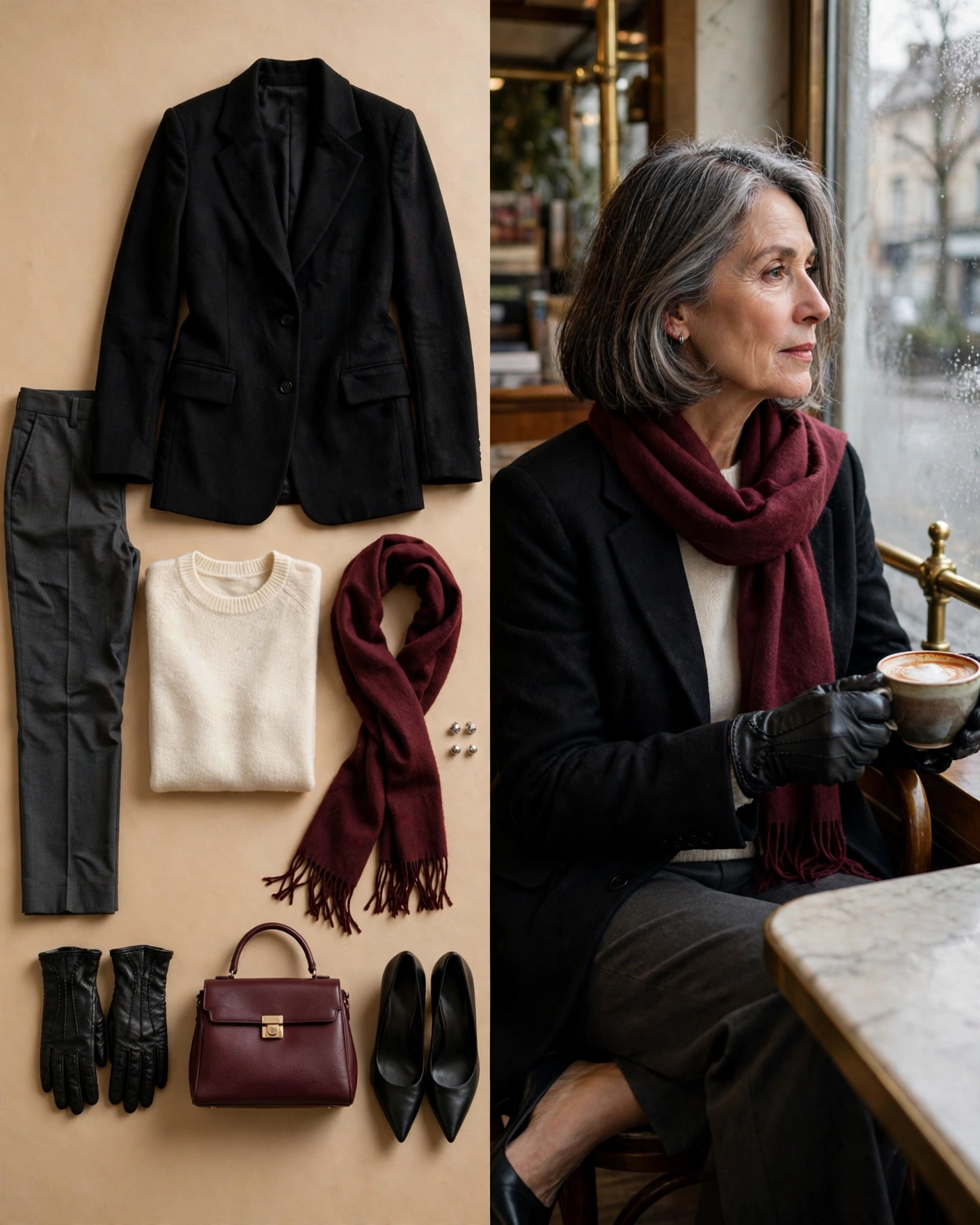
The last move is the one other people actually notice. Fall’s pale neutrals read crisp in October and washed out in December light, so anchor them with the deep end of the palette: a burgundy scarf against a cream knit, charcoal and black standing in for tan and beige, plaid and wine tones layered over the lighter pieces you already own. Add leather gloves matched to your bag and boots, and the outfit reads winter from head to toe — even when every garment underneath started life as a fall piece.
In Summary
Transitioning a work wardrobe is not a shopping project — it is a reinforcing project. A thermal underneath, a fine knit in the middle, tights and boots at the base, and a serious coat on top turn fall’s best pieces into winter outfits, while deeper colours and matched accessories make the transformation visible.
Because the moves build on what you already own, the wardrobe stays recognisably yours: the same navy dress, the same plaid blazer, the same camel skirt, each one simply dressed for colder weather. The classic palette — camel, charcoal, navy, burgundy, cream, black, grey and plaid — carries both seasons, so nothing you add now will clash with anything you buy later.
So when the forecast turns, do not retire the fall rail and start again. Layer it, deepen it, boot it — and walk into winter wearing the wardrobe you already love, properly finished.