There is a particular frustration in hunting for winter workwear in a plus size: rails of black, shapeless sacks, size runs that stop exactly where yours begins, and so-called extended ranges that turn out to be straight sizes scaled up with no thought for a real body. The coat will not close, the blazer pulls at the button, and the boots zip halfway up your calf and give up.
The good news is that genuinely well-cut plus size workwear does exist — you just have to shop the channels that design for curves from the pattern block up, not as an afterthought. Fit, not the number on the label, is what makes a blazer look expensive and a coat feel like it was made for you.
This guide walks through the six places and strategies that actually deliver: true plus-pattern tailoring, knit dresses with real shaping, coats cut with room where you need it, wide-fit boots, and the fit-check routine that stops expensive mistakes before they happen.
Every outfit below is worn by a plus size model in the classic winter work palette — camel, charcoal, navy, burgundy, cream, black, grey and plaid — so you can see exactly how each piece should sit when the fit is right.
Start With Lines That Draft True Plus Patterns, Not Scaled-Up Sizes
The single biggest difference in plus size workwear is how the pattern was made. Dedicated plus lines draft on a curvy fit model, adding room at the bust, waist and hip independently and grading the shoulder and armhole properly, so a blazer closes without pulling and a dress skims instead of clinging. Scaled-up straight sizes simply get longer and wider everywhere, which is why the shoulders hang and the waist swims. Seek out ranges whose plus line has its own fit model and honest reviews from curvy customers, then judge the whole line by one anchor piece — a camel wrap coat over a burgundy knit dress that belts cleanly at the waist is the test.

Shop Plus Departments in Person for Tailoring You Can Try On
For blazers and trousers, nothing beats trying on in person. A proper plus department — a full section with its own fitting rooms, not two rails by the escalator — lets you compare cuts back to back: the high-rise trouser that sits at your natural waist instead of digging in, the blazer whose button closes without gapping across the bust. Take two sizes of everything into the fitting room, then sit down, reach forward and twist, and check the seat, shoulder and button line in the three-way mirror. A navy blazer and charcoal trousers that pass the sit-down test in the shop will earn their keep all winter.

Use Online Extended Ranges With Free Returns for Knit Dresses and Layers
Online is where the widest choice lives, especially for knit dresses, wrap styles and layering pieces that rarely make it into physical stores above a certain size. The trick is to order deliberately: two sizes at a time, tried on at home with the boots and tights you will actually wear, and only from sellers whose returns are free and painless. Wrap and faux-wrap dresses with a defined waist and a surplice neckline are the most forgiving winter buy, because they adjust to your shape instead of fighting it. A deep green wrap sweater dress that ties at your natural waist — never under the bust — is the benchmark to measure every other dress against.

Choose Coats From Ranges That Cut for Shoulder, Sleeve and Hip Room
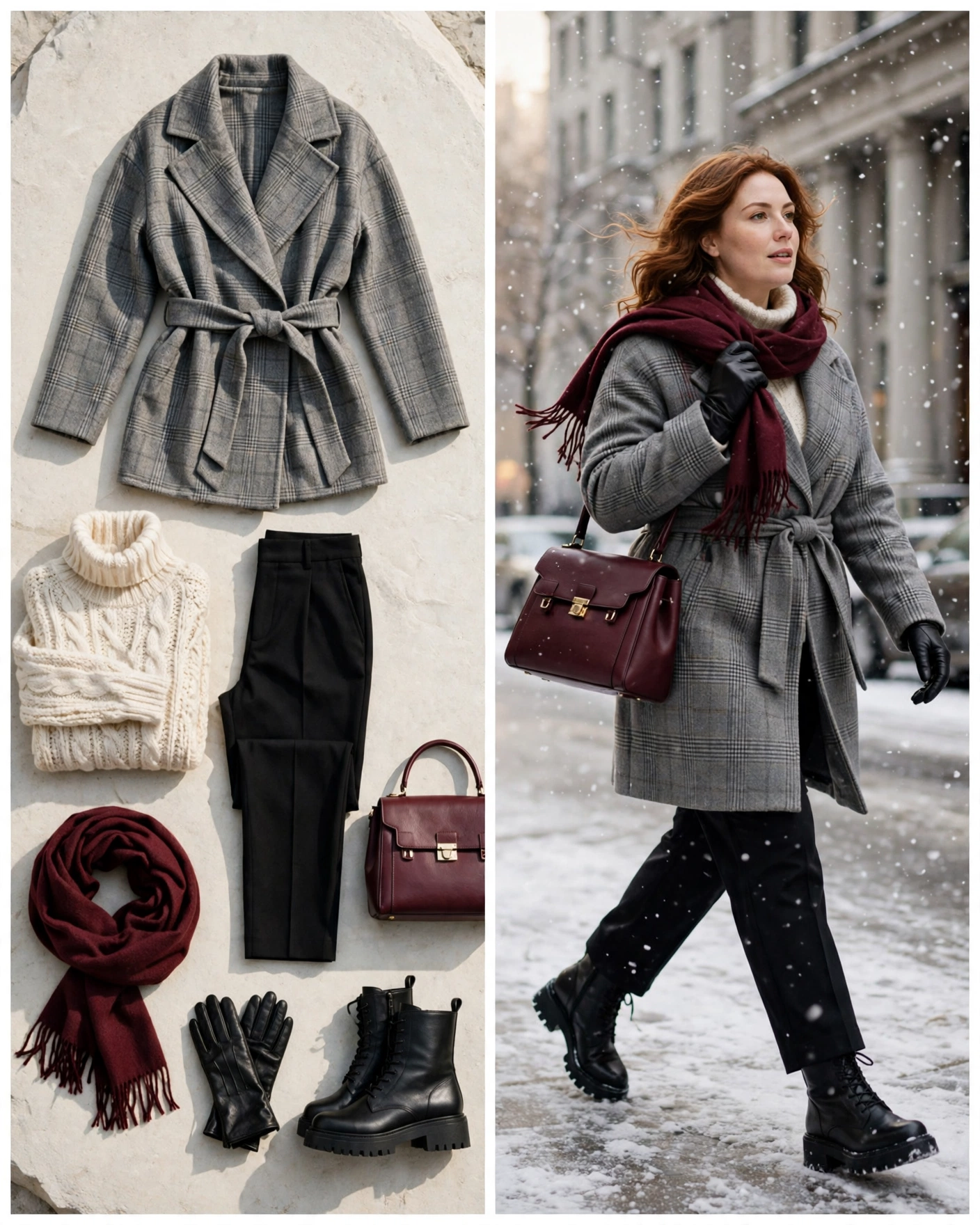
A winter coat is the biggest fit risk in a plus wardrobe, because a coat that closes over knitwear needs ease in three places at once: across the back and upper arm, over the hip, and at the button or belt line. Look for wrap coats, gently cocooned shapes and A-line cuts from ranges that publish actual garment measurements rather than just size labels, and always size for the layer you will wear underneath — a coat that only fits over a T-shirt in November will not fit in January. A grey plaid wrap coat over a cream knit, closing smoothly with the belt tied at the natural waist, is exactly what correct coat fit looks like.
Buy Boots From Wide-Fit Specialists, Not the Standard Rail
Boots are where plus size shoppers get quietly excluded: standard calf fittings assume a slim leg, and most knee-high styles zip halfway up and stop. Wide-calf and wide-width footwear specialists solve this properly, grading calf circumference by shoe size and offering regular, wide and extra-wide calf fittings, so the boot zips smoothly, stays up and does not cut in by lunchtime. Measure your calf at its widest point over the tights you will wear, buy to that number rather than your shoe size alone, and choose a low block heel for all-day office wear. Black wide-calf knee-high boots under a burgundy knit dress transform the whole winter wardrobe, because suddenly every dress and skirt you own works in the cold.

Finish Every Purchase With a Ten-Minute Fit Check and a Good Tailor
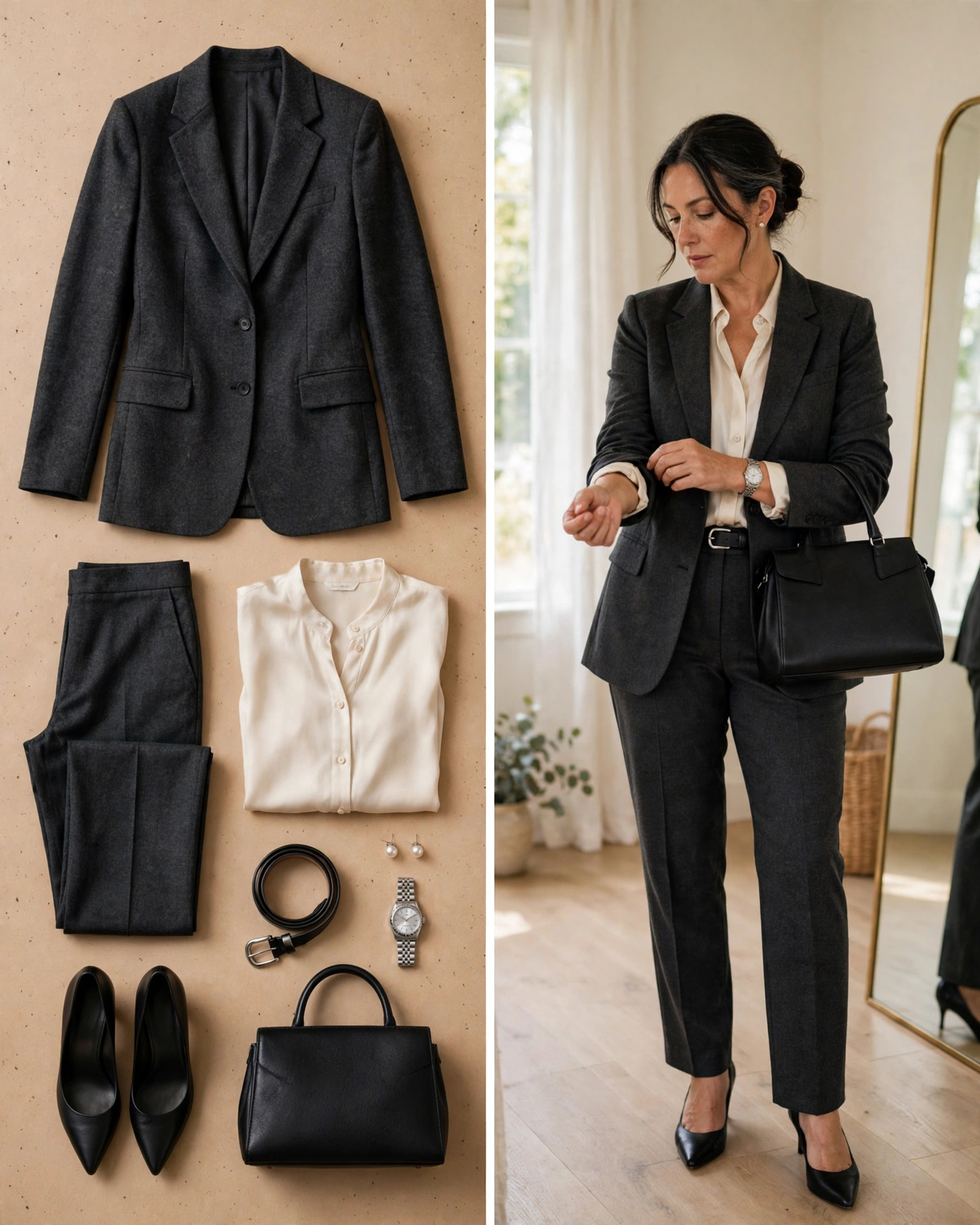
Even the best plus ranges cannot cut for every individual body, which is why the final buying channel is your local tailor. Budget a small alteration into every tailored purchase — taking in a waist, shortening a sleeve, moving a button half an inch — and a good fit becomes a made-to-measure one for very little money. Before anything goes to the tailor, run the ten-minute check at home in daylight: sit, stand, reach overhead, climb a step, and inspect the shoulder seams, button lines and hem lengths in a full-length mirror. A charcoal suit and cream blouse that pass every check, with the waist nipped in by a tailor, will look bespoke at a fraction of the price.
In Summary
Plus size winter workwear that actually fits is out there — it just rewards shoppers who buy from true plus patterns, try tailoring on in person, use free returns strategically, and go to wide-fit specialists for the boots everyone else gets wrong.
Fit is the real luxury. A camel wrap coat that closes smoothly, a blazer that buttons without pulling and boots that zip over your calf will always look more expensive than a higher price tag in the wrong cut — and in the classic palette of camel, charcoal, navy, burgundy, cream, black, grey and plaid, every well-fitting piece works with every other.
So measure once, shop the right channels, keep a good tailor’s number saved, and build slowly. One perfectly fitting outfit at a time is exactly how a winter work wardrobe that truly serves you gets built.