A blazer is the hardest-working piece in a winter work wardrobe — and the one most women abandon by December, convinced it is too thin, too open at the neck and too unforgiving over anything warmer than a blouse. The blazer is not the problem. The layers you put under and over it are where winter styling is won or lost.
The trick is to think of the blazer as the middle of the outfit rather than the top of it. Warmth comes from slim, close-fitting layers that slide underneath without changing the blazer’s line, plus one or two deliberate moves — a belt, a longer coat — that seal the whole look against the cold.
This guide shares five layering tricks that keep a blazer in rotation all winter, each with a complete work outfit built from the classic palette of camel, charcoal, navy, burgundy, cream, black, grey and plaid.
Try one trick at a time with the blazer you already own, and by the coldest week of the year you will be layering on instinct — sharp in the meeting, warm on the platform, and never once dressed like you are heading for the slopes.
Start With a Slim Turtleneck Under the Blazer
The turtleneck is the blazer’s best winter friend: it fills the open neckline where cold air usually pours in, adds a full layer of warmth across the chest and shoulders, and still sits flat enough that the blazer closes without pulling. Choose fine-gauge merino or a ribbed knit that skims the body, tuck it in fully, and let the collar peek just above the blazer’s lapel for a clean, intentional line. Deep colours do the heavy lifting here — a burgundy fine-knit turtleneck under a camel blazer with charcoal wide-leg trousers keeps the palette classic while the knit does all the thermal work.

Sandwich a Fine Sweater Between Shirt and Blazer
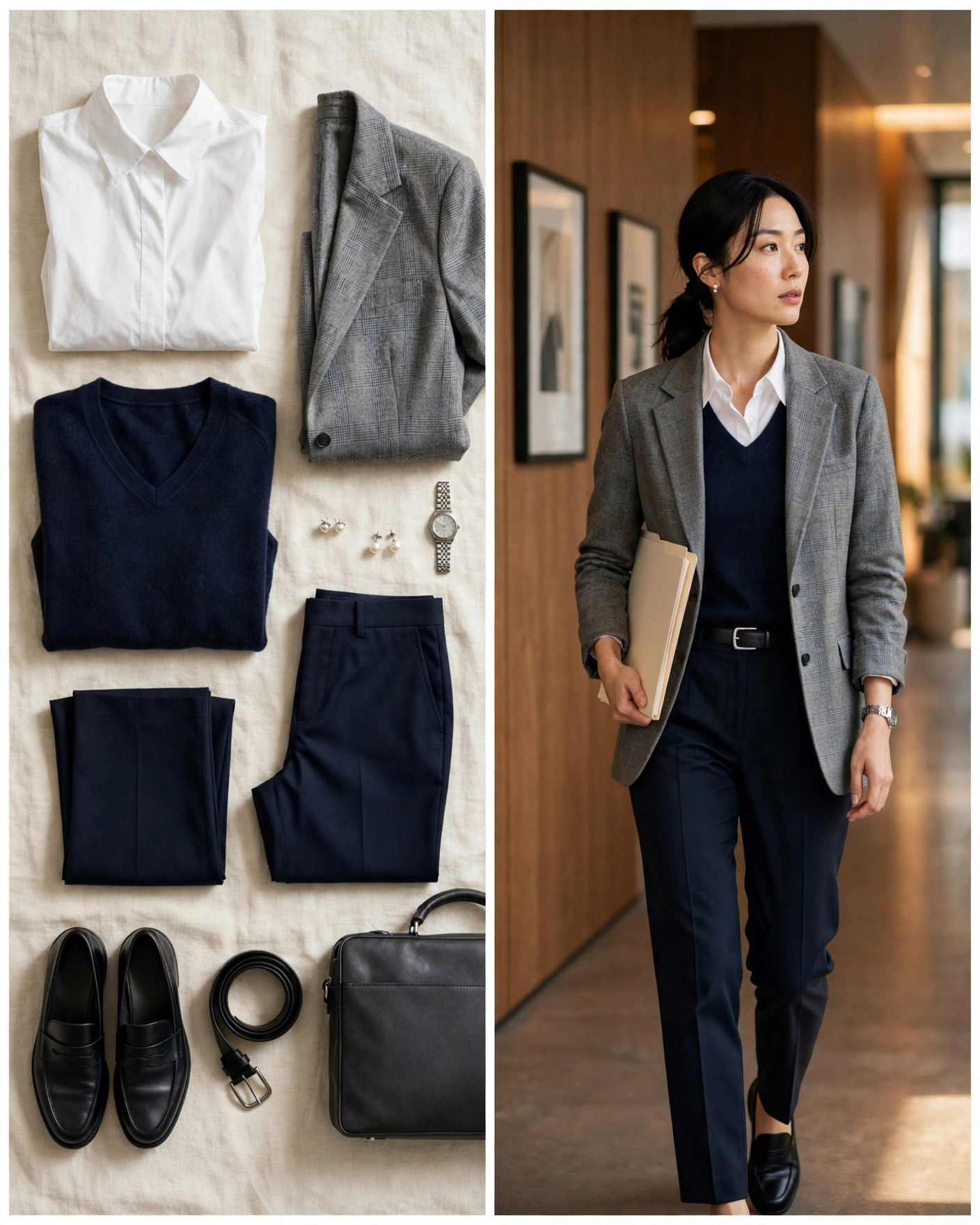
When one knit is not enough, build a three-layer sandwich: a crisp shirt as the base, a fine V-neck or crew sweater over it, and the blazer on top. The secret is keeping every layer thin — a cotton-poplin shirt, a featherweight merino sweater, nothing chunkier than a few millimetres — so the stack insulates like a coat while the blazer still drapes like tailoring. Let the shirt collar sit over the sweater neckline and a sliver of cuff show below the sweater sleeve; those small white edges are what make the layering look deliberate rather than padded. A white shirt under a navy fine-knit sweater, finished with a grey plaid blazer and navy trousers, is the version that survives the coldest office in the building.
Belt the Blazer Closed Over a Knit Dress
A blazer worn open loses heat every time you move; a blazer buttoned and belted becomes a fitted layer that traps warmth and defines your waist in one move. Wear it over a knit dress rather than separates — the smooth, single-layer base means nothing bunches at the waistband under the belt — and choose a belt wide enough to sit over the closed button without strain. Keep tights opaque and boots tall so the dress hem, boot top and blazer form one unbroken warm column. A black blazer belted over a burgundy ribbed knit midi dress with knee-high boots takes you from desk to work dinner without a single layer change.

Treat the Blazer as a Mid-Layer Under a Long Coat
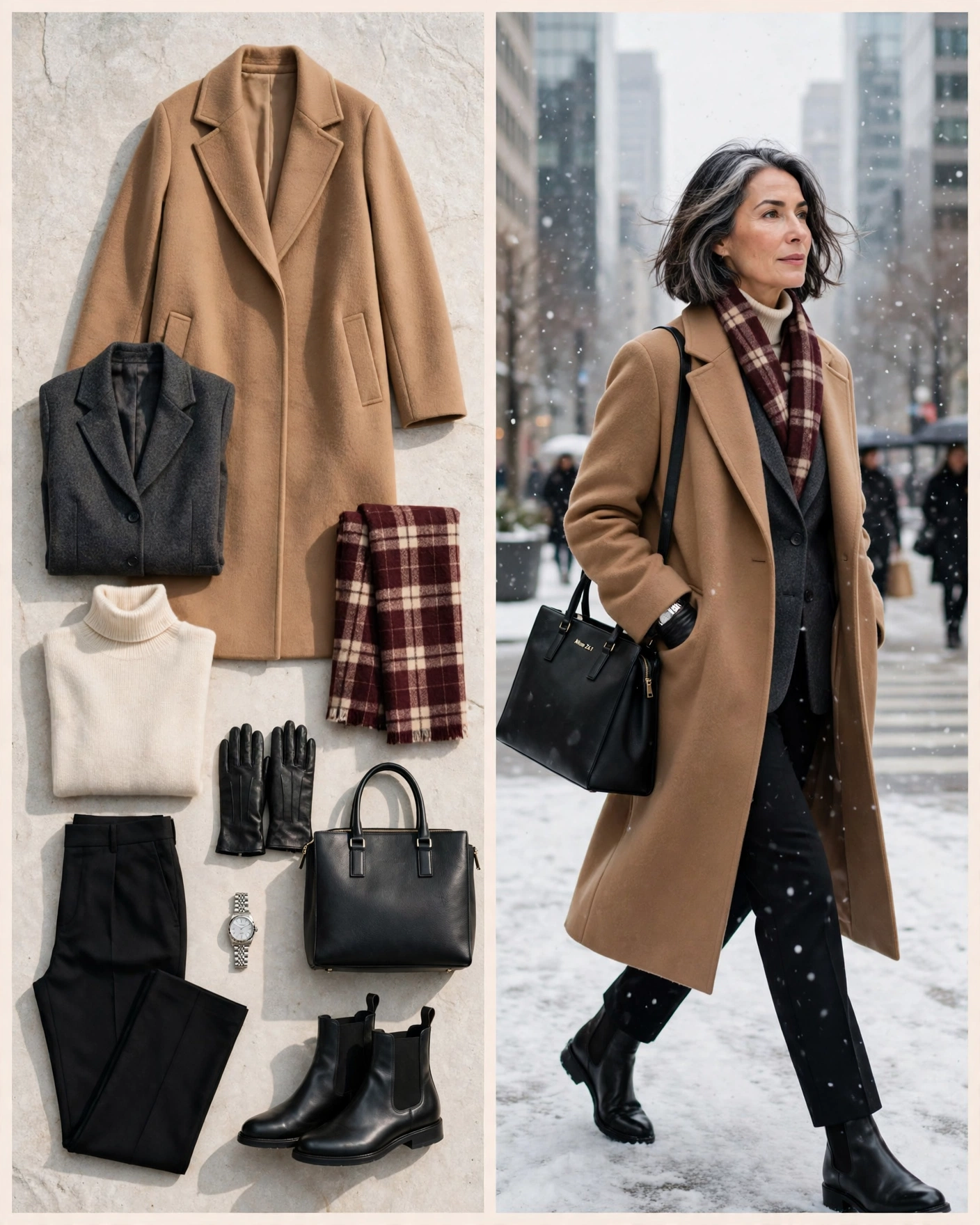
On genuinely freezing days, stop asking the blazer to be the outer layer — promote the coat instead and let the blazer become the warm, tailored middle. A long wool coat cut with a little ease through the shoulders slides over a blazer without crushing it, and the double tailoring means you arrive, remove the coat, and are already dressed for the meeting. Match the lengths carefully: the coat should fall well below the blazer’s hem, and a scarf in a colour drawn from the outfit seals the neckline gap the coat leaves open. A charcoal blazer layered under a long camel coat, with a cream turtleneck, black trousers and a plaid scarf, is the commute formula that never fails.
Hide a Thin Quilted Vest Underneath
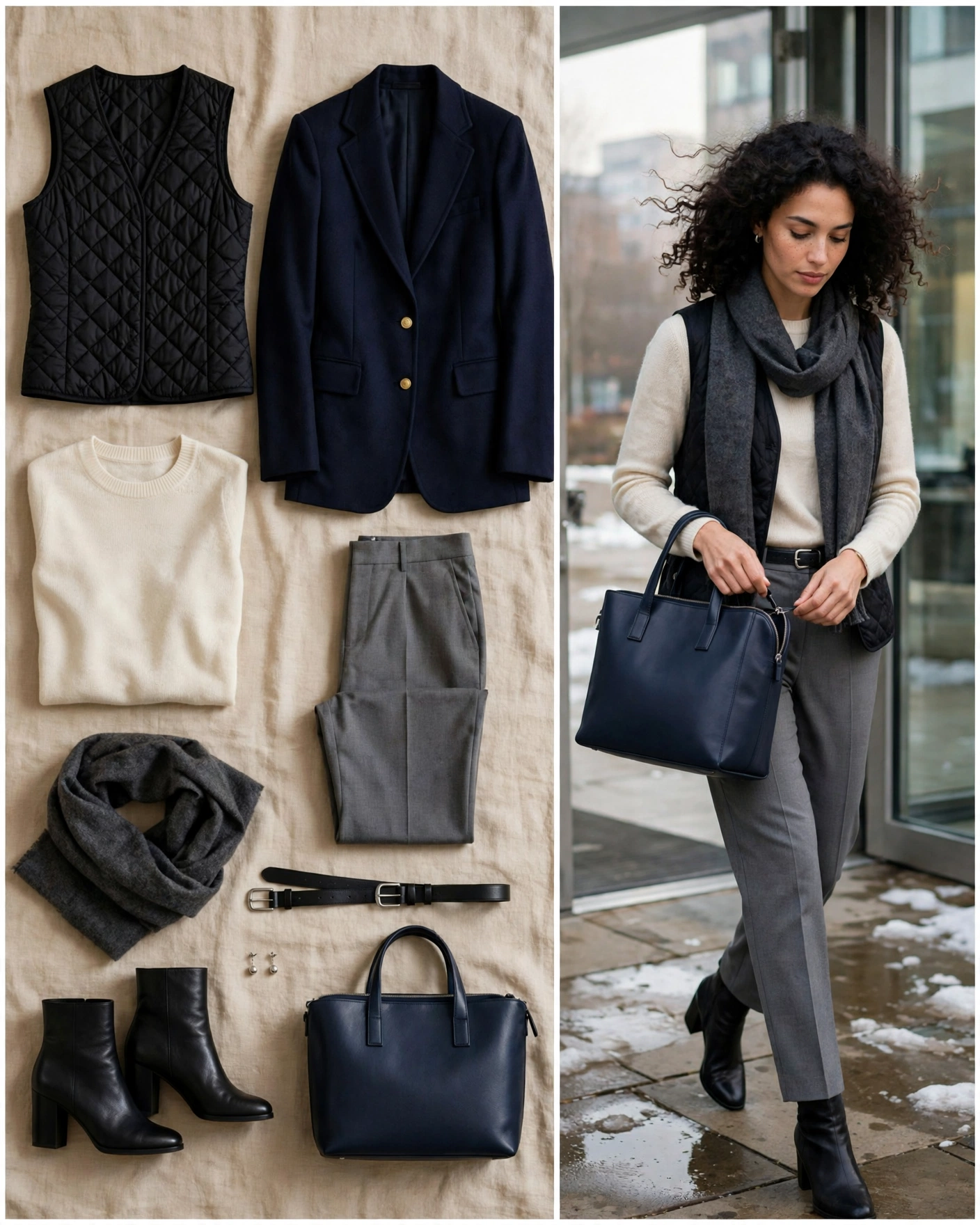
The stealth trick stylists rely on: a slim quilted vest worn under the blazer adds a windproof, insulated core exactly where you need it, and because it is sleeveless and cut close, it stays completely invisible beneath a buttoned blazer. Choose the thinnest down or synthetic fill you can find, a V-neckline that hides below the blazer’s top button, and a matte finish so nothing shines through the blazer’s fabric. It earns its keep on the commute and in draughty offices, then unzips and hangs on your chair if the heating finally wins. Under a navy blazer with a cream crew-neck knit and grey trousers, nobody will ever know your warmest layer is there.
In Summary
A winter blazer is never a single layer — it is the centre of a system. A slim turtleneck fills the neckline, a fine sweater sandwiched over a shirt triples the insulation, a belt seals the blazer into a fitted layer, a long coat promotes it to a tailored mid-layer, and a hidden quilted vest adds warmth nobody can see.
The best part is that none of these tricks asks you to buy a new blazer. They work with the camel, charcoal, navy, black and plaid blazers already hanging in most work wardrobes, and with the classic winter palette everything layers together without a colour clash in sight.
So keep the blazer in rotation this winter. Layer smart underneath, seal it properly on top, and you will stay sharp in the boardroom and warm on the coldest commute — exactly what good styling is supposed to do.