Nothing dates a good sweater faster than pilling. The knit itself can be perfect — the colour rich, the fit exactly right — but a dusting of tiny fuzz balls across the front and under the arms makes it look tired, cheap and several winters older than it is, usually just before the morning you most need to look sharp.
Pills are not a sign of a bad sweater. They are short, broken fibres that work loose from the yarn, rub against a surface and tangle into balls — and work knits take more friction than almost anything else you own. Bag straps cross the chest, seatbelts saw at one shoulder, desk edges rub the forearms and sleeves catch on chair arms all day, which is why your most-worn office knit always pills first.
This guide covers both halves of the problem: how to rescue a sweater that has already pilled so it looks new again, and the washing, drying, storing and wearing habits that stop new pills forming. Every step is paired with a winter work outfit from the classic palette of camel, charcoal, navy, burgundy, cream, black, grey and plaid.
Build these six habits into your routine and the same burgundy, navy and camel knits rotate through winter after winter with smooth surfaces and sharp lines — no replacement shopping, and no meeting where your sweater looks older than your ideas.
Shave Fresh Pills Away with an Electric Fabric Shaver
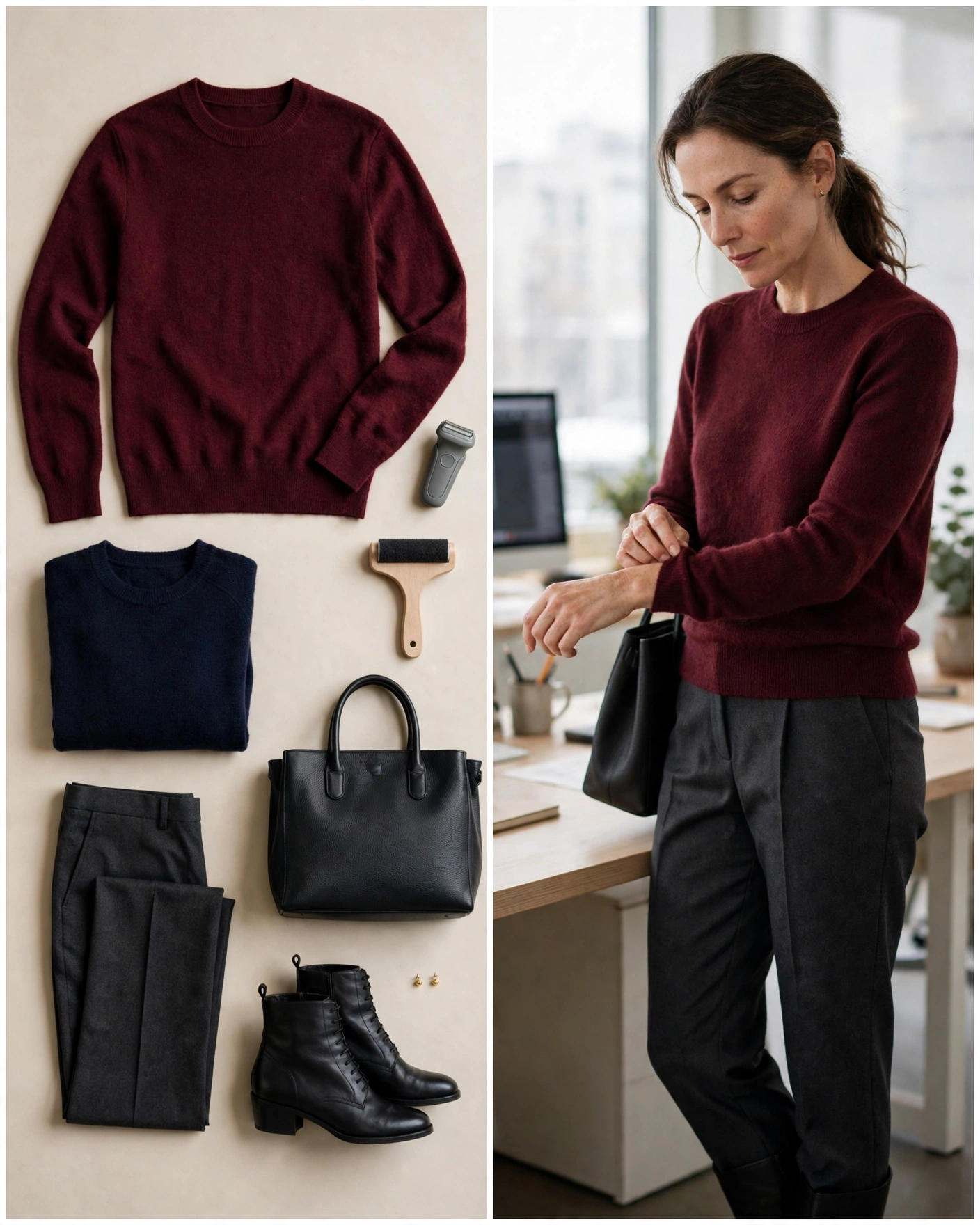
The fastest rescue for a pilled sweater is a small electric fabric shaver, and used properly it is the difference between a knit that looks rescued and one that looks attacked. Lay the sweater completely flat on a firm surface — a table, never your lap — smooth each section with your palm, and move the shaver in light, slow circles with no downward pressure, letting the rotating blades skim the pills off the surface. Work the friction zones first: under the arms, down the sides where your bag hangs, and across the stomach where the desk edge rubs. Empty the lint chamber often, test an inside hem before you start on the front, and stop the moment the surface looks clean rather than chasing perfection — over-shaving thins the yarn and invites faster pilling next time. A burgundy fine-knit crew-neck treated this way comes back smooth enough to wear under a blazer with charcoal trousers, looking like it came off the shop rail that morning.
Comb Delicate Knits Back to Smooth with a Cashmere Comb
Cashmere, lambswool and fine merino deserve a gentler tool than a shaver: a cashmere comb, whose fine metal teeth lift pills away without any blade near the yarn. Spread the knit flat, hold the fabric taut with one hand, and draw the comb across the surface in short strokes in one direction only, lifting the pills off rather than scrubbing at them. Work in good light so you can see the shadow each tiny ball casts, gather the loosened pills with your fingers as you go, and finish with a soft clothes brush to lay the surface fibres back down in one direction. The whole job takes five minutes on a Sunday evening and is oddly satisfying. Combing is a maintenance habit, not a one-off repair — a light pass every few wears keeps pills from ever building into the matted patches that need a shaver. A cream cashmere crew-neck kept this way stays soft and unbroken-looking season after season, pairing with navy wide-leg trousers and tan loafers like a knit that has just been unboxed.

Wash Cold, Inside Out, and Far Less Often
Most pilling is born in the wash, not in the wardrobe. Every machine cycle tumbles fibres against each other and against rougher garments, loosening exactly the short fibres that later tangle into pills. The first fix is frequency: a work sweater worn over a blouse or base layer rarely needs washing after one wear — air it on a chair overnight and most knits are good for three or four wears between washes. When you do wash, turn the sweater inside out so the face of the knit is protected, slip it into a mesh laundry bag, and choose cold water, a gentle or wool cycle and a small amount of wool wash. Keep zips, hooks and denim out of the load entirely; one open zip fastening can saw at a knit for forty minutes. Hand washing in a basin of cool water is gentler still for your best pieces. A navy merino sweater washed this way keeps its smooth face through a whole winter of grey plaid trousers and black loafers, instead of fuzzing by half-term.

Dry Every Knit Flat So It Keeps Its Shape and Surface
How a sweater dries decides both its shape and its next round of pilling. A wet knit is heavy and fragile: hung on a hanger or a line, its own water weight drags the shoulders into points and stretches the body, and drip-drying against a radiator bakes one side while the other stays damp. The tumble dryer is worse — heat and tumbling together are a pill-making machine, abrading the surface for the whole cycle. Instead, lift the washed sweater out supporting its full weight, roll it gently in a clean dry towel to press out the water without wringing, then lay it flat on a fresh towel or mesh drying rack, reshaping the body and sleeves with your hands. Leave it away from direct heat and turn it once when the top feels dry. Flat drying keeps the surface calm and even, so fibres settle back into the yarn instead of lifting. A camel chunky knit dried this way holds its line under a burgundy midi skirt with knee-high boots, smooth from shoulder to hem.

Fold, Don’t Hang: Store Knits Away from Friction
Storage quietly undoes sweaters between wears. On a hanger, a knit stretches at the shoulders and its front rubs against zips, buttons and rough fabrics every time the wardrobe door moves — friction applied daily, all winter, before you even put it on. Folded storage removes both problems. Fold each sweater smoothly with the front facing inward, slip a sheet of plain tissue paper between folds if you stack them, and keep the stack low — three or four knits high at most, so the bottom one is not crushed and dragged out from under the pile each morning. Cedar blocks or a plain lavender sachet in the drawer keep moths away from the wool without any scent clinging to your work clothes. Smooth the surface with your palm as you fold; pills that start as a lifted, roughened patch in storage are the ones that bloom after one wear. A grey crew-neck stored folded this way comes out of the drawer crease-light and smooth, ready to layer over a cream blouse with navy trousers and brown brogues.

Buy Tighter Weaves and Rest Each Sweater Between Wears
Prevention starts before the sweater is even yours. Pilling is worst on loose, fuzzy knits spun from short fibres, so when you shop, look for the opposite: a fine-gauge, tightly knitted surface that feels smooth and dense when you pinch it, with little halo of fuzz on the shop rail. Hold the knit up and rub two layers of the same sweater together briskly for ten seconds — if fibres already lift and ball, they will do it far worse on your body. Long-staple fibres, merino and tightly twisted yarns cost a little more and repay it by staying smooth for years. The second half of prevention is rest: a knit worn two days running never gets to recover, because the fibres need a day relaxed and flat for the yarn to settle back. Rotate at least three work sweaters so each one rests a full day between wears. A charcoal tight-weave crew-neck rotated with cream and burgundy knits keeps its clean face through a season of black tailored trousers and pointed pumps, still reading as new at the spring clear-out.

In Summary
Pilling is a process, not a verdict — and every stage of it has a counter-move. The fabric shaver and the cashmere comb rescue the sweaters you already own, bringing a matted burgundy or cream knit back to a smooth, wearable surface in minutes at home. Cold, gentle, inside-out washing then stops the rescue from being needed so often.
From there it is the quiet habits that compound: drying flat so the surface settles calmly, folding instead of hanging so storage adds no friction, choosing tight weaves when you buy, and resting each sweater a day between wears so the fibres recover. None of these take more than a few minutes, and together they are the whole difference between a knit that looks elderly by February and one that still looks new next winter.
So rescue your favourite first, set the washing and storing habits once, and let your camel, charcoal, navy and burgundy work knits do what they were bought to do — come out of the drawer smooth, sharp and ready, season after season.