A winter business trip is the hardest packing problem there is: the clothes are bulky, the weather at the other end is a guess, and the meetings do not care that your coat took up half a suitcase. Check a bag and you add an hour of carousel risk to every tight connection; pack badly and you spend the trip rotating the same two outfits while the one blazer you actually needed hangs at home.
The good news is that a carry-on is genuinely enough for a week of winter work — but only if every piece is chosen as part of a system rather than as individual outfits. Palette first, heavy pieces worn not packed, knitwear rolled, one suit doing triple duty, and shoes capped at two pairs.
This guide walks through the six decisions that make it work, in the order you should make them at the open suitcase. Each step comes with a complete outfit pulled from the classic winter work palette of camel, charcoal, navy, burgundy, cream, black, grey and plaid.
Pack this way once and the routine sticks: you walk off the plane with everything you need in the overhead bin, and every day of the trip has a polished outfit that was planned, not improvised.
Start With a Three-Day Capsule in One Colour Palette
Everything else in this guide depends on this first decision: pick three neutrals and one accent colour, and let nothing into the case that does not match all of them. A capsule built on camel, charcoal and cream with burgundy as the accent means the coat goes with every trouser, the turtleneck goes under every layer, and three days of clothes combine into five or six genuinely different outfits. The rule for each candidate piece is simple — if it only works in one outfit, it stays home. Start with the anchor outfit you will travel in and build around it: a camel wool coat, cream fine-knit turtleneck, charcoal tailored trousers, black ankle boots and a burgundy wool scarf already cover the airport, the first meeting and a working dinner, and every one of those pieces reappears in later combinations. Pack for three days and mix, rather than five days and repeat, and the case closes without a fight.

Roll the Knits and Fold the Tailoring Flat
How you pack matters as much as what you pack. Knitwear should always be rolled, never folded: rolling a sweater or a pair of wool trousers into a tight tube pushes out the air, stops hard crease lines forming across the front, and lets each roll slot into the gaps around shoes and cubes. Tailoring goes the opposite way — a blazer travels best folded flat inside a packing cube, turned inside out with the shoulders tucked into each other so the lapels and structure arrive uncrushed. Packing cubes are what make the system work in a small case: one cube for rolled knits, one for folded tailoring, and the compression buys you roughly a third more space. A burgundy fine-knit sweater and grey plaid trousers rolled this way, with the black single-breasted blazer cubed flat on top, come out at the hotel needing nothing more than ten minutes hanging in a steamy bathroom.

Wear the Coat, Boots and Bulkiest Knit on the Plane
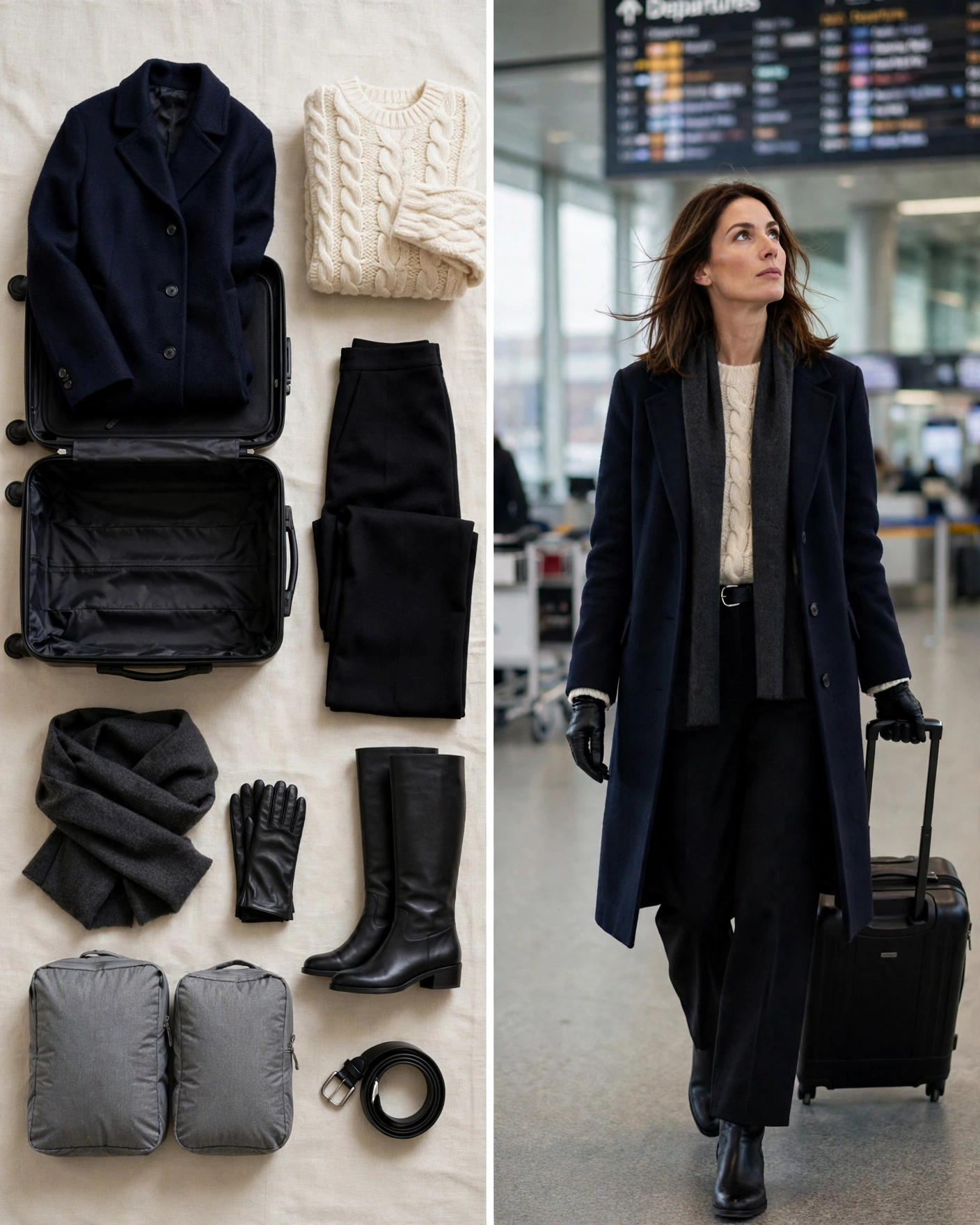
The heaviest third of a winter wardrobe should never see the inside of the suitcase. A long wool coat, knee-high or chunky ankle boots and your thickest sweater can easily account for three kilos and half the case’s volume — worn on the plane, they cost you nothing but a few minutes at security. There is a second benefit: cabin temperatures swing from stuffy to freezing, and the chunky knit plus coat-as-blanket combination handles both ends of that range better than anything an airline provides. Choose the travel outfit for this job deliberately: a navy long wool coat over a cream chunky cable-knit sweater, black wide-leg trousers and black knee-high boots looks like a considered outfit rather than a packing strategy, and the wide-leg trousers stay comfortable through a long flight in a way skinny fits never do. Everything you are wearing is also the outfit least likely to crease, which is not a coincidence.
Pack One Suit and Style It Three Different Ways
One suit is the hardest-working thing in the case, provided you pack it as separates rather than as a single outfit. A navy blazer and matching navy trousers give you the full suit for the most formal meeting of the trip, the blazer over your capsule’s charcoal or grey trousers for day two, and the trousers with a knit and no jacket for the casual day — three distinct registers from two pieces. The swaps that stretch it furthest are small and light: a crisp white cotton shirt for the formal day, a cream fine-knit top for the middle day, and a burgundy silk scarf that changes the neckline of both and doubles as an evening layer. Black pointed pumps are the one formal shoe the suit needs, and they slide flat along the case wall where boots never could. Plan the suit days in advance — formal, mixed, casual — and the rest of the capsule only has to fill the gaps between them.

Limit Shoes to Two Pairs and Make Both Work Hard
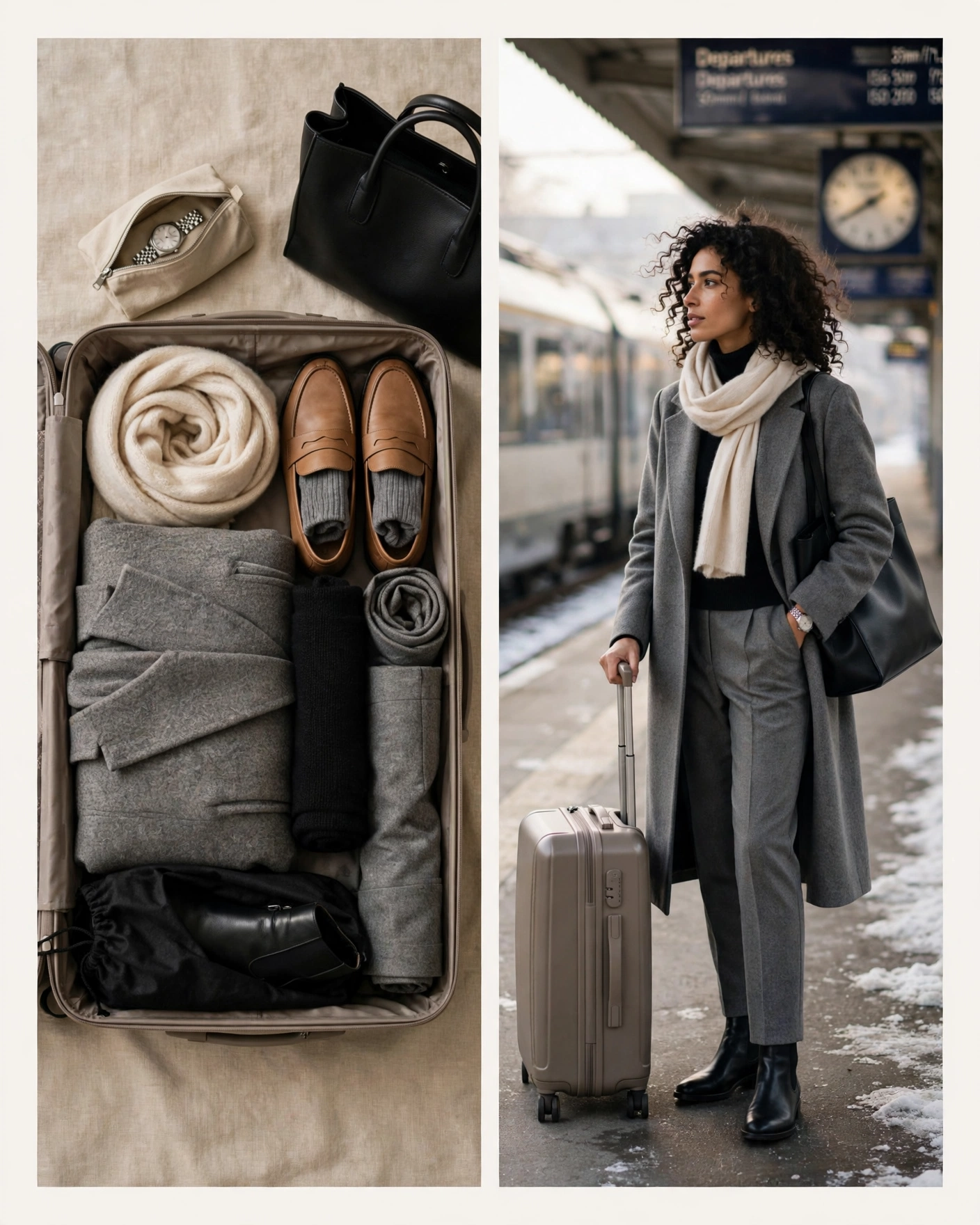
Shoes are where carry-on packing plans go to die: they are the heaviest, bulkiest and least compressible things you own, and a third pair almost never earns its space. The working rule is two pairs total — the boots you wear to travel, chosen for the worst weather of the trip, and one smarter flat pair packed flat, such as leather loafers that slip into the case lid or along its wall. Every outfit in the capsule must be tested against both pairs before it earns a place; a skirt or trouser length that only works with heels you are not bringing is a packing error, not an outfit. Use the inside of the packed pair, too — socks, chargers and small pouches stuffed into shoes reclaim the dead space their shape creates. A long grey wool coat, black turtleneck and grey tailored trousers work with the worn black ankle boots on a wet arrival day and the packed tan loafers on the dry days between, which is exactly the flexibility the two-pair rule is designed to buy.
Keep an Arrival Kit in Your Personal Item
The last decision protects the first impression. Keep one complete, crease-resistant outfit within reach in your personal item — not buried in the case — so a delayed flight, a spilled coffee or a meeting moved forward by two hours never leaves you presenting in what you slept in on the plane. A knit dress is the ideal arrival piece: it rolls to the size of a water bottle, shrugs off wrinkles entirely, and needs no matching because it is the whole outfit. A cream ribbed-knit midi dress with a plaid scarf and the black heeled ankle boots already in your capsule takes you from arrivals hall to meeting room in the time it takes to find a mirror, and the scarf hides any travel creases at the neckline while adding the pattern the plain dress needs. Pack the arrival kit last and unpack it first: hang the dress up while you shower, and the trip starts on the front foot.

In Summary
A week of winter business travel fits in one carry-on when the packing is a system: a three-day capsule in one tight palette so everything mixes, knits rolled and tailoring folded flat in cubes, the coat, boots and bulkiest knit worn on the plane instead of packed, one suit styled three ways, shoes held to two pairs, and an arrival outfit kept within reach in your personal item.
Notice that none of these moves asks you to bring less style — they ask you to bring fewer, better-connected pieces. The camel coat, the navy suit, the burgundy knit and the plaid scarf all appear more than once across the trip, and it is that repetition, planned in advance, that makes a small case feel like a full wardrobe.
So open the case on the bed, lay out the palette first, and pack in the order this guide runs. You will close the lid without sitting on it, walk past the baggage carousel without stopping, and arrive at the first meeting looking like someone whose luggage was never a question.