Starting a work wardrobe from absolute zero is daunting enough in spring. In winter it can feel impossible: coats cost real money, boots cost real money, and somehow you are expected to own both — plus everything that goes underneath — before your first Monday. The temptation is to panic-buy a rail of random sale pieces and discover by February that none of them work together.
The way out is to build in the right order. A winter work wardrobe is not a collection of outfits; it is a small system of pieces chosen to combine, layered in the order you actually need them: a plan, a palette, the two expensive anchors, a reliable bottom half, tops and knits that slot under everything, and finally one dress and the accessories that make it all look finished.
This guide walks through those six steps in sequence, each with a complete outfit that shows the step working. Everything is built from the classic winter palette of camel, charcoal, navy, burgundy, cream, black, grey and plaid, so each new piece multiplies the outfits you already own instead of starting a new problem.
Follow the order and you will spend less, own less, and still have something warm, polished and appropriate to wear every single working day of the season.
Start With Your Job, Your Dress Code and Your Budget
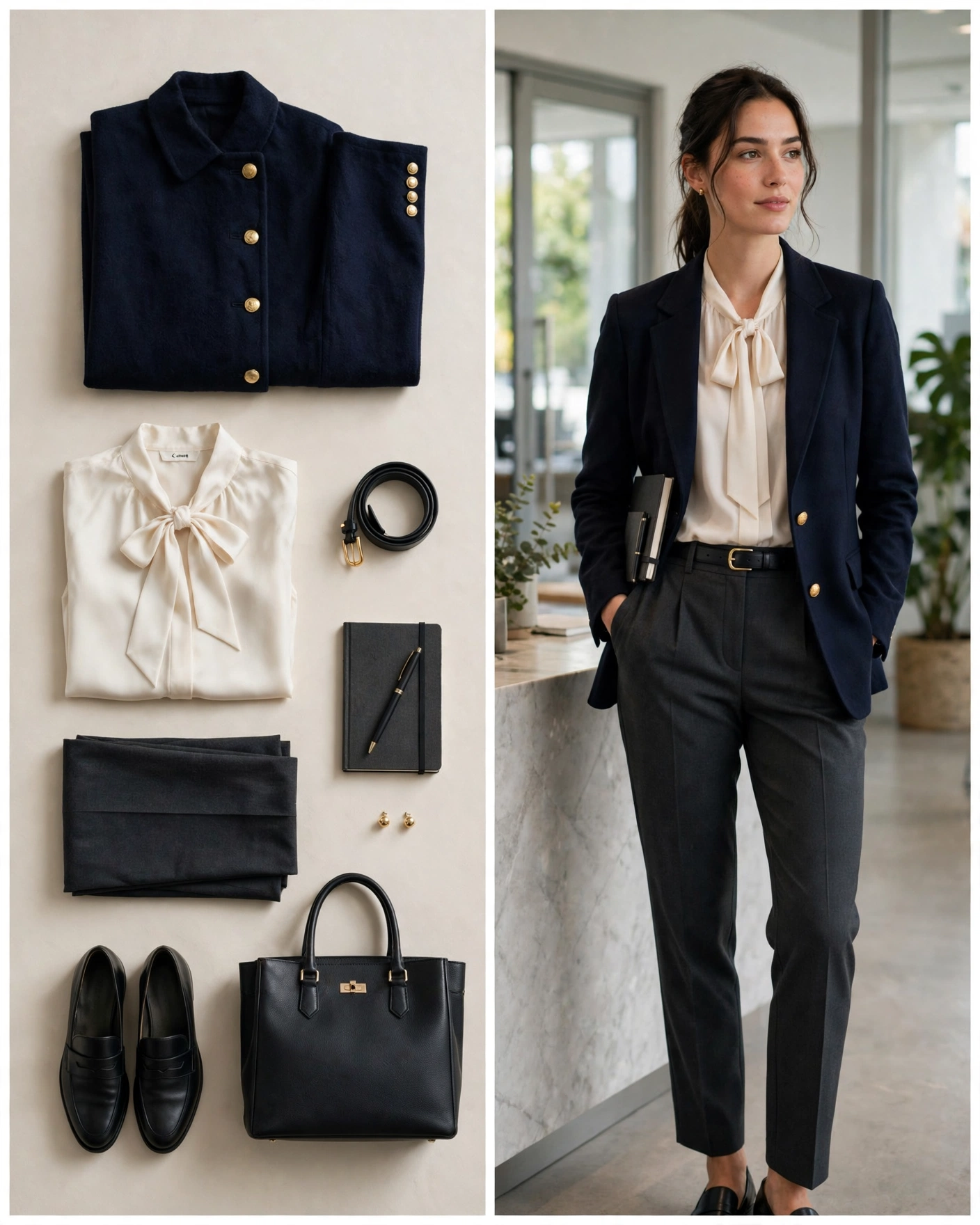
Before you buy a single thing, write down three facts: what your workplace actually expects (watch what the well-dressed people on your floor wear, not the handbook), how you get there (a forty-minute platform wait demands different clothes from a five-minute drive), and a total budget you can split across the season rather than blowing in week one. Most from-scratch wardrobes fail because they are built for an imaginary job — ballgowns for a business-casual office, jeans for a law firm. Dress for your real diary: a new starter in a smart office needs one dependable formula first, like the navy blazer, cream blouse and charcoal trousers here, that can carry a full week while the rest of the wardrobe arrives.
Pick a Tight Colour Palette Before You Spend Anything
A palette is the cheapest wardrobe upgrade there is, because it costs nothing and makes everything you buy afterwards combine automatically. Choose two neutrals that will carry most of your wardrobe — charcoal and navy, or black and camel — then add cream or white as your light neutral and one or two accent colours, such as burgundy or deep green, for knitwear and scarves. Rule for every future purchase: if it does not sit comfortably inside the palette, it does not come home, however good the discount is. A camel coat over a cream knit and charcoal skirt shows why the discipline pays off — three neutral pieces, zero effort, and an outfit that looks expensive precisely because nothing in it is fighting anything else.

Buy the Anchors First: One Serious Coat, One Pair of Boots
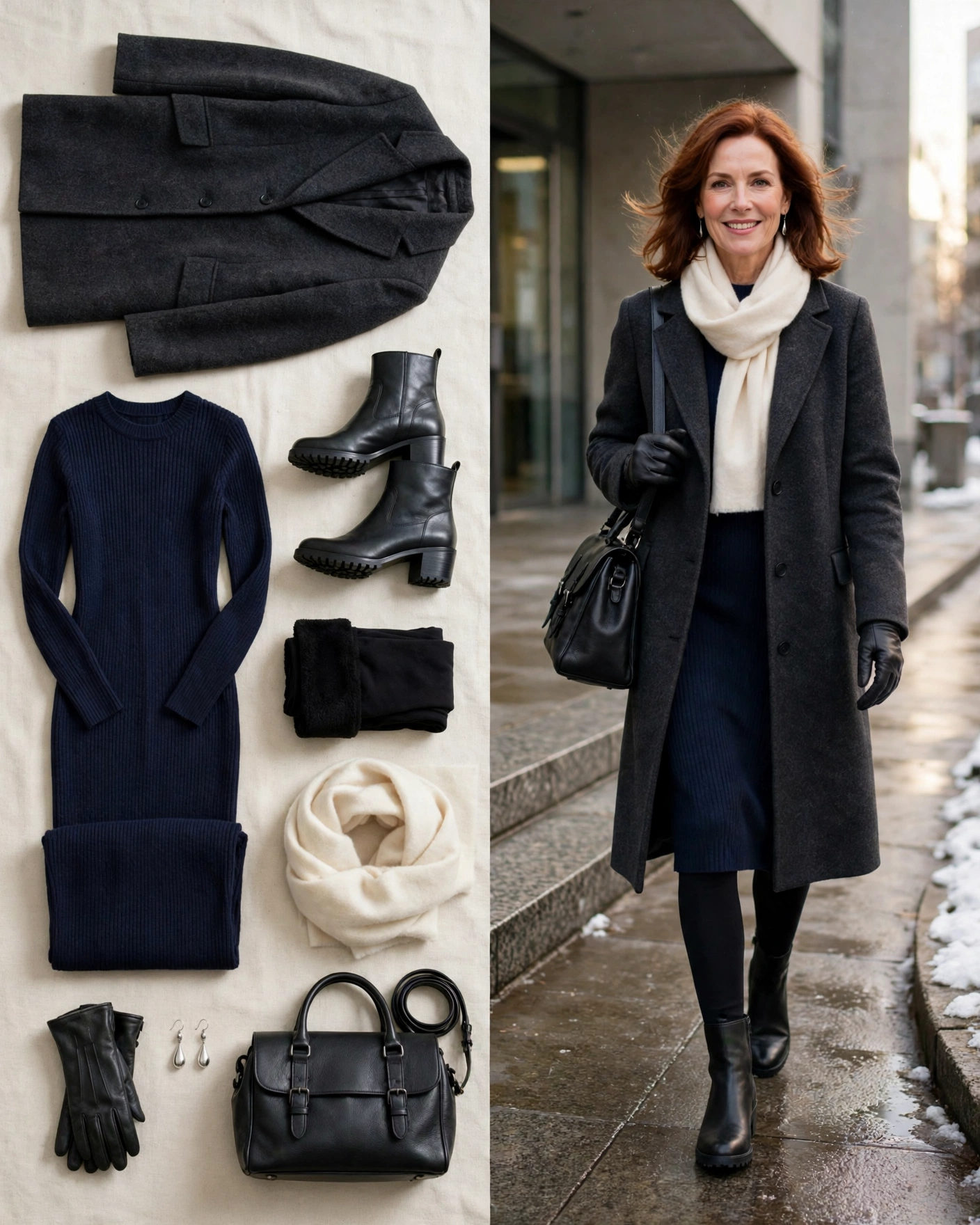
When money has to be sequenced, spend it where winter actually happens: outdoors. A long wool coat in one of your core neutrals and a waterproof leather boot with a lugged sole are the two pieces you will wear every single day for four months, so they earn their budget before anything decorative does. Choose the coat long enough to cover your longest skirt hem and roomy enough to sit over a blazer; choose the boot minimal enough on top to pass as a smart shoe once you are indoors. Together they form the frame of every outfit you own — a charcoal coat and black ankle boots over a simple knit dress will carry a brand-new starter through her entire first month of meetings.
Build the Bottom Half Around Two Trousers and One Skirt
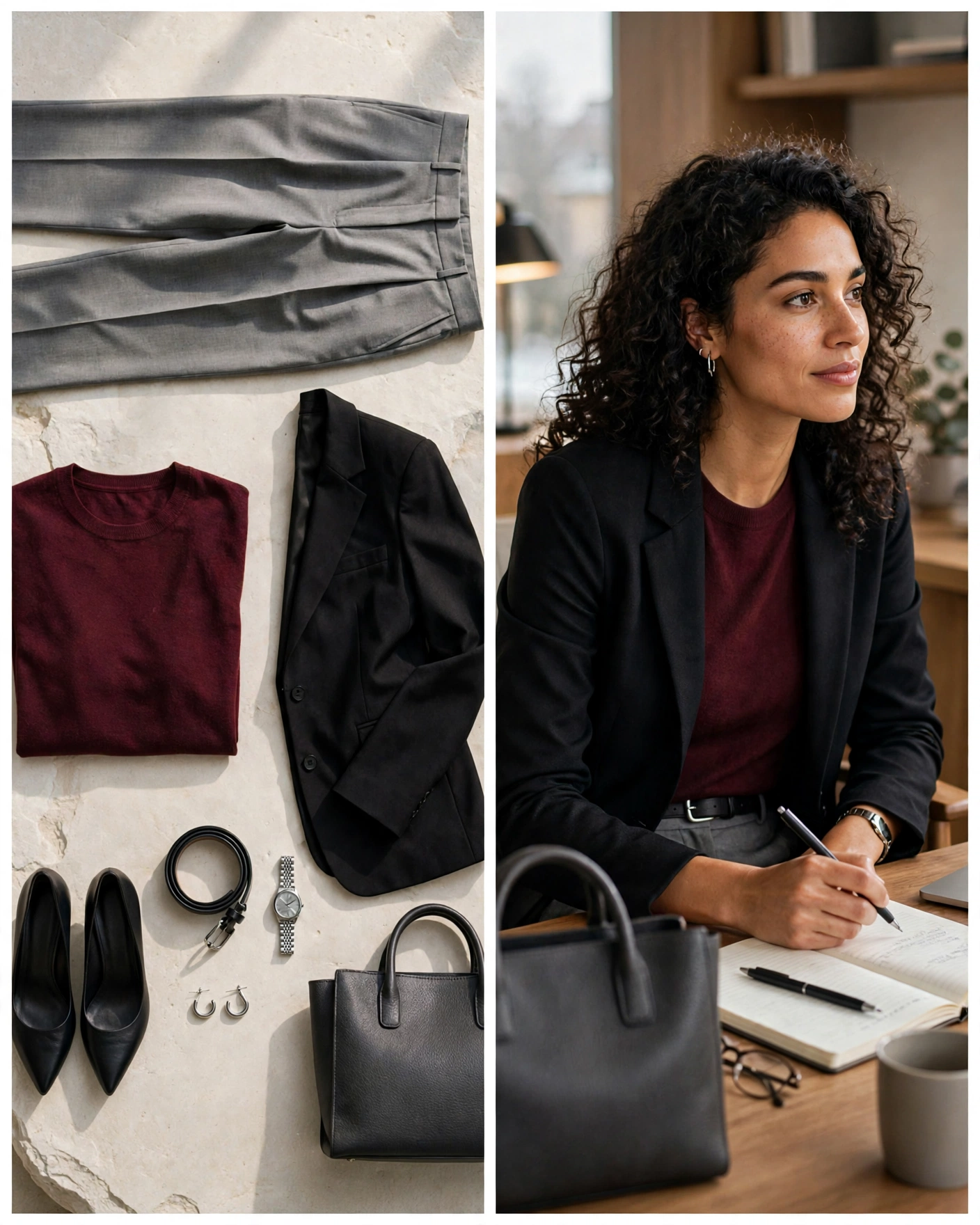
With the anchors bought, the bottom half is where a small wardrobe becomes a rotation. Start with two pairs of tailored trousers in your two core neutrals — say charcoal and black, or navy and grey — cut in slightly different shapes, one straight and one wide-leg, so outfits do not feel identical. Add one skirt in a winter-weight fabric, a wool midi or a plaid A-line, that works with opaque tights and both your boots and your shoes. Those three bottoms, combined with the tops still to come, quietly generate two weeks of distinct outfits. Grey wide-leg trousers with a burgundy sweater is the kind of combination this step exists to produce: plain pieces, endless mileage.
Layer in Tops and Slim Knits That Work Under Everything
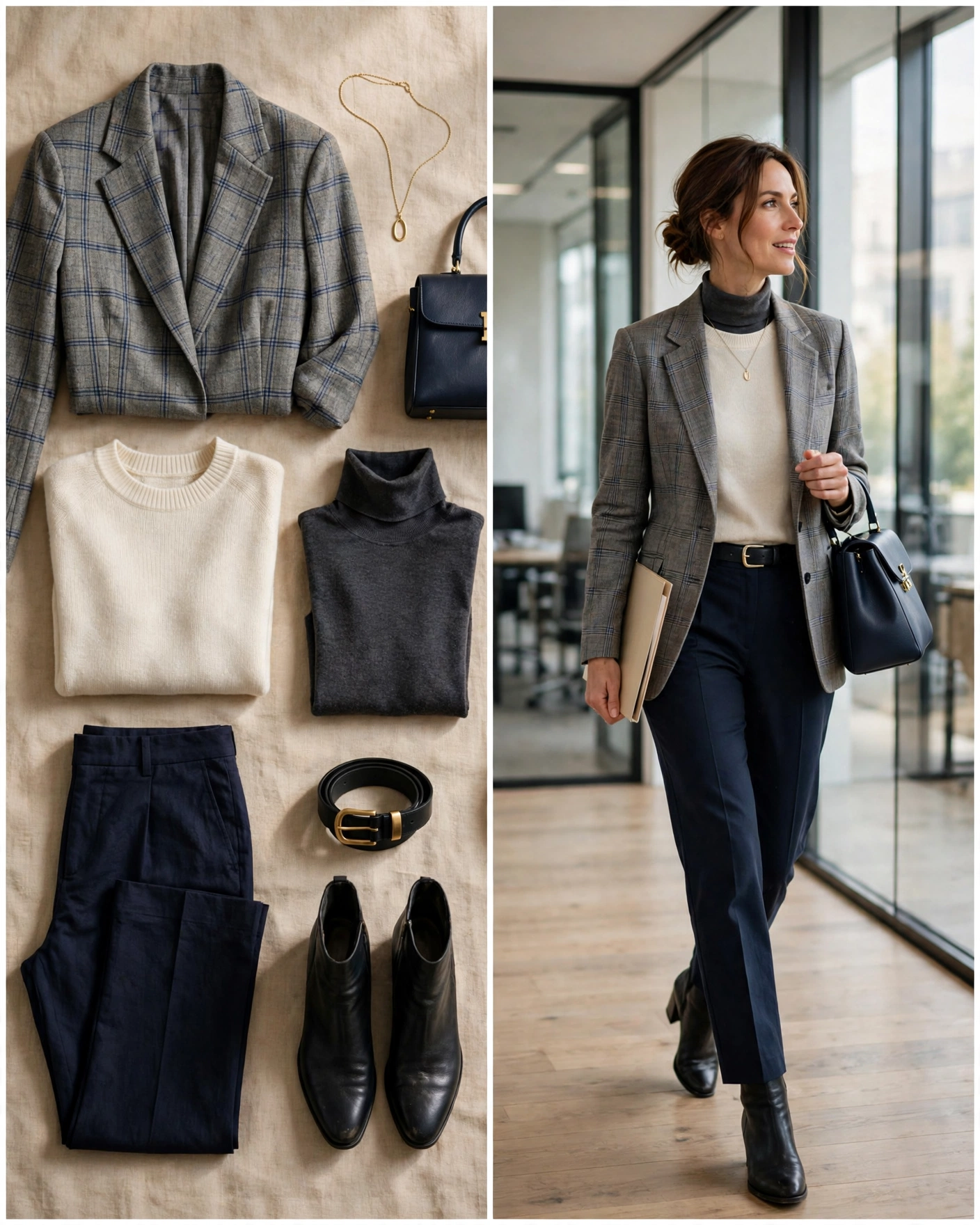
Tops are where a from-scratch wardrobe usually goes wrong — five statement blouses that each match exactly one thing. Buy the opposite: one white or cream shirt, one silk or satin blouse in a palette colour, and two slim fine-gauge knits, a turtleneck and a crew neck, that sit flat under your blazer and coat without bunching. Check every candidate against your bottoms before it joins the wardrobe; a top that works with both trousers and the skirt earns its place, one that works with nothing yet is a future problem wearing a price tag. A grey plaid blazer over a cream knit, finished with a charcoal turtleneck on colder days, shows how three quiet layers can look sharper than any single statement piece.
Add One Reliable Dress and the Finishing Accessories
The final step turns a set of separates into a wardrobe: one knit dress that needs nothing but tights and boots to be a complete outfit on the mornings your brain refuses to coordinate anything, plus the small kit of accessories that makes every combination look intentional. Put your accessory money into a structured bag in a core neutral, a wool scarf in an accent colour, leather gloves that match your boots, and one set of simple jewellery you can wear daily without thinking. A deep green sweater dress with gold earrings, a camel scarf and knee-high boots is the proof: one dress, four finishing touches, and a from-scratch wardrobe that suddenly looks like it was always this put together.

In Summary
Building a work wardrobe from scratch is a sequence, not a shopping trip: plan around your real job and budget, lock a tight palette of camel, charcoal, navy, burgundy, cream, black, grey and plaid, buy the coat and boots first, then the bottoms, then the layering tops, and only then the dress and accessories that finish everything.
Because each step was chosen to serve the ones before it, a wardrobe of barely a dozen main pieces produces weeks of warm, varied, work-appropriate outfits — and every future purchase has a clear test to pass before it earns a place.
So resist the panic-buy, follow the order, and let the wardrobe build itself one sensible step at a time. By the middle of winter you will not just be dressed for work — you will be dressed well for it, every day, without thinking.