Shopping for sustainable workwear sounds simple until you are standing in front of a rail of beige knitwear wondering which piece is genuinely ethical and which one is just well marketed. The frustrating truth is that the most sustainable work clothes rarely shout about it — they are the heavy wool coat, the blazer with real construction and the knit that still looks new after five winters, made by labels that publish how and where their garments are produced.
So instead of memorising a directory of names, it is smarter to learn what the right kind of brand actually does. Fibre choices, supply-chain transparency, timeless design and repair support are the four things that separate a genuinely ethical workwear label from a greenwashed one, and every one of them is visible before you spend anything.
This guide walks through the six things to look for when you shop ethical labels for winter workwear, and each one comes with a complete office outfit built from the classic winter palette of camel, charcoal, navy, burgundy, cream, black, grey and plaid — proof that dressing responsibly never has to look like a compromise.
Buy fewer pieces, buy them from makers who show their working, and the polished wardrobe builds itself.
Start With Natural Fibres That Outlast Trends
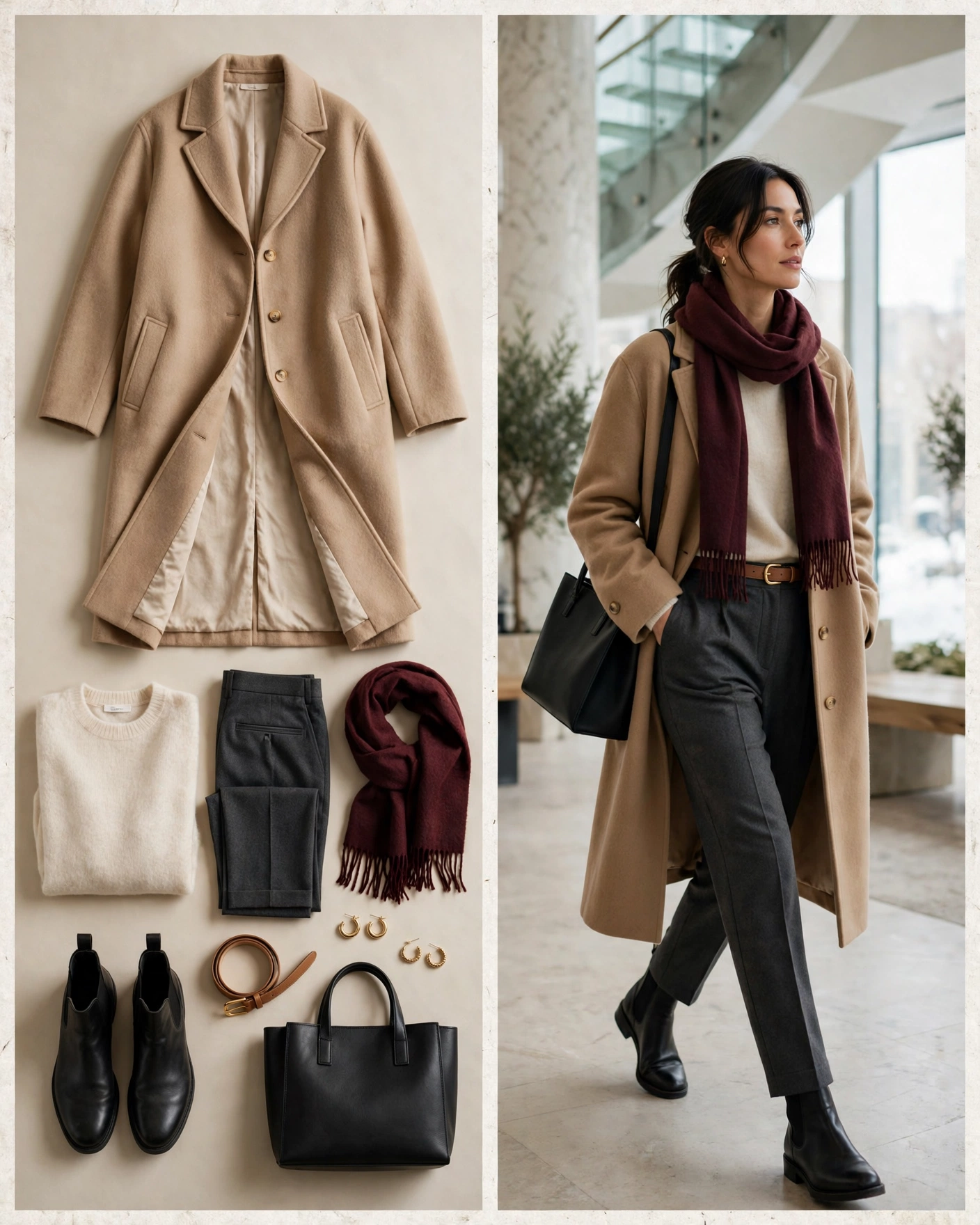
Fibre is where sustainability and polish stop being separate goals. Organic wool, recycled cashmere, organic cotton and responsibly sourced merino do everything synthetic workwear promises and more: they breathe instead of trapping sweat, hold a crease and a silhouette for years, resist odour so they need fewer washes, and can be brushed, steamed and repaired back to looking new instead of pilling into retirement after one season. Recycled fibres deserve a special mention — a sweater knitted from recycled cashmere keeps premium yarn in circulation without growing anything new, and it feels identical to virgin knitwear on the body. The quick check is the composition label: look for one or two natural fibres making up the whole garment rather than a polyester blend with a token percentage of wool. In practice that reads as a long camel coat in organic wool worn over a cream recycled cashmere sweater and charcoal tailored trousers — an outfit that looks like quiet luxury and is built to be worn for a decade.
Choose Makers Who Show You the Whole Supply Chain
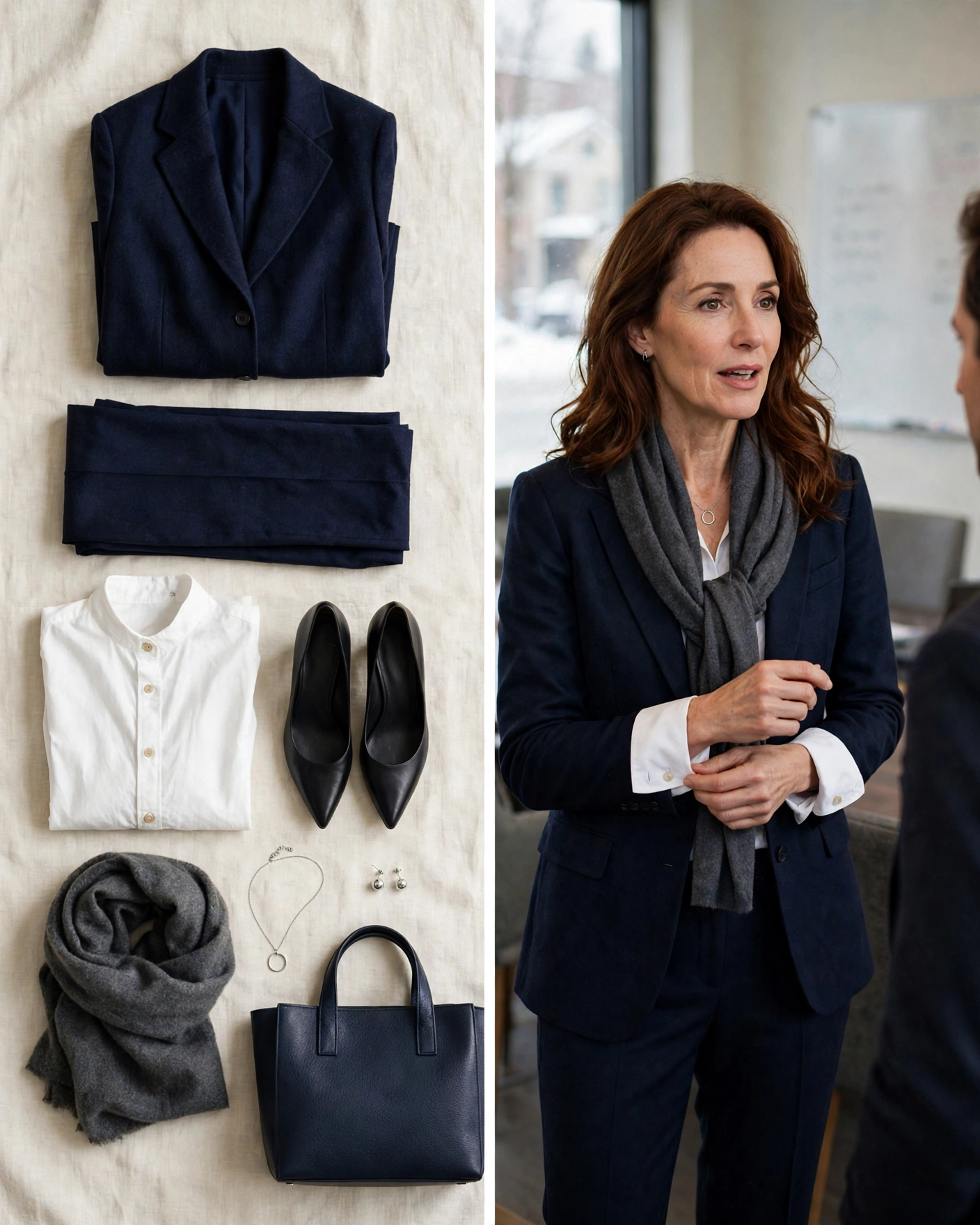
The labels worth your money treat transparency as a feature, not a favour. The credible ones publish their factory lists, name the mills their wool comes from, state the percentage of certified fibres in each garment and back their claims with independent audits rather than soft words — because vague language like conscious, eco or green on a swing tag, with no numbers attached, is the oldest greenwashing trick there is. A practical test before buying: the product page should tell you where the garment was made, what it is made from and who verified it, and the brand’s site should carry a repair or sourcing policy you can actually read. None of this research shows in the outfit itself, which is exactly the point — a navy suit in traceable merino wool, worn with a crisp organic cotton shirt, looks like nothing more than sharp boardroom tailoring while the supply chain behind it stays clean.
Buy Timeless Tailoring, Not Seasonal Trends
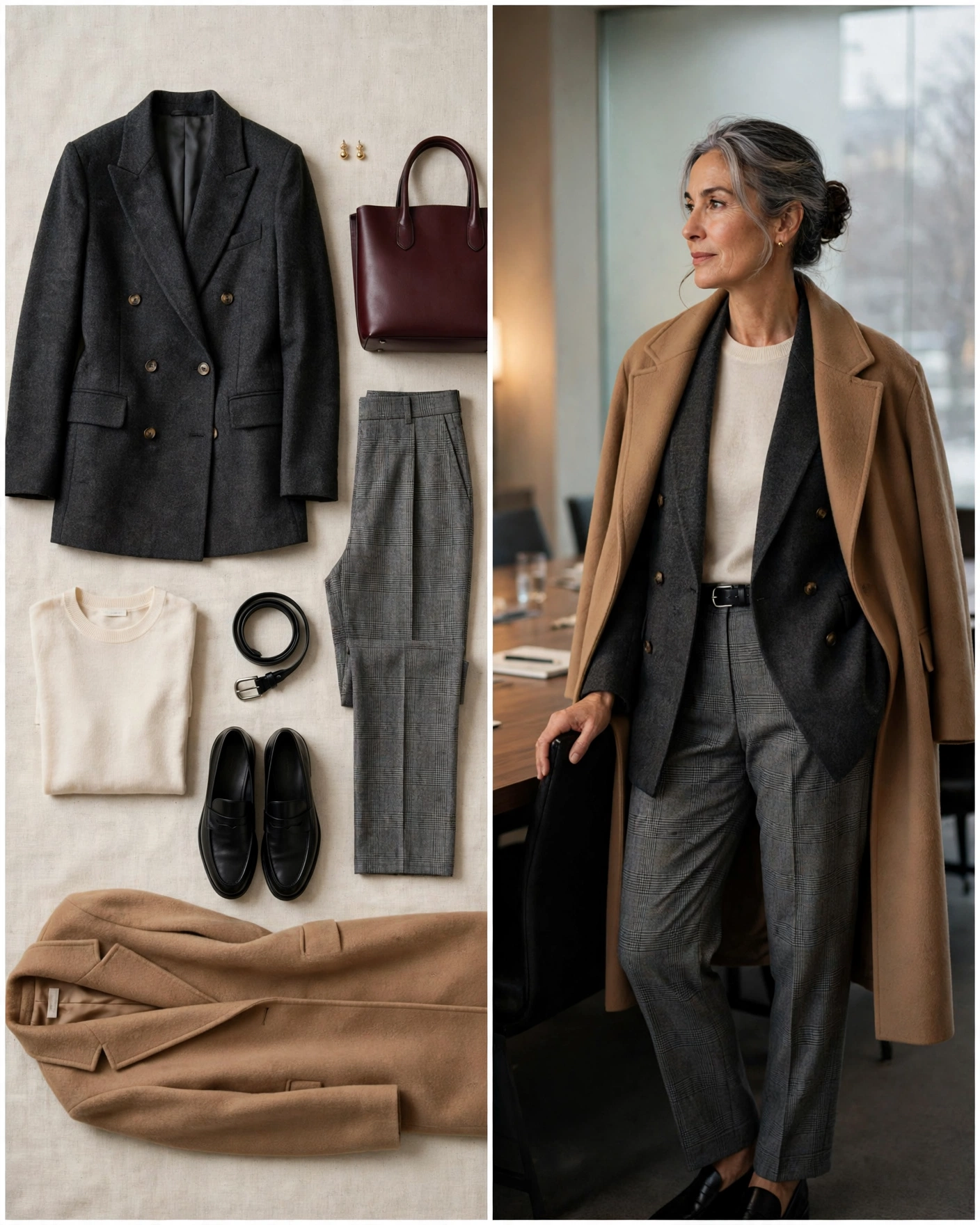
The most sustainable garment in any wardrobe is the one still in rotation ten years from now, and that is decided by cut and construction long before it is decided by fibre. Timeless tailoring means shapes that ignore the trend cycle: a single or double-breasted blazer with clean lapels, straight-leg trousers, a pencil or A-line skirt, a coat that falls below the knee. Construction is the part worth learning to read — fully lined jackets that hang smoothly, generous seam allowances a tailor can let out, buttons in horn or corozo rather than plastic, and lapels with structure instead of fused flatness. Ethical labels that design this way are effectively selling you a decade of outfits, because a blazer that can be altered and relined never has to be replaced. A charcoal double-breasted blazer in organic wool over grey plaid trousers and a cream fine-knit top is the working proof: nothing about it belongs to a single season, and nothing about it needs to be.
Build a Small Capsule That Mixes Without Thinking
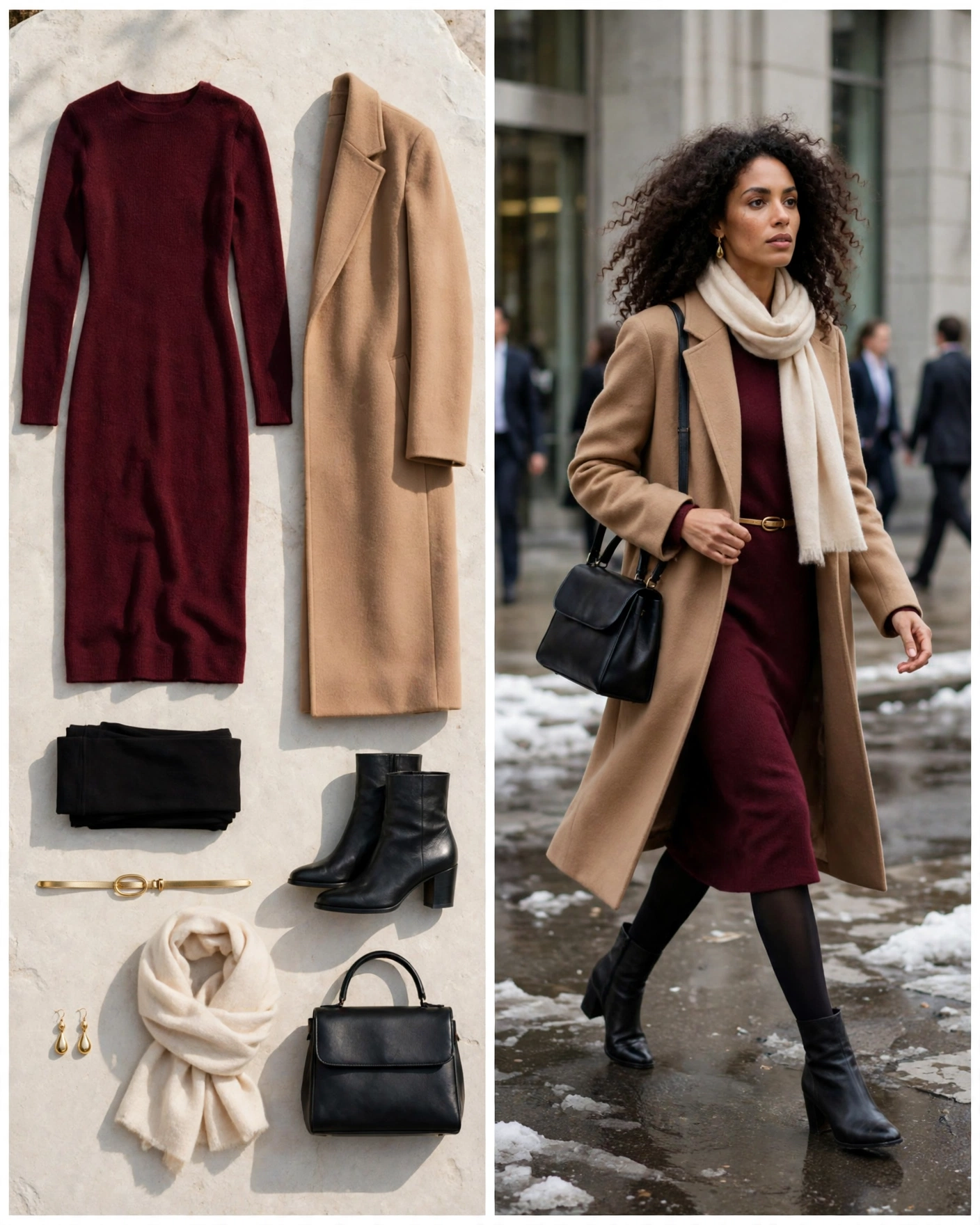
Capsule thinking is the engine that makes ethical shopping affordable, because a higher price per piece only works when every piece earns its place dozens of times a year. The method is discipline about palette and silhouette: twelve to fifteen pieces in one family of colours — camel, charcoal, navy, burgundy, cream, black, grey and plaid — where every top works with every bottom and one coat finishes everything. When a label sells in this spirit, its collections look almost plain on the rail, and that plainness is the point: no statement pieces that clash, no one-wear novelties, just knitwear, tailoring and dresses designed to recombine. The maths is what convinces: a burgundy merino knit dress worn under a long camel coat, then reworked a week later with a cream recycled cashmere scarf and a different belt, is two outfits for one purchase and a cost per wear that drops every single week.
Choose Pieces That Can Be Repaired, Resold and Reworn
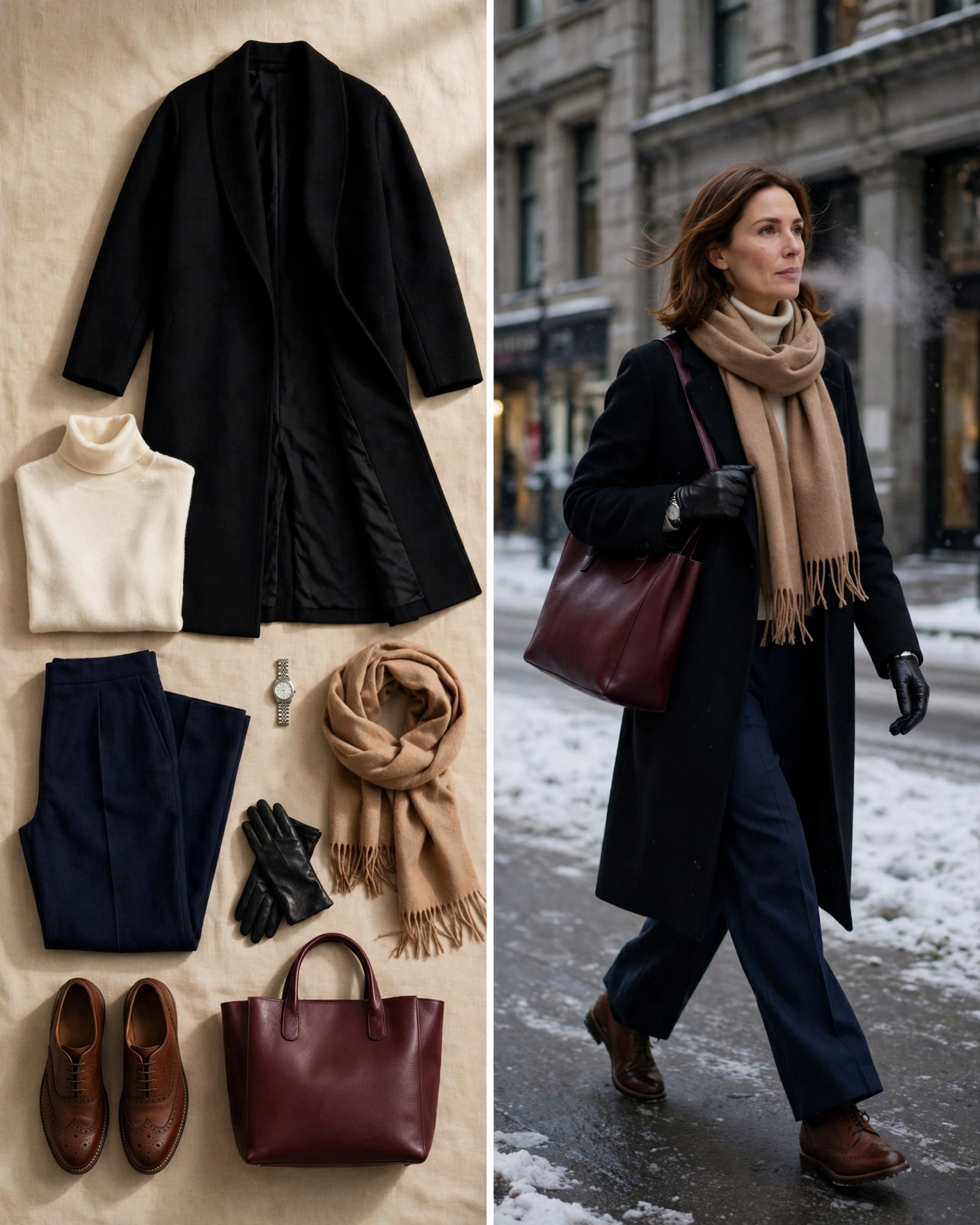
A garment’s second life is designed in at the factory, and the better ethical labels plan for it openly: repair services for loose buttons and worn linings, spare yarn included with knitwear, resoleable leather shoes with stitched rather than glued soles, and take-back or resale schemes that keep their own pieces in circulation. As a shopper you can read these signals fast — if a brand will mend it, resell it or take it back, it was built to last in the first place. Pre-loved is the other half of the same habit: coats and tailoring from quality labels hold their shape so well that buying them second-hand is often the most sustainable purchase of all. Picture it as a long black organic wool coat over a cream organic cotton turtleneck and navy wide-leg trousers, finished with brown leather brogues a cobbler can resole for years — every piece in the outfit can be repaired, resold and reworn instead of replaced.
Put It Together: A Working Wardrobe That Lasts for Years
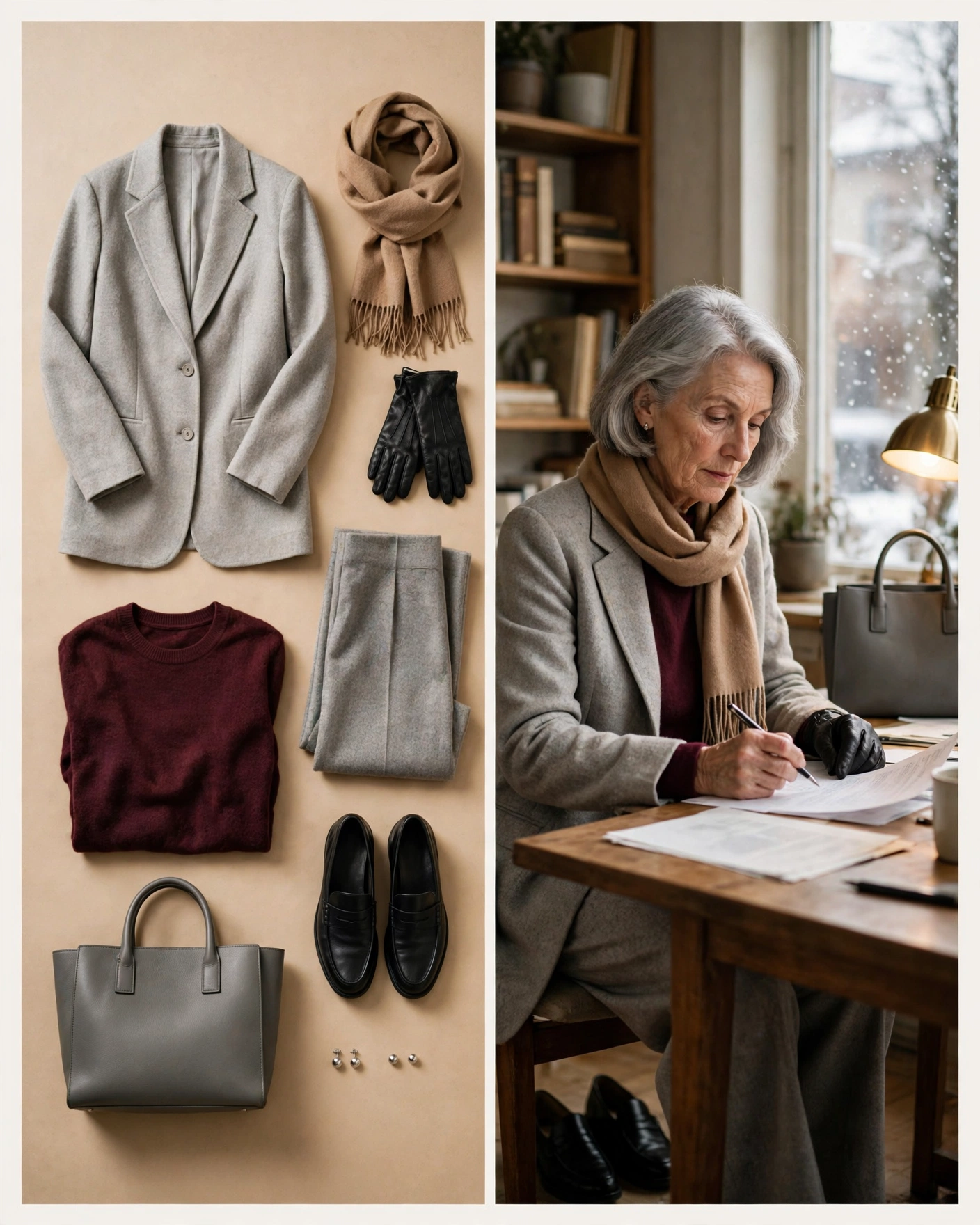
The six filters become a wardrobe faster than most people expect, because they shrink the shopping list instead of growing it. One long coat in organic wool, two blazers with real construction, three natural-fibre knits, two pairs of tailored trousers, one knit dress and a scarf or two in recycled wool covers a full winter of office outfits — especially when everything sits inside the camel, charcoal, navy, burgundy, cream, black, grey and plaid palette and recombines without effort. The labels that belong in that wardrobe are simply the ones that pass the tests above: honest fibres, a supply chain they will show you, cuts that ignore trends, and a repair policy that assumes you will keep the piece. The result looks like this — a relaxed grey organic wool suit over a burgundy recycled cashmere sweater, warmed with a camel scarf — polished enough for any meeting room, and built to still be in your wardrobe when this winter is a distant memory.
In Summary
Ethical workwear shopping is a set of checks, not a list of names to memorise: natural fibres that outlast trends, makers who publish their supply chains, tailoring cut to survive a decade of seasons, a small capsule that mixes without thinking, and pieces designed to be repaired, resold and reworn. Any label that passes those five tests has earned its place in a work wardrobe, whatever its size or price point.
The reward for shopping this way is a wardrobe that quietly gets better with age. The camel coat, navy suit, charcoal blazer and burgundy knit dress stop being purchases and become fixtures — altered when they need it, resoled when they wear, and recombined every winter without a single panic buy in January.
So build slowly and deliberately: one honest piece at a time, from makers who show their working. Ethical and polished were never opposites — in a winter work wardrobe, they are the same decision made well.