Every winter wardrobe eventually faces the same checkout question: the sturdy wool sweater at a fair price, or the cloud-soft cashmere one at three times the cost? Both are natural fibres, both look right under a blazer, and both promise warmth — yet they behave very differently across a working season of commutes, overheated offices and Monday-to-Friday wear.
The honest answer is that neither wins outright. Wool and cashmere are built for different jobs: one is the workhorse that shrugs off weather and wear, the other is the luxury layer that feels like nothing and elevates everything it touches. Knowing which job you actually need done is what decides whether the splurge is worth it.
This guide compares the two fibres across the six things that matter for work sweaters — warmth, durability, care, price per wear, best use cases and the final verdict — with a complete winter work outfit for each, drawn from the classic palette of camel, charcoal, navy, burgundy, cream, black, grey and plaid.
By the end you will know exactly which fibre belongs in your wardrobe, which one is a treat rather than a tool, and how to get the most working years out of whichever you choose.
Warmth: Which Fibre Actually Keeps You Warmer
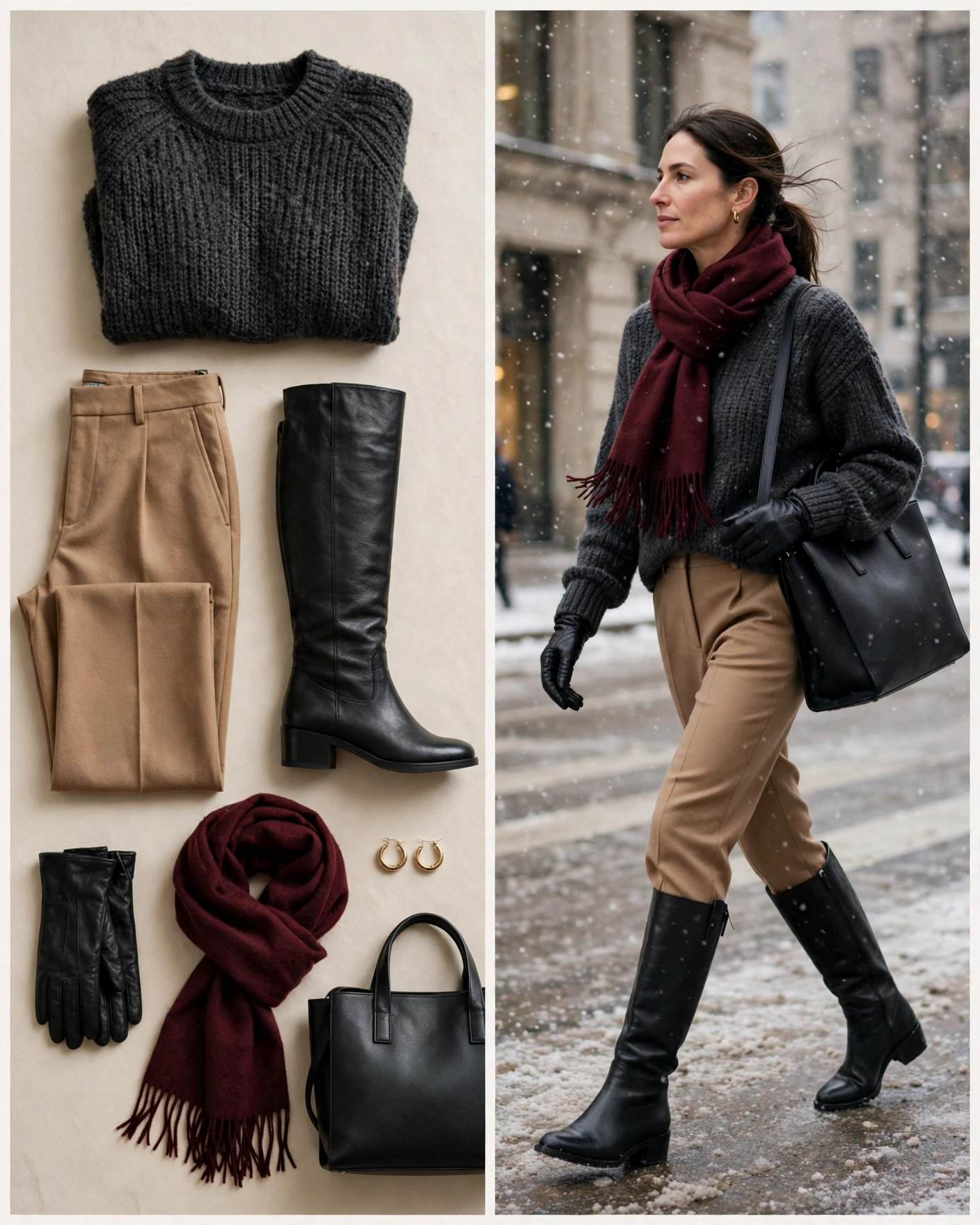
Warmth is where the two fibres part company first. Wool fibres are naturally crimped, and that crimp traps pockets of still air inside the knit — which is why a good wool sweater insulates even when it is not especially thick, and why it keeps working on a wet platform when other fibres give up. Wool also absorbs moisture vapour without feeling damp, so the walk from a cold street into a heated office never turns clammy. Cashmere is warm for its weight — remarkably so — because its fibres are far finer and denser, but it achieves that warmth in thin, delicate layers that a sharp wind can cut through. On the coldest commute days, a chunky charcoal wool crewneck over a fine base layer, with camel tailored trousers and a burgundy scarf, simply out-performs any single cashmere layer. Verdict on warmth: wool for weather, cashmere for mild days and heated offices.
Durability and Pilling: The Sweater That Survives the Season
A work sweater earns its keep five days a week, and durability is where wool quietly wins the whole comparison. Wool fibres are elastic — each one can bend tens of thousands of times before breaking — so a quality wool knit springs back from elbow creases, bag straps and seat-belt rub, and resists the abrasion that thins cheaper sweaters at the sides. Cashmere’s fibres are shorter and far finer, which is exactly why it feels like a cloud and exactly why it pills: the short fibres work loose under friction, gather into bobbles under the arms and along the bag side, and a much-worn cashmere sweater can look tired within a single season. Pilling is manageable with a cashmere comb, but it never fully stops. A fine-gauge navy merino wool crewneck, worn with grey tailored trousers and a charcoal blazer, will still look crisp in its third winter — the standard cashmere has to meet.

Care and Maintenance: What Each Fibre Asks of You
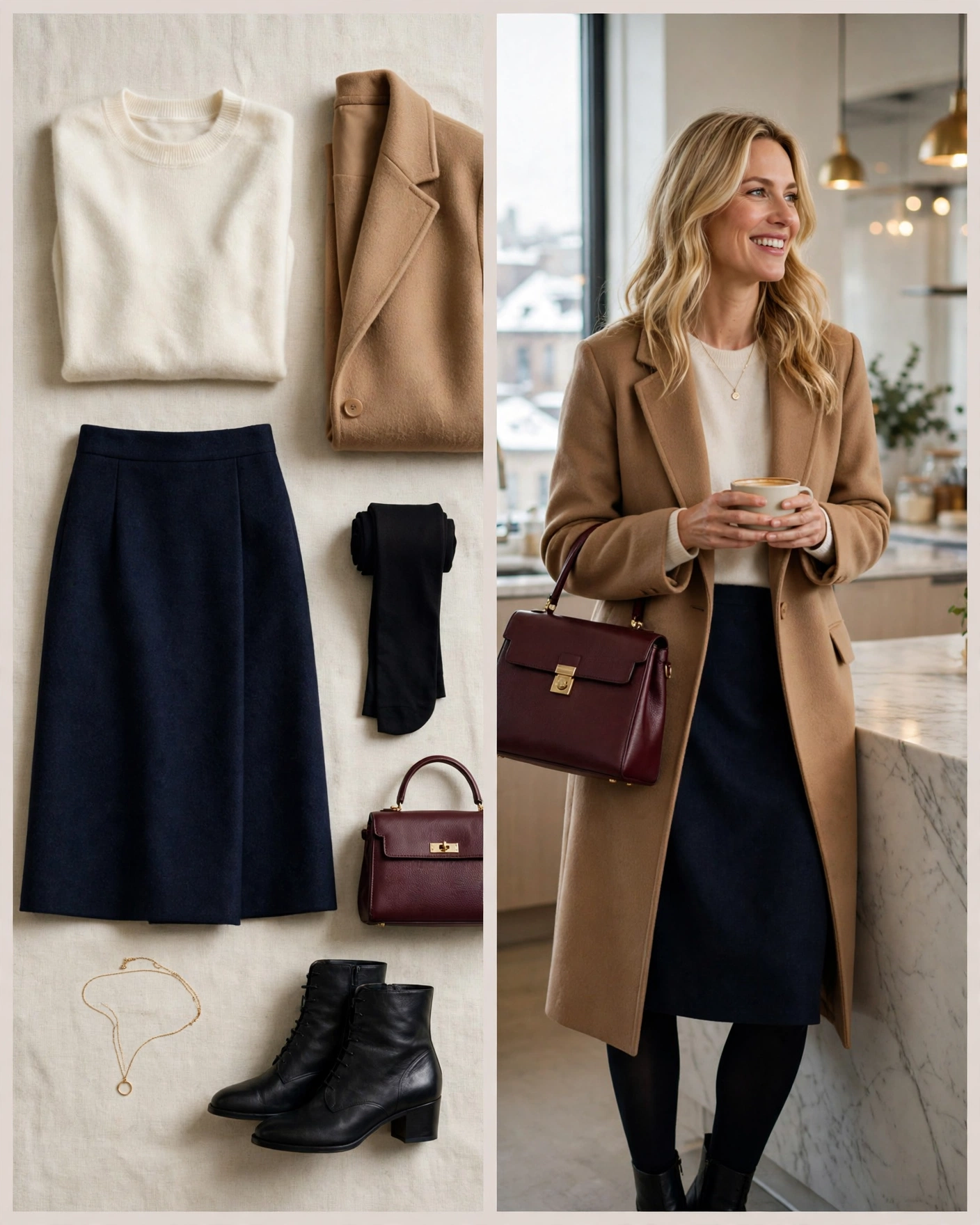
Neither fibre belongs in a hot wash, but their care demands are not equal. Wool is the forgiving one: its fibres carry natural lanolin and a scaly surface that resists dirt and odour, so a wool sweater genuinely needs washing only a handful of times a season — airing it overnight on a chair resets it for the next wear. It tolerates a gentle wool cycle or a cool hand wash, dries flat, and shrugs off the occasional spill. Cashmere asks for more devotion: hand wash cold or use a proper cashmere shampoo, never wring it, dry it flat away from heat, rest it at least a day between wears so the fibres recover, and store it folded with cedar or lavender because moths adore it. None of this is difficult, but it is a routine — and a cream cashmere crewneck worn with a navy midi skirt and a camel coat is the reward for keeping it.
Price per Wear: Doing the Real Maths
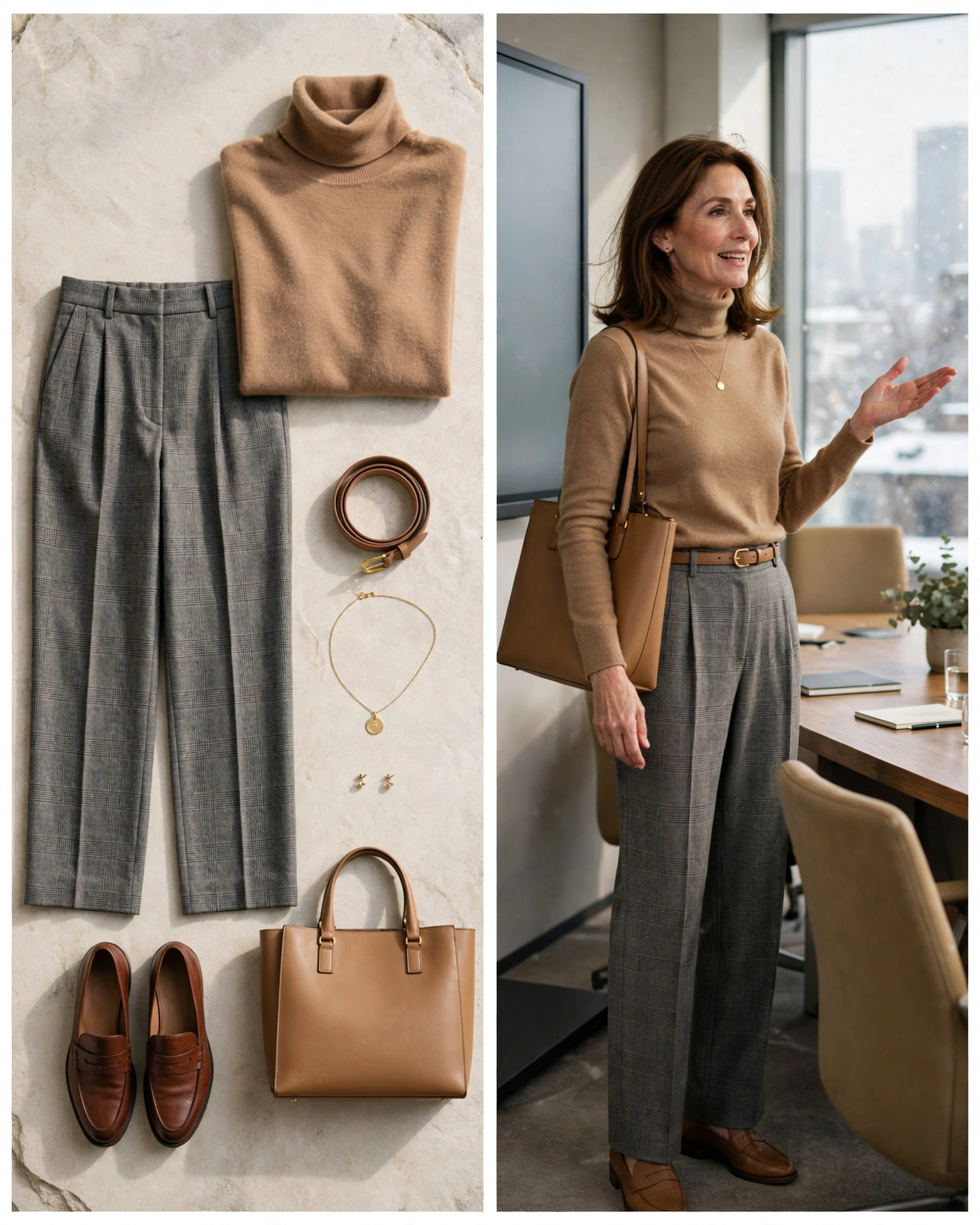
Sticker price is the worst way to judge either fibre — cost per wear is the honest number. A well-made wool sweater at a mid-range price, worn twice a week across five winters, drops to pennies per outing and is still going at the end of it; wool’s durability is what makes its maths almost unbeatable. Cashmere starts at two to four times the price and wears more delicately, so it only justifies itself when it is genuinely good cashmere — long-staple fibres, tightly knitted — and worn in rotation rather than daily. Cheap cashmere is the worst buy in knitwear: short fibres pill fast, the cost per wear never recovers, and it ends up costing more than the quality piece would have. The smart calculation is a camel cashmere turtleneck, worn with grey plaid wide-leg trousers on your most visible days, costed over years of boardrooms rather than one season of novelty.
Best Use Cases: Matching the Fibre to Your Working Week
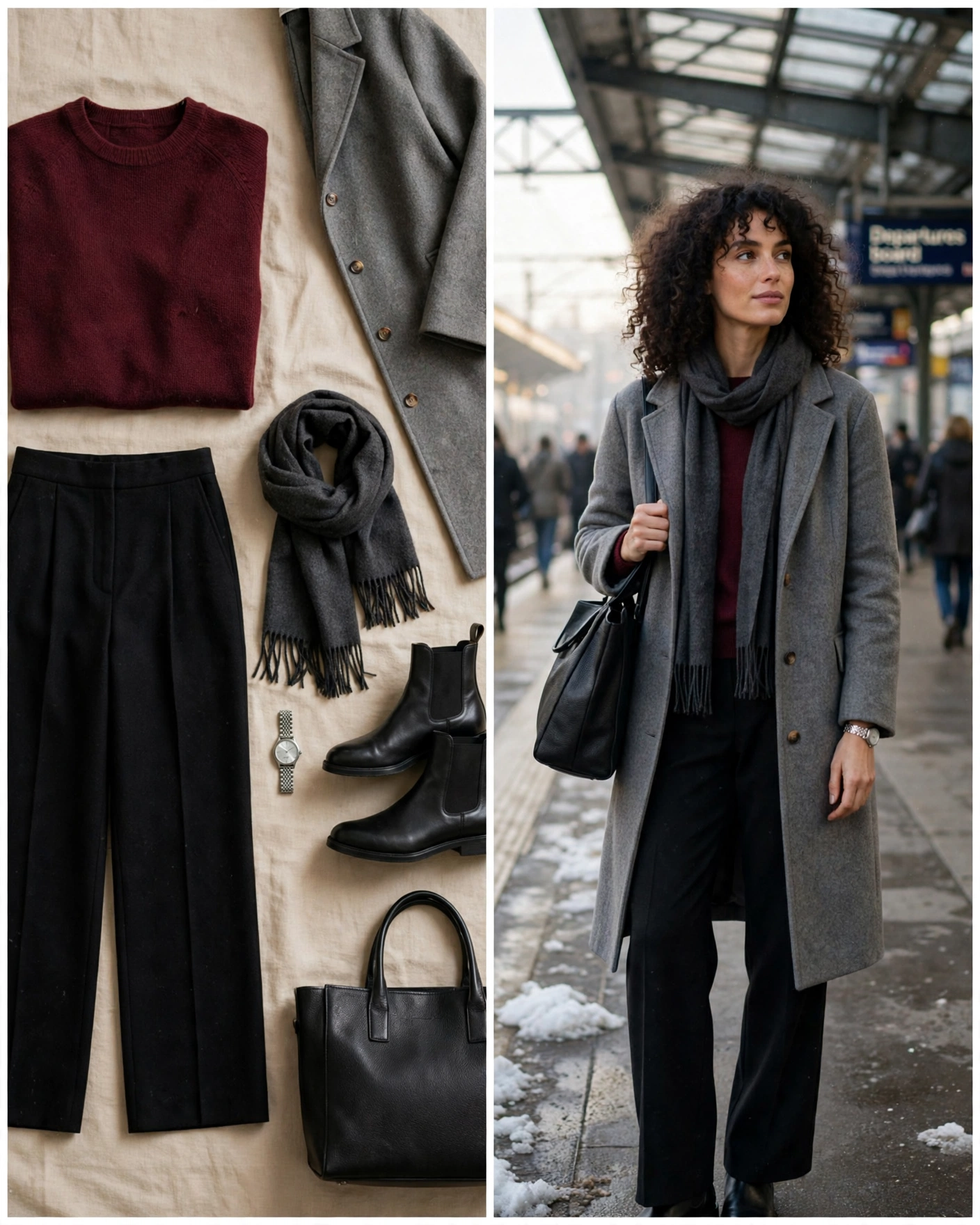
The practical answer is not either-or — it is zoning your wardrobe by job. Give wool the hard labour: the freezing commute, the all-day wear, the travel days and the layered outfits under coats and blazers where friction is constant. Merino wool in particular works as the office athlete, regulating temperature through a day that swings from a cold platform to a stuffy meeting room. Give cashmere the high-value, low-friction moments: the presentation, the client lunch, the day you are photographed, the video call where the camera sits close and softness reads as polish on screen. Cashmere also wins as the travel-light layer, packing to almost nothing in a carry-on. A burgundy merino wool crewneck with black wide-leg trousers and a grey coat is the weekday default — the cashmere stays fresh for when it counts.
The Verdict: Which One Deserves Your Money
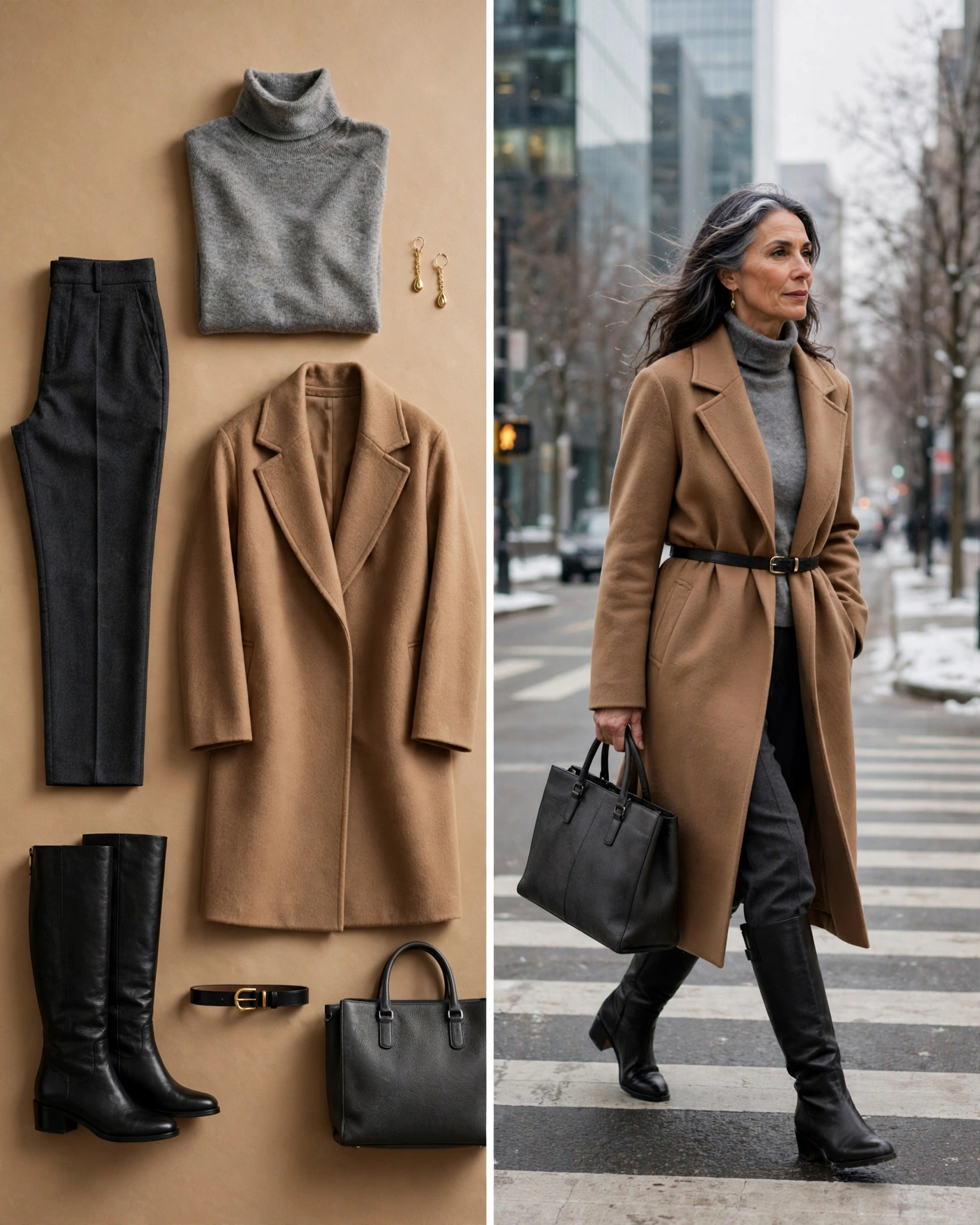
If you can only buy one sweater this winter, buy the wool one — in merino or a good lambswool, in navy, charcoal or burgundy — and wear it without anxiety for years. It wins on warmth in real weather, wins on durability, wins on care, and wins on cost per wear; it is the sensible choice and it never looks like a compromise. Cashmere is worth it as the second act: one excellent piece, in a neutral that works with everything you own, bought for how it feels against the skin and how quietly luxurious it looks under a coat or blazer — not as an everyday shield against winter. Treated as a workhorse-plus-one-luxury system, the two fibres stop competing. A grey cashmere turtleneck under a long camel coat, with charcoal trousers and knee-high boots, is what the luxury end of that system looks like.
In Summary
Wool and cashmere are not rivals so much as specialists. Wool brings the warmth that survives real weather, the elasticity that resists pilling and wear, the easy care and the unbeatable cost per wear. Cashmere brings unmatched softness and lightness, a polished finish for high-visibility days, and a price that only makes sense when the quality is high and the wear is rotated.
The wardrobe that gets the best of both is simple to build: two or three wool sweaters in the core colours — navy, charcoal, burgundy, camel — doing the daily work, plus one excellent cashmere piece kept for the days that deserve it. Buy the wool first, buy the cashmere well, and care for each the way its fibres ask.
Do that, and the checkout question answers itself every winter: wool for the season you actually live in, cashmere for the moments you want to feel it.