Every winter commuter knows the 7:40 platform dilemma. In one hand, the long wool coat: tailored, polished, the coat that makes a plain outfit look like a decision. In the other, the puffer: light, warm, unbothered by weather — and faintly like you are dressed for a ski lift. Choosing between them feels like choosing between looking right and feeling warm, and most of us pick wrong on exactly the mornings it matters.
The honest answer is that neither coat is simply better. They are built for different commutes. The puffer optimises for warmth per gram and shrugs off wet weather; the wool coat optimises for polish per glance and layers over tailoring without a fight. The right choice depends on how long you stand outside, how formal your office is, and how your coat spends the nine hours after you arrive.
This guide compares the two across the six tests a work coat actually has to pass: warmth, polish and dress codes, wet-weather performance, everyday commute practicality, care and storage, and a final verdict matched to real commutes. Each section comes with a complete winter work outfit built from the classic palette of camel, charcoal, navy, burgundy, cream, black, grey and plaid, so you can see exactly how each coat behaves over proper office clothes.
Read your commute honestly — the platform waits, the dress code, the walk from the station — and by the end you will know which coat it needs, and whether the other one earns a place beside it.
Warmth: The Puffer Wins the Coldest Weeks
Start with the test most people buy on. Warmth in a coat comes from trapped air, and nothing traps air like loft: a puffer’s quilted chambers hold a thick layer of still air around your whole torso, which is why a good knee-length puffer keeps you comfortable standing on an exposed platform at minus five in a way no wool coat quite matches. Wool insulates differently — a heavy melton cloth blocks wind and holds moderate cold well, especially over a knit and a blazer — but its warmth stops growing at the surface, and on long, stationary waits the chill eventually works through. Where the wool coat fights back is wind with layering: a long cut that covers the thighs, a buttoned front over a scarf, and room underneath for a proper sweater close most of the gap for city winters. The fair verdict is this: for short walks from a car or a nearby station, a heavyweight wool coat is warm enough all winter; for platform waits, bus stops and walking commutes in deep cold, the puffer is the warmer tool by a clear margin. A long black puffer over a cream chunky knit and charcoal trousers is the deep-winter uniform for a reason.

Polish and Dress Codes: The Wool Coat Still Leads
Warmth is only half the job — a work coat also has to introduce you. A wool coat arrives with tailoring built in: clean lapels, a structured shoulder, buttons that line up with the blazer underneath, and a hem that falls in one unbroken line over trousers or a dress. It reads as part of the outfit rather than equipment worn over it, which is why it remains the safe answer for client-facing roles, interviews, court, finance and any office where the dress code still has teeth. The puffer’s problem is not warmth, it is vocabulary: horizontal quilting, a sporty zip and a swollen silhouette all say leisure, and over a suit the message clashes no matter how expensive the puffer was. That said, the gap has narrowed — a matte, knee-length puffer with concealed fastenings, no logos and a tailored fit passes comfortably in smart-casual and creative offices, especially in black or navy. The rule of thumb: the more formal the clothes underneath, the harder the puffer has to work to look intentional. A long camel wool coat over a charcoal suit and burgundy knit needs no such effort — it looks finished from the pavement to the boardroom door.

Wet Snow and Freezing Rain: Weather Resistance, Honestly Compared
Dry cold flatters both coats; wet weather separates them. A puffer’s synthetic shell is effectively a raincoat’s cousin — wet snow and drizzle bead on the surface and shake off at the door, the fill underneath stays dry behind water-resistant fabric, and even a soaked puffer dries overnight on a hook without changing shape. Wool plays by older rules. A dense melton sheds light snow beautifully and brushes clean when dry, but sustained rain soaks into the fibres, and a wet wool coat becomes heavy, slow to dry and prone to holding that unmistakable damp-wool smell into the next morning. Wind tells a split story: the puffer’s elasticated cuffs, hem drawcord and high zip neck seal the gaps where cold air sneaks in, while a wool coat’s open throat and buttoned front need a scarf worn properly to do the same job. None of this makes the wool coat a fair-weather-only piece — with an umbrella and a covered route it handles most winter days — but if your commute regularly involves standing in sleet, the puffer is simply engineered for it in a way woven cloth is not. A navy hooded puffer over a black turtleneck and grey trousers walks through falling wet snow and arrives ready for work.

On the Train and at Your Desk: Everyday Commute Practicality
A commute coat spends most of its life being sat on, carried and stored, and here the puffer’s lightness becomes a daily quality-of-life win. It weighs almost nothing on your shoulders during a long walk, compresses when you sit on a crowded train so it neither pools on the floor nor crushes a skirt, squeezes into a tote or under a desk, and springs back without creases when you stand up. The wool coat asks for more ceremony: it is heavier over a full day of carrying, its long hem finds the wet floor of every train carriage, and at the office it really wants a hanger and a hook rather than the back of your chair, where a heavy coat slowly pulls its own shoulders out of shape. Driving splits the difference — a puffer’s bulk can bunch behind a seatbelt, while the wool coat drapes but drags at the door sill. Cyclists and backpack carriers should note one quiet wool weakness: straps rub the shoulder cloth shiny over a season, while a puffer’s shell shrugs them off. None of these are deal-breakers, but added up across two hundred commutes a year, the puffer is simply easier to live with. A slim burgundy puffer over a cream knit and navy trousers survives the train seat, the desk drawer and the walk home without a single wrinkle.

Care, Storage and Cost Per Wear
The last practical test is what each coat asks of you across a whole season. A wool coat wants a routine: brush it down after wear to lift grit and snow melt, rest it a full day between outings so the fibres recover, hang it on a wide shaped hanger, and give it one or two professional cleans a season — washed at home it can shrink, felt and lose its line forever. Stored in a breathable garment bag with cedar against moths, a quality wool coat keeps its structure for a decade, which turns a higher purchase price into some of the lowest cost-per-wear in your wardrobe. The puffer is easier week to week — most are machine washable on a gentle cycle and need no specialist care — but it has its own traps: storing it vacuum-compressed all summer permanently flattens cheaper fills, torn shells leak feathers and synthetic fluff, and a budget puffer can look tired by its third winter. The honest maths: the wool coat costs more to buy and to clean but amortises over ten years of looking new; the puffer costs less, asks less weekly care, and earns its keep in seasons rather than decades. A long grey wool coat over a cream turtleneck, brushed and rested in rotation, arrives at the office looking immaculate in year five.
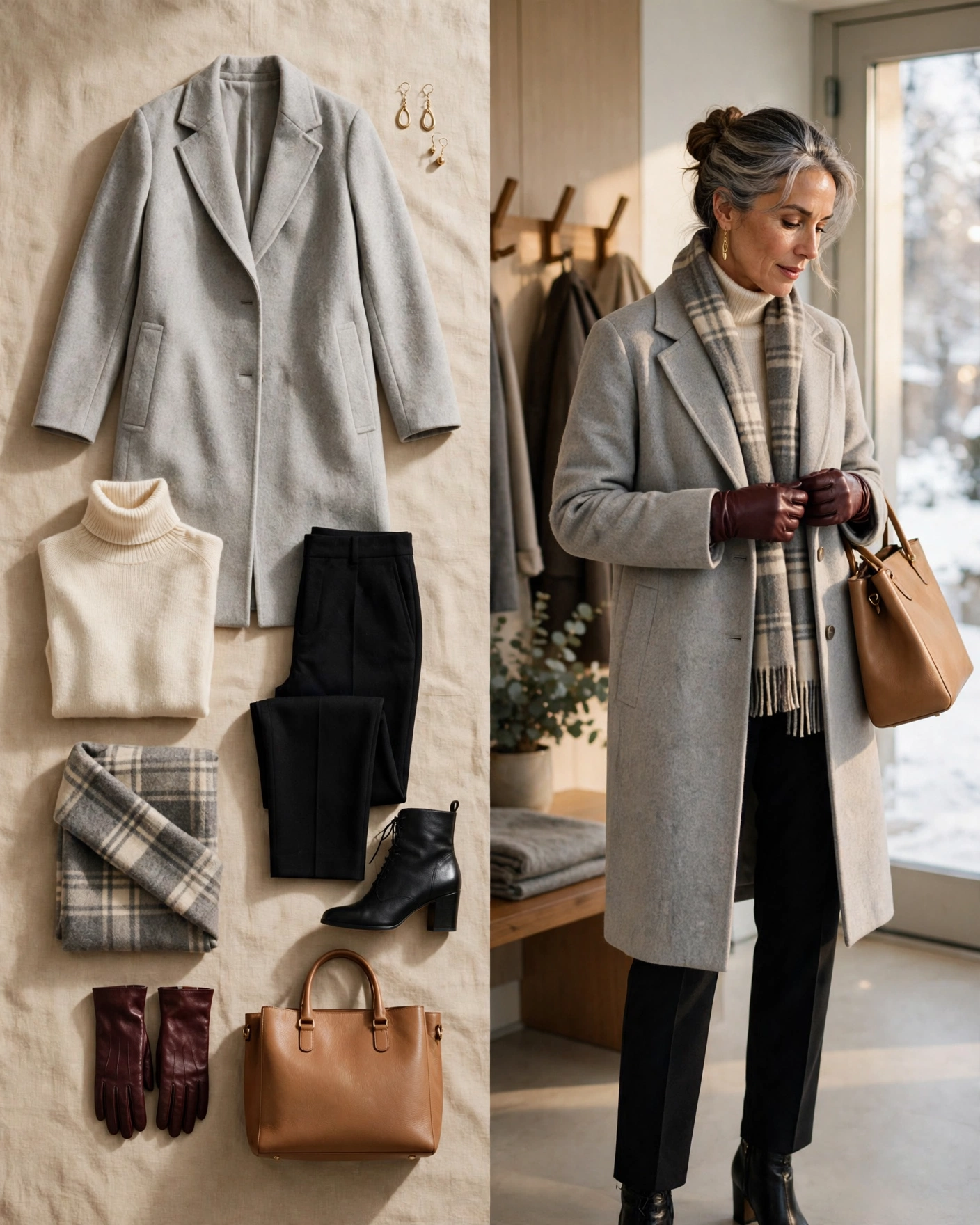
The Verdict: Match the Coat to Your Commute
After six tests the pattern is clear enough to turn into a rule. Choose the puffer if your commute is the challenge: long waits on open platforms, a walk of more than fifteen minutes, unreliable weather, a crowded train, or a smart-casual office where a matte tailored puffer in black, navy or burgundy will not raise an eyebrow. Choose the wool coat if the destination is the challenge: a formal or client-facing dress code, a short covered route, a car commute, or a wardrobe built on suits and dresses that need a tailored frame over them. And if your budget and wardrobe allow it, the genuinely correct answer for most working women is both — the wool coat carrying the formal week, the puffer absorbing the coldest, wettest, longest-commute days, each resting while the other works, which makes both last longer. If you can only buy one this winter, buy for the commute you have four days out of five, not the one exceptional day — the coat that matches your ordinary Tuesday is the one that will still be earning its place in March. A plaid wool coat over a black turtleneck and wide-leg trousers is the formal-day half of that rotation, and it never looks like a compromise.

In Summary
Wool coat versus puffer was never really a contest with one winner — it is a matching exercise. The puffer takes warmth, wet weather and day-to-day practicality; the wool coat takes polish, formal dress codes and decade-long value. Score your own commute against those six tests and the right coat identifies itself.
For most readers the destination is a two-coat rotation in the shared winter palette — camel, charcoal, navy, burgundy, cream, black, grey and plaid work across both coats and every outfit underneath them, so whichever you pull from the hook, the wardrobe below it still makes sense.
So buy for your ordinary commute, care for the coat you choose the way it asks to be cared for, and let the other one join the rotation when you can. Warm platform, polished arrival, no morning spent choosing between them at the door — that is the real verdict.